
Title
Developing Zeami: The Noh Actor's Attunement in Practice,Used
Sold by Ergodebooks, an authorized reseller.
Returns accepted within 30 days | support@ergodebooks.com
Shipping Information
- Free Standard Shipping — United States only
- Processing Time: 3–5 business days
- Estimated Delivery: 6–10 business days after dispatch
- Double-boxed, fully insured & discreetly packaged
- Tracking number sent via email once dispatched
Returns & Refund
Returns accepted within 30 days of delivery.
Damaged or Defective Item
Free return shipping + replacement or full refund
Wrong Item Received
Free return shipping + replacement or full refund
Change of Mind
Return shipping at customer's expense · 25% restocking fee applies
Payment Option

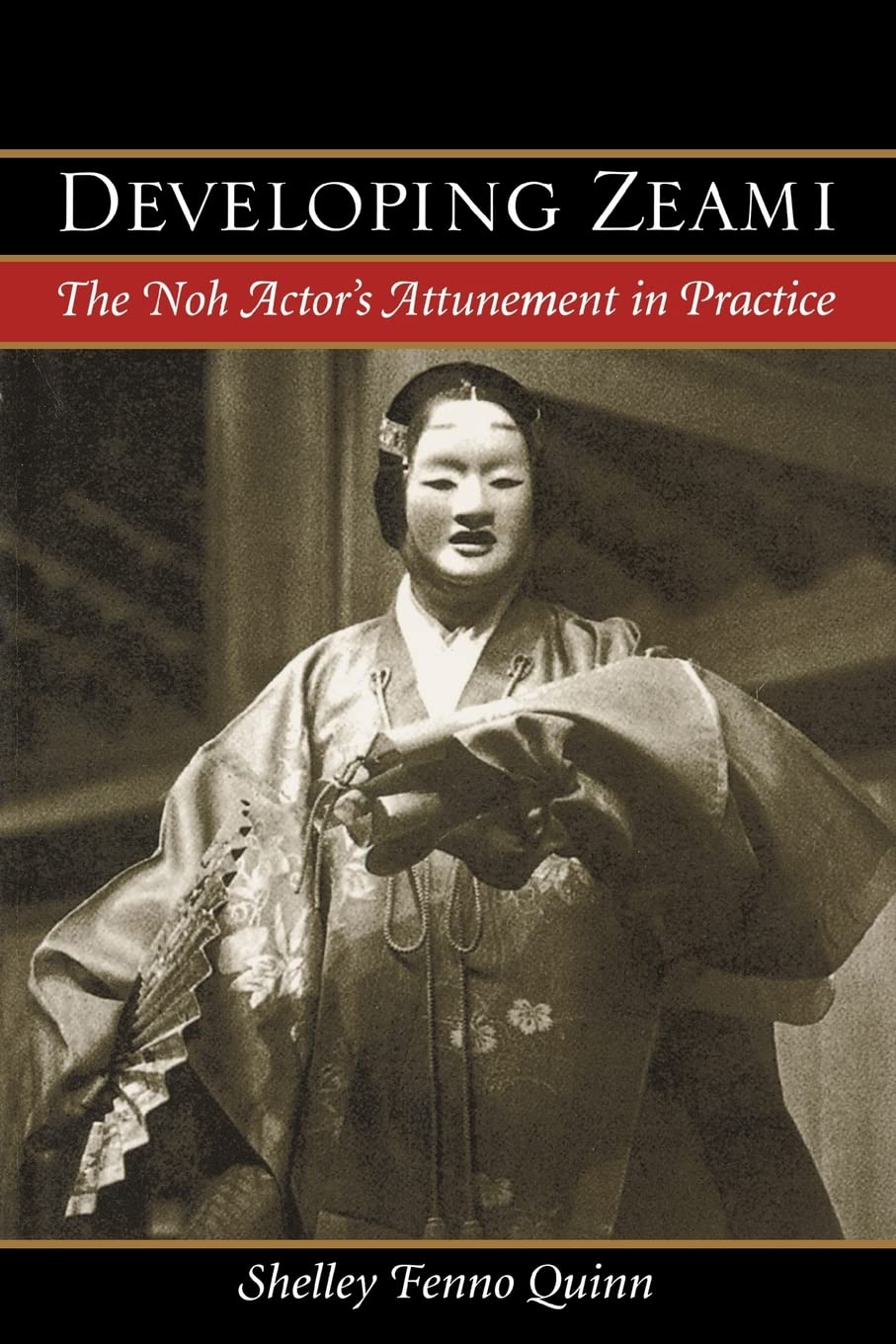
The great noh actor, theorist, and playwright Zeami Motokiyo (ca. 13631443) is one of the major figures of world drama. His critical treatises have attracted international attention ever since their publication in the early 1900s. His corpus of work and ideas continues to offer a wealth of insights on issues ranging from the nature of dramatic illusion and audience interest to tactics for composing successful plays to issues of somaticity and bodily training. Shelley Fenno Quinns impressive interpretive examination of Zeamis treatises addresses all of these areas as it outlines the development of the playwrights ideas on how best to cultivate attunement between performer and audience.Quinn begins by tracing Zeamis transformation of the largely mimetic stage art of his fathers troupe into a theater of poiesis in which the playwright and actors aim for performances wherein dance and chant are rekeyed to the evocative power of literary memory. Synthesizing this remembered language of stories, poems, phrases, and their prosodies and associated auras with the flow of dance and chant led to the creation of a dramatic prototype that engaged and depended on the audience as never before.Later chapters examine a performance configuration created by Zeami (the nikyoku santai) as articulated in his mature theories on the training of the performer. Drawing on possible reference points from Buddhist and Daoist thought, the author argues that Zeami came to treat the nikyoku santai as a set of guidelines for bracketing the subjectivity of the novice actor, thereby allowing the actor to reach a certain skill level or threshold from which his freedom as an artist might begin.
⚠️ WARNING (California Proposition 65):
This product may contain chemicals known to the State of California to cause cancer, birth defects, or other reproductive harm.
For more information, please visit www.P65Warnings.ca.gov.