
Title
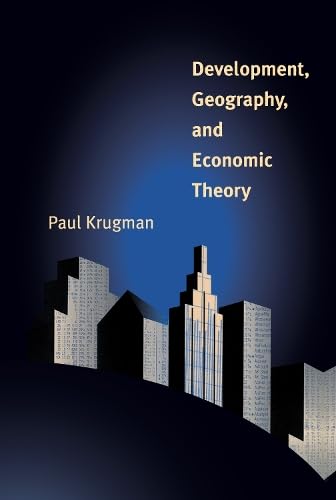
Development, Geography, and Economic Theory (Ohlin Lectures),Used
Sold by Ergodebooks, an authorized reseller.
Returns accepted within 30 days | support@ergodebooks.com
Shipping Information
- Free Standard Shipping — United States only
- Processing Time: 3–5 business days
- Estimated Delivery: 6–10 business days after dispatch
- Double-boxed, fully insured & discreetly packaged
- Tracking number sent via email once dispatched
Returns & Refund
Returns accepted within 30 days of delivery.
Damaged or Defective Item
Free return shipping + replacement or full refund
Wrong Item Received
Free return shipping + replacement or full refund
Change of Mind
Return shipping at customer's expense · 25% restocking fee applies
Payment Option

Why do certain ideas gain currency in economics while others fall by the wayside? Paul Krugman argues that the unwillingness of mainstream economists to think about what they could not formalize led them to ignore ideas that turn out, in retrospect, to have been very good ones. Krugman examines the course of economic geograph and development theory to shed light on the nature of economic inquiry. He traces how development theory lost its huge initial influence and virtually disappeared from economic discourse after it became clear that many of the theory's main insights could not be clearly modeled. Economic geography seems to have fared even worse, as economists shied away from grappling with questions about spacesuch as the size, location, or even existence of citiesbecause the 'terrain was seen as unsuitable for the tools at hand.' Krugman's book, however, is not a call to abandon economic modeling. He concludes with a reminder of why insisting on the use of models may be right, even when these sometimes lead economists to overlook good ideas. He also recaps the discussion of development and economic geography with a commentary on recent developments in those fields and areas where further inquiry looks most promising.
⚠️ WARNING (California Proposition 65):
This product may contain chemicals known to the State of California to cause cancer, birth defects, or other reproductive harm.
For more information, please visit www.P65Warnings.ca.gov.