If you have any questions, you are always welcome to contact us. We'll get back to you as soon as possible, withing 24 hours on weekdays.
Customer service
All questions about your order, return and delivery must be sent to our customer service team by e-mail at yourstore@yourdomain.com
Sale & Press
If you are interested in selling our products, need more information about our brand or wish to make a collaboration, please contact us at press@yourdomain.com
Help
If you have any questions, you are always welcome to contact us. We'll get back to you as soon as possible, withing 24 hours on weekdays.
Customer service
All questions about your order, return and delivery must be sent to our customer service team by e-mail at yourstore@yourdomain.com
Sale & Press
If you are interested in selling our products, need more information about our brand or wish to make a collaboration, please contact us at press@yourdomain.com
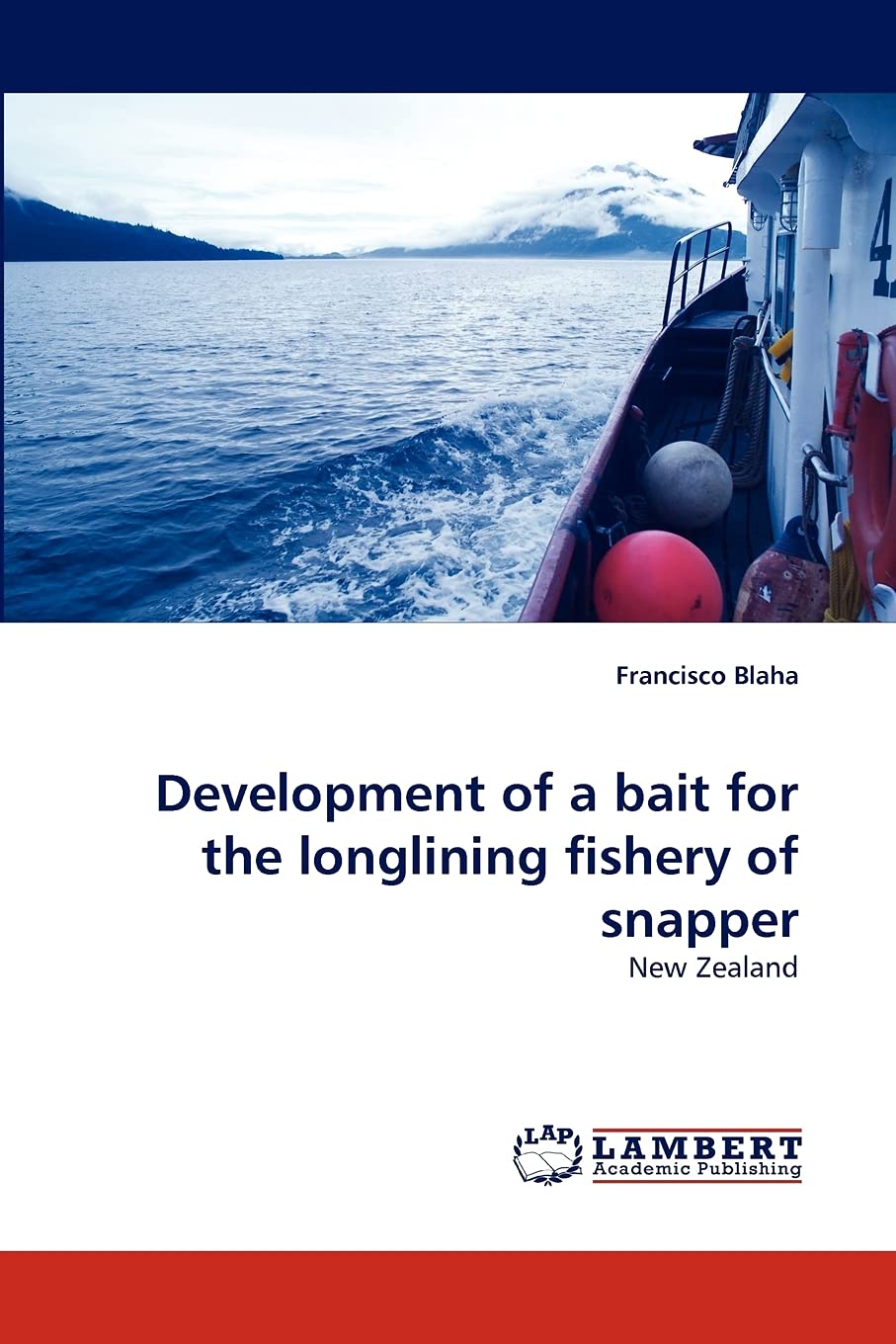
Natural baits such as squid and pilchard have been the favored choice of fishermen for the longline fishing of snapper (Pagrus auratus) in New Zealand. Overexploitation of fish stocks together with an increase in demand for fish for human consumption has decreased the resources of natural baits at cost effective prices. This has lead to attempts in the development of artificial or reconstituted baits. In this study, baits were prepared using differing proportions of industry surplus Greenshell? Mussel and gurnard which are know to be part of the snapper diet. These species also contain large amounts of glycine and alanine, which are known to stimulate feeding behavior in snapper. Results of test bait were compared to hooks baited with control squid bait, showing that control bait was 83.93% more effective compared to the test bait. Although the catches on the test bait were low, the selectivity for snapper was 29.25 % higher. Reasons for the reduced total catch may be because the tests bait texture and taste, compared to natural foods of snapper. In terms of ease handling by the fishermen, the format and consistency was well liked.
⚠️ WARNING (California Proposition 65):
This product may contain chemicals known to the State of California to cause cancer,
birth defects, or other reproductive harm.
For MAP (Minimum Advertised Price) violations and Intellectual Property (IP) or Trademark concerns, please contact:
support@ergodebooks.com
⚠️ California Proposition 65 Warning: Some products sold on this website may expose you to chemicals known to the State of California to cause cancer, birth defects, or other reproductive harm. For more information, visit www.P65Warnings.ca.gov.