
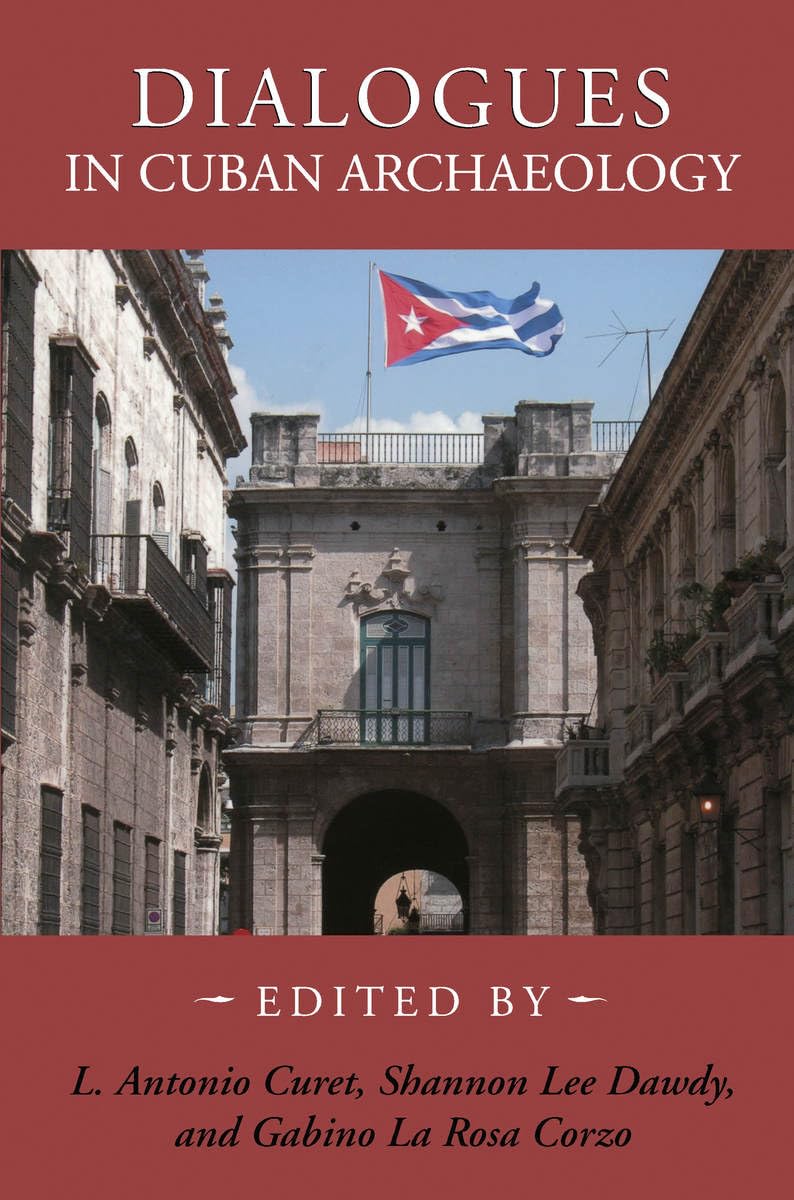
Title
Dialogues in Cuban Archaeology,New
Sold by Ergodebooks, an authorized reseller.
Returns accepted within 30 days | support@ergodebooks.com
Shipping Information
- Free Standard Shipping — United States only
- Processing Time: 3–5 business days
- Estimated Delivery: 6–10 business days after dispatch
- Double-boxed, fully insured & discreetly packaged
- Tracking number sent via email once dispatched
Returns & Refund
Returns accepted within 30 days of delivery.
Damaged or Defective Item
Free return shipping + replacement or full refund
Wrong Item Received
Free return shipping + replacement or full refund
Change of Mind
Return shipping at customer's expense · 25% restocking fee applies
Payment Option

Provides a politically and historically informed review of Cuban archaeology, from both American and Cuban perspectives.Many Americans are aware of the political, economic, and personal impacts of the U.S. embargo on Cuba. But the communication blockade between scholars has also affected the historical course of academic disciplines and research in general. With the easing of restrictions in the 1990s, academics are now freer to conduct research in Cuba, and the Cuban government has been more receptive to collaborative projects.This volume provides a forum for the principal Cuban and American archaeologists to update the current state of Cuban archaeological researchfrom rock art and potsherds to mortuary practices and historical renovationthereby filling in the information gap created by the political separation. Each group of researchers brings significant new resources to the effort, including strong conservation regulations, innovative studies of lithic and shell assemblages, and transculturation theories. Cuban research on the hacienda system, slavery, and urban processes has in many ways anticipated developments in North American archaeology by a decade or more. Of special interest are the recent renovation projects in Old Havana that fully integrate the work of historians, architects, and archaeologistsa model project conducted by agreement between the Cuban government and UNESCO.The selection of papers for this collection is based on a desire to answer pressing research questions of interest for North American Caribbeanists and to present a crosssection of Cuban archaeological work. With this volume, then, the principal players present results of recent collaborations and begin a renewed conversation, a dialogue, that can provide a foundation for future coordinated efforts.
⚠️ WARNING (California Proposition 65):
This product may contain chemicals known to the State of California to cause cancer, birth defects, or other reproductive harm.
For more information, please visit www.P65Warnings.ca.gov.
- Q: What is the main focus of 'Dialogues in Cuban Archaeology'? A: 'Dialogues in Cuban Archaeology' provides a comprehensive review of Cuban archaeology, addressing both American and Cuban perspectives on the subject.
- Q: Who is the author of this book? A: The book is authored by L. Antonio Curet.
- Q: What topics are covered in this volume? A: The volume covers a wide range of topics including rock art, potsherds, mortuary practices, and the impact of historical renovation projects in Cuba.
- Q: When was 'Dialogues in Cuban Archaeology' published? A: The book was published on August 21, 2005.
- Q: Is this book available in paperback format? A: 'Dialogues in Cuban Archaeology' is available in paperback format.
- Q: How many pages does the book have? A: The book contains a total of 259 pages.
- Q: What is the item condition of this book? A: The item condition of 'Dialogues in Cuban Archaeology' is New.
- Q: What is the edition of this book? A: This book is a First Edition, First.
- Q: Does the book discuss the effects of the U.S. embargo on Cuban archaeology? A: Yes, the book discusses the political and academic impacts of the U.S. embargo on Cuban archaeology.
- Q: What makes this book unique in its field? A: The book provides a forum for Cuban and American archaeologists to share recent research, bridging the information gap created by political separation.