If you have any questions, you are always welcome to contact us. We'll get back to you as soon as possible, withing 24 hours on weekdays.
Customer service
All questions about your order, return and delivery must be sent to our customer service team by e-mail at yourstore@yourdomain.com
Sale & Press
If you are interested in selling our products, need more information about our brand or wish to make a collaboration, please contact us at press@yourdomain.com
Help
If you have any questions, you are always welcome to contact us. We'll get back to you as soon as possible, withing 24 hours on weekdays.
Customer service
All questions about your order, return and delivery must be sent to our customer service team by e-mail at yourstore@yourdomain.com
Sale & Press
If you are interested in selling our products, need more information about our brand or wish to make a collaboration, please contact us at press@yourdomain.com
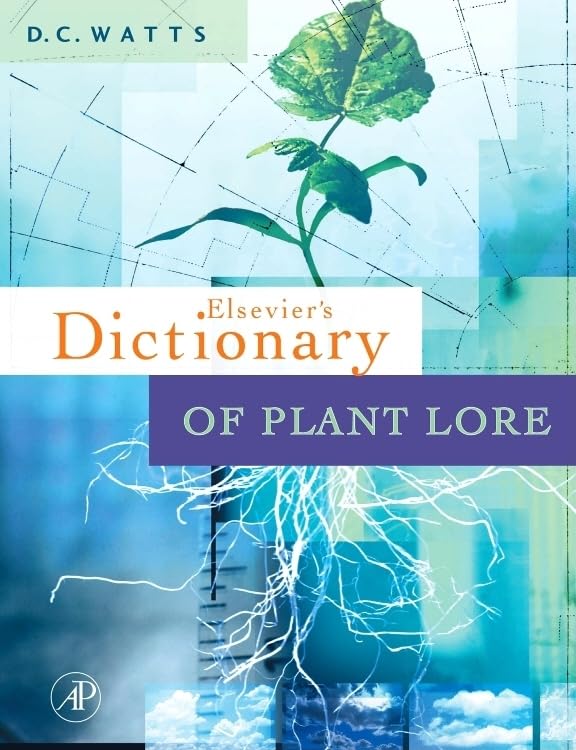
Knowledge of plant names can give insight into largely forgotten beliefs. For example, the common red poppy is known as 'Blind Man' due to an old superstitious belief that if the poppy were put to the eyes it would cause blindness. Many plant names derived from superstition, folk lore, or primal beliefs. Other names are purely descriptive and can serve to explain the meaning of the botanical name. For example, BeautyBerry is the name given to the American shrub that belongs to the genus Callicarpa. Callicarpa is Greek for beautiful fruit. Still other names come from literary sources providing rich detail of the transmission of words through the ages.Conceived as part of the author's wider interest in plant and tree lore and ethnobotanical studies, this fully revised edition of Elsevier's Dictionary of Plant Names and Their Origins contains over 30,000 vernacular and literary English names of plants. Wild and cultivated plants alike are identified by the botanical name. Further detail provides a brief account of the meaning of the name and detailed commentary on common usage.* Includes color images * Inclusive of all Latin terms with vernacular derivatives * The most comprehensive guide for plant scientists, linguists, botanists, and historians
⚠️ WARNING (California Proposition 65):
This product may contain chemicals known to the State of California to cause cancer,
birth defects, or other reproductive harm.
For MAP (Minimum Advertised Price) violations and Intellectual Property (IP) or Trademark concerns, please contact:
support@ergodebooks.com
⚠️ California Proposition 65 Warning: Some products sold on this website may expose you to chemicals known to the State of California to cause cancer, birth defects, or other reproductive harm. For more information, visit www.P65Warnings.ca.gov.