
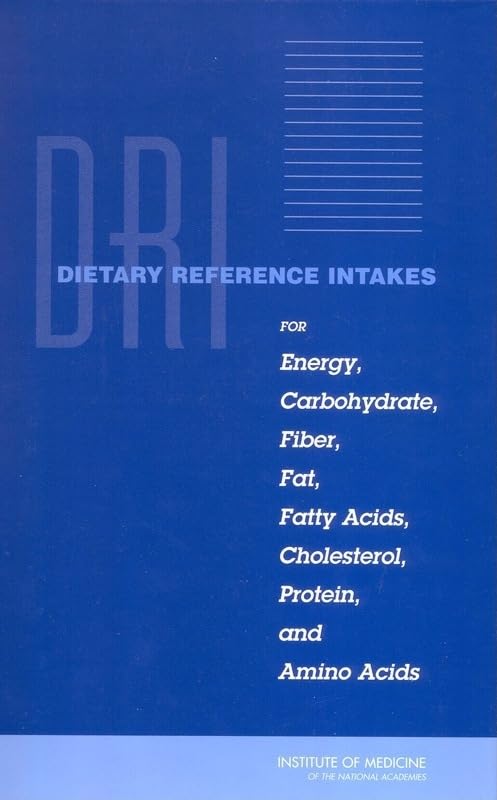
Title
Dietary Reference Intakes For Energy, Carbohydrate, Fiber, Fat, Fatty Acids, Cholesterol, Protein, And Amino Acids
Sold by Ergodebooks, an authorized reseller.
Returns accepted within 30 days | support@ergodebooks.com
Shipping Information
- Free Standard Shipping — United States only
- Processing Time: 3–5 business days
- Estimated Delivery: 6–10 business days after dispatch
- Double-boxed, fully insured & discreetly packaged
- Tracking number sent via email once dispatched
Returns & Refund
Returns accepted within 30 days of delivery.
Damaged or Defective Item
Free return shipping + replacement or full refund
Wrong Item Received
Free return shipping + replacement or full refund
Change of Mind
Return shipping at customer's expense · 25% restocking fee applies
Payment Option

Responding To The Expansion Of Scientific Knowledge About The Roles Of Nutrients In Human Health, The Institute Of Medicine Has Developed A New Approach To Establish Recommended Dietary Allowances (Rdas) And Other Nutrient Reference Values. The New Title For These Values Dietary Reference Intakes (Dris), Is The Inclusive Name Being Given To This New Approach. These Are Quantitative Estimates Of Nutrient Intakes Applicable To Healthy Individuals In The United States And Canada. This New Book Is Part Of A Series Of Books Presenting Dietary Reference Values For The Intakes Of Nutrients. It Establishes Recommendations For Energy, Carbohydrate, Fiber, Fat, Fatty Acids, Cholesterol, Protein, And Amino Acids. This Book Presents New Approaches And Findings Which Include The Following: The Establishment Of Estimated Energy Requirements At Four Levels Of Energy Expenditure Recommendations For Levels Of Physical Activity To Decrease Risk Of Chronic Disease The Establishment Of Rdas For Dietary Carbohydrate And Protein The Development Of The Definitions Of Dietary Fiber, Functional Fiber, And Total Fiber The Establishment Of Adequate Intakes (Ai) For Total Fiber The Establishment Of Ais For Linolenic And Alinolenic Acids Acceptable Macronutrient Distribution Ranges As A Percent Of Energy Intake For Fat, Carbohydrate, Linolenic And Alinolenic Acids, And Protein Research Recommendations For Information Needed To Advance Understanding Of Macronutrient Requirements And The Adverse Effects Associated With Intake Of Higher Amountsalso Detailed Are Recommendations For Both Physical Activity And Energy Expenditure To Maintain Health And Decrease The Risk Of Disease.
⚠️ WARNING (California Proposition 65):
This product may contain chemicals known to the State of California to cause cancer, birth defects, or other reproductive harm.
For more information, please visit www.P65Warnings.ca.gov.
- Q: What are the dimensions of this book? A: The book measures six point zero eight inches in length, two point zero nine inches in width, and eight point nine four inches in height.
- Q: How many pages does this book have? A: This book contains one thousand three hundred fifty-eight pages, providing extensive content on dietary reference intakes.
- Q: What type of binding does this book have? A: This book features a paperback binding, making it lightweight and flexible for easy reading.
- Q: Who is the author of this book? A: The author of this book is the Institute of Medicine, a recognized authority in dietary guidelines.
- Q: What is the main topic of this book? A: The book focuses on dietary reference intakes for various nutrients, including energy, carbohydrates, and proteins.
- Q: How do I use this book effectively? A: To use this book effectively, refer to the sections discussing the recommended dietary allowances for specific nutrients and apply them to your dietary planning.
- Q: Is this book suitable for beginners? A: Yes, this book is suitable for beginners interested in understanding dietary guidelines and nutrient recommendations.
- Q: Can I use this book for meal planning? A: Yes, this book provides valuable information that can assist in meal planning based on recommended nutrient intakes.
- Q: How do I keep this book in good condition? A: To keep this book in good condition, store it in a cool, dry place and avoid exposing it to excessive moisture.
- Q: Is this book safe for children to read? A: Yes, while it's primarily aimed at adults, the content is educational and can be beneficial for older children interested in nutrition.
- Q: What if the book arrives damaged? A: If the book arrives damaged, contact the seller within the return policy period for a replacement or refund.
- Q: Can I return this book if I don't like it? A: Yes, you can return this book according to the seller's return policy, usually within a specified time frame.
- Q: What makes this book different from other dietary guides? A: This book is distinct because it incorporates the latest scientific research on dietary reference intakes, making it a comprehensive resource.
- Q: Are there any recommendations for physical activity in this book? A: Yes, the book includes recommendations for levels of physical activity to maintain health and reduce disease risk.
- Q: How does this book address dietary fiber? A: This book defines dietary fiber and provides adequate intake levels for total fiber, along with its importance in nutrition.