
Title
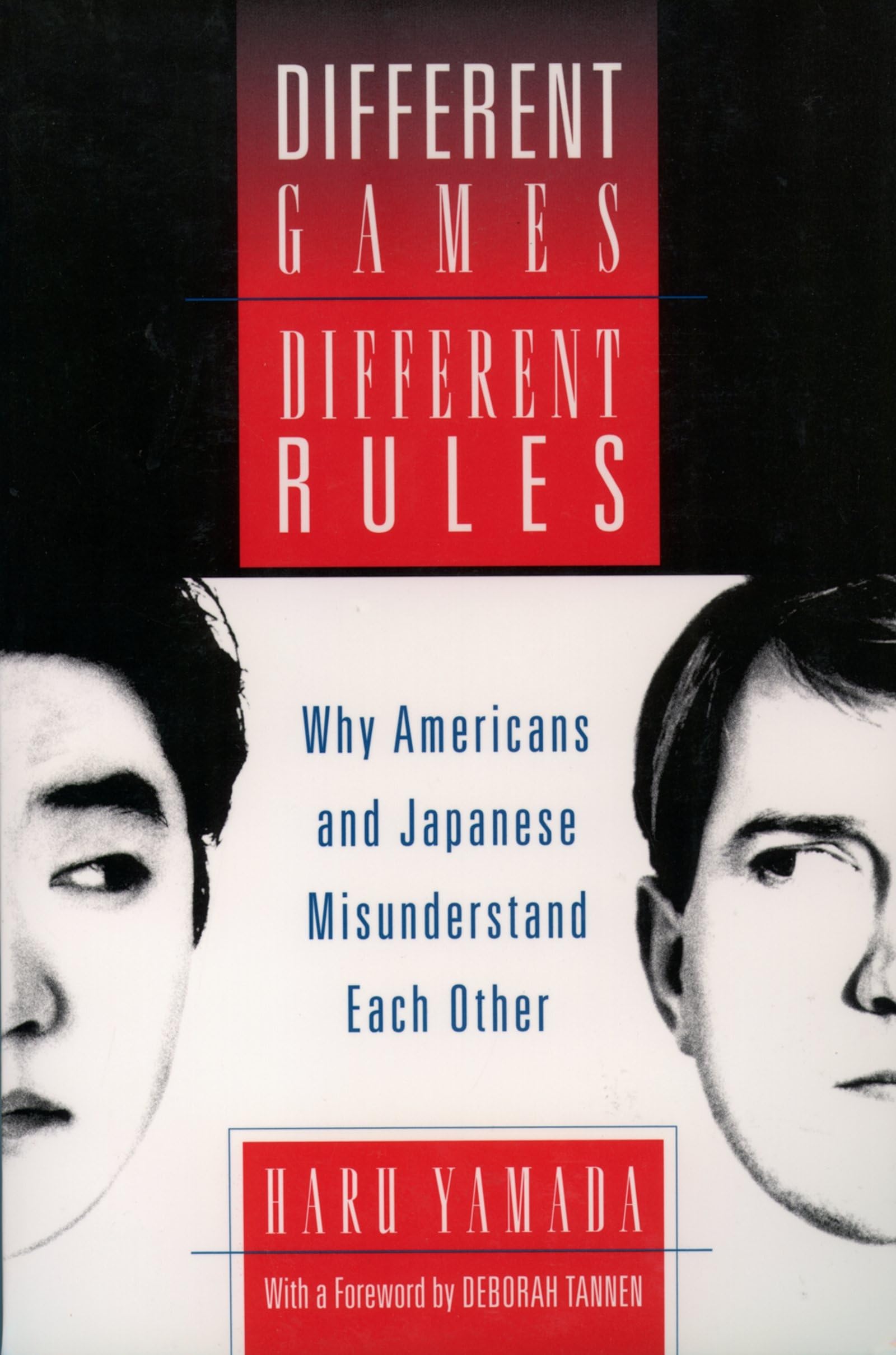
Different Games, Different Rules: Why Americans and Japanese Misunderstand Each Other,Used
Sold by Ergodebooks, an authorized reseller.
Returns accepted within 30 days | support@ergodebooks.com
Shipping Information
- Free Standard Shipping — United States only
- Processing Time: 3–5 business days
- Estimated Delivery: 6–10 business days after dispatch
- Double-boxed, fully insured & discreetly packaged
- Tracking number sent via email once dispatched
Returns & Refund
Returns accepted within 30 days of delivery.
Damaged or Defective Item
Free return shipping + replacement or full refund
Wrong Item Received
Free return shipping + replacement or full refund
Change of Mind
Return shipping at customer's expense · 25% restocking fee applies
Payment Option

Japan and the United States are in closer contact politically and economically than ever before, yet in many ways our nations are as far from mutual understanding as ever. Misconceptions and miscommunications between East and West continue to plague this important relationship, frustrating the best efforts of both cultures to work together. Stereotypes abound: Americans see Japanese as evasive and inscrutable, while Japanese see Americans as pushy and selfish. What causes these persistent misunderstandings, and what can be done to avoid them?Fluent in both languages and at home in both cultures, Haru Yamada brings an insiders perspective and a linguists training to this difficult question, illuminating the many reasons why Americans and Japanese misunderstand one another. Social organization, she explains, shapes the way we talk. Because American and Japanese cultures value different kinds of social relationships, they play different language games with different sets of rules. In America, for instance, Aesop's fable about the grasshopper and the ants ends with the ants scorning the foolhardy grasshopper. In Japan, however, the story has a very different ending: the ants invite the grasshopper in to share their winter meal, as they appreciate how his singing spurred them on during their summer labors. In the difference between these two endings, argues Yamada, lies an important lesson: Americans, because of their unique political history, value independence and individuality, while Japanese value mutual dependency and interconnectedness. The language of both cultures is designed to display and reinforce these values so that words, phrases and expressions in one language can have completely different connotations in another, leading to all manner of misunderstanding. Yamada provides numerous examples. In Japan, for instance, silence is valued and halting speech is considered more honest and thoughtful than fluid speech, while in America forthright, polished speech is valued. Likewise, the Japanese use word order to express emphasis, while Americans use vocal stress: a listener unaware of this difference may easily misunderstand the import of a sentence. In a lucid and insightful discussion, Yamada outlines the basic differences between Japanese and American English and analyzes a number of reallife business and social interactions in which these differences led to miscommunication. By understanding how and why each culture speaks in the way that it does, Yamada shows, we can learn to avoid frustrating and damaging failures of communication.Different Games, Different Rules is essential reading for anyone who travels to or communicates regularly with Japan, whether they are scientists, scholars, tourists, or business executives. But as Deborah Tannen notes in her Foreword to the book, even those who will never travel to Japan, do business with a Japanese company, or talk to a person from that part of the world, will find the insights of this book illuminating and helpful, because the greatest benefit that comes of understanding another culture is a better and deeper understanding of one's own.
⚠️ WARNING (California Proposition 65):
This product may contain chemicals known to the State of California to cause cancer, birth defects, or other reproductive harm.
For more information, please visit www.P65Warnings.ca.gov.
- Q: How many pages does the book have? A: The book has one hundred ninety-two pages. This length provides a concise exploration of cultural misunderstandings between Americans and Japanese.
- Q: What is the binding type of this book? A: The book is paperback bound. This makes it lightweight and easy to carry for on-the-go reading.
- Q: What are the dimensions of the book? A: The book measures nine point two two inches in length, six point one two inches in width, and zero point six inches in height. These dimensions make it a portable addition to your library.
- Q: What topics does this book cover? A: The book explores cultural misunderstandings between Americans and Japanese. It delves into language differences and their impact on communication.
- Q: Is this book suitable for beginners in cultural studies? A: Yes, the book is suitable for beginners. It presents complex concepts in an accessible manner, making it easy to understand.
- Q: What age group is this book appropriate for? A: The book is appropriate for adults and older teenagers. Its themes are relevant for anyone interested in cultural communication.
- Q: How should I care for this book? A: To keep the book in good condition, store it upright in a dry place. Avoid exposing it to direct sunlight to prevent fading.
- Q: Can I lend this book to others? A: Yes, you can lend this book to others. Just ensure it is returned to maintain your personal library.
- Q: Is this book safe for young readers? A: Yes, the book does not contain inappropriate content. However, it is best suited for older teens and adults.
- Q: What should I do if my book arrives damaged? A: If your book arrives damaged, contact the seller for a return or replacement. Most sellers offer a satisfaction guarantee.
- Q: How do I find this book in a library? A: To find this book in a library, use the title or the author's name, Haru Yamada, in the library's catalog search.
- Q: Can this book help with business communications in Japan? A: Yes, this book offers insights that can improve business communications with Japanese partners. It highlights crucial cultural differences.
- Q: Is there a digital version of this book? A: Yes, a digital version may be available through various e-book platforms. Check your preferred e-reader for availability.
- Q: How does this book compare to other cultural studies books? A: This book is unique in its focus on language and communication differences. It provides practical examples not commonly found in other texts.
- Q: What is the author's background? A: Haru Yamada is fluent in both English and Japanese. She brings a linguist's perspective to the cultural analysis presented in the book.