
Title
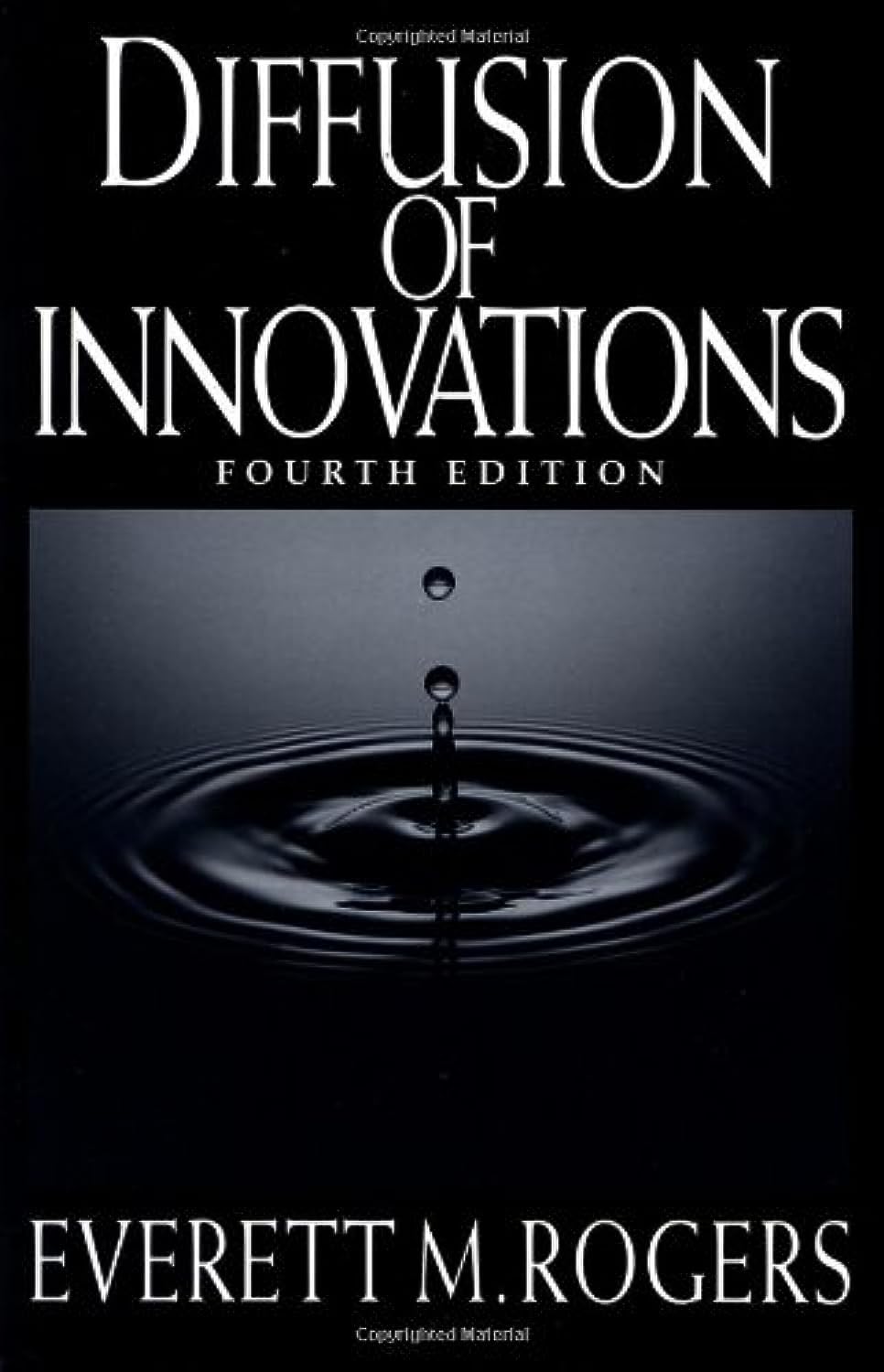
Diffusion of Innovations, Fourth Edition,Used
Sold by Ergodebooks, an authorized reseller.
Returns accepted within 30 days | support@ergodebooks.com
Shipping Information
- Free Standard Shipping — United States only
- Processing Time: 3–5 business days
- Estimated Delivery: 6–10 business days after dispatch
- Double-boxed, fully insured & discreetly packaged
- Tracking number sent via email once dispatched
Returns & Refund
Returns accepted within 30 days of delivery.
Damaged or Defective Item
Free return shipping + replacement or full refund
Wrong Item Received
Free return shipping + replacement or full refund
Change of Mind
Return shipping at customer's expense · 25% restocking fee applies
Payment Option

Since the first edition of this landmark book was published in 1962, Everett Rogers's name has become 'virtually synonymous with the study of diffusion of innovations,' according to Choice. The second and third editions of Diffusion of Innovations became the standard textbook and reference on diffusion studies. Now, in the fourth edition, Rogers presents the culmination of more than thirty years of research that will set a new standard for analysis and inquiry.The fourth edition is (1) a revision of the theoretical framework and the research evidence supporting this model of diffusion, and (2) a new intellectual venture, in that new concepts and new theoretical viewpoints are introduced. This edition differs from its predecessors in that it takes a much more critical stance in its review and synthesis of 5,000 diffusion publications. During the past thirty years or so, diffusion research has grown to be widely recognized, applied and admired, but it has also been subjected to both constructive and destructive criticism. This criticism is due in large part to the stereotyped and limited ways in which many diffusion scholars have defined the scope and method of their field of study. Rogers analyzes the limitations of previous diffusion studies, showing, for example, that the convergence model, by which participants create and share information to reach a mutual understanding, more accurately describes diffusion in most cases than the linear model.Rogers provides an entirely new set of case examples, from the Balinese Water Temple to Nintendo videogames, that beautifully illustrate his expansive research, as well as a completely revised bibliography covering all relevant diffusion scholarship in the past decade. Most important, he discusses recent research and current topics, including social marketing, forecasting the rate of adoption, technology transfer, and more. This allinclusive work will be essential reading for scholars and students in the fields of communications, marketing, geography, economic development, political science, sociology, and other related fields for generations to come.
⚠️ WARNING (California Proposition 65):
This product may contain chemicals known to the State of California to cause cancer, birth defects, or other reproductive harm.
For more information, please visit www.P65Warnings.ca.gov.