
Title
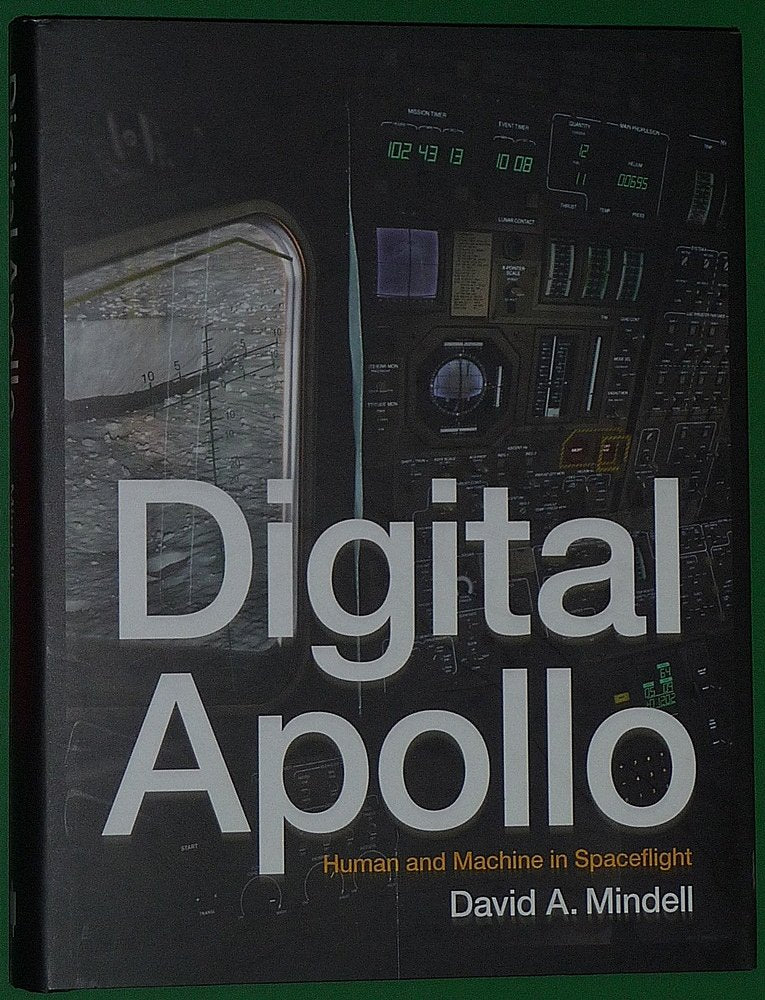
Digital Apollo: Human And Machine In Spaceflight
Sold by Ergodebooks, an authorized reseller.
Returns accepted within 30 days | support@ergodebooks.com
Shipping Information
- Free Standard Shipping — United States only
- Processing Time: 3–5 business days
- Estimated Delivery: 6–10 business days after dispatch
- Double-boxed, fully insured & discreetly packaged
- Tracking number sent via email once dispatched
Returns & Refund
Returns accepted within 30 days of delivery.
Damaged or Defective Item
Free return shipping + replacement or full refund
Wrong Item Received
Free return shipping + replacement or full refund
Change of Mind
Return shipping at customer's expense · 25% restocking fee applies
Payment Option

How Human Pilots And Automated Systems Worked Together To Achieve The Ultimate In Flightthe Lunar Landings Of Nasa'S Apollo Program.As Apollo 11'S Lunar Module Descended Toward The Moon Under Automatic Control, A Program Alarm In The Guidance Computer'S Software Nearly Caused A Mission Abort. Neil Armstrong Responded By Switching Off The Automatic Mode And Taking Direct Control. He Stopped Monitoring The Computer And Began Flying The Spacecraft, Relying On Skill To Land It And Earning Praise For A Triumph Of Human Over Machine. In Digital Apollo, Engineerhistorian David Mindell Takes This Famous Moment As A Starting Point For An Exploration Of The Relationship Between Humans And Computers In The Apollo Program. In Each Of The Six Apollo Landings, The Astronaut In Command Seized Control From The Computer And Landed With His Hand On The Stick. Mindell Recounts The Story Of Astronauts' Desire To Control Their Spacecraft In Parallel With The History Of The Apollo Guidance Computer. From The Early Days Of Aviation Through The Birth Of Spaceflight, Test Pilots And Astronauts Sought To Be More Than Spam In A Can Despite The Automatic Controls, Digital Computers, And Software Developed By Engineers.Digital Apollo Examines The Design And Execution Of Each Of The Six Apollo Moon Landings, Drawing On Transcripts And Data Telemetry From The Flights, Astronaut Interviews, And Nasa'S Extensive Archives. Mindell'S Exploration Of How Human Pilots And Automated Systems Worked Together To Achieve The Ultimate In Flighta Lunar Landingtraces And Reframes The Debate Over The Future Of Humans And Automation In Space. The Results Have Implications For Any Venture In Which Human Roles Seem Threatened By Automated Systems, Whether It Is The Work At Our Desktops Or The Future Of Exploration.
⚠️ WARNING (California Proposition 65):
This product may contain chemicals known to the State of California to cause cancer, birth defects, or other reproductive harm.
For more information, please visit www.P65Warnings.ca.gov.
- Q: How many pages are in 'Digital Apollo'? A: The book 'Digital Apollo' contains three hundred fifty-nine pages. It provides an in-depth look at the Apollo program and the collaboration between human pilots and automated systems.
- Q: What type of binding does 'Digital Apollo' have? A: The book is bound in hardcover. This durable binding is ideal for preserving the content and making it suitable for long-term use.
- Q: Who is the author of 'Digital Apollo'? A: The author is David A. Mindell. He is a noted engineer-historian who explores the interactions between humans and technology throughout the Apollo program.
- Q: What is the main theme of 'Digital Apollo'? A: The main theme revolves around the relationship between human pilots and automated systems in spaceflight. It examines how humans maintained control during critical lunar landings.
- Q: Is 'Digital Apollo' suitable for children? A: Yes, the book is suitable for older children and teens interested in space exploration. It provides educational content about the Apollo program and its historical significance.
- Q: What genre does 'Digital Apollo' belong to? A: The book falls into the History genre. It specifically focuses on the history of space exploration and the technological advancements of the Apollo program.
- Q: How should I store 'Digital Apollo'? A: Store the book in a cool, dry place, away from direct sunlight. This will help preserve its condition and prevent fading of the cover and pages.
- Q: Can 'Digital Apollo' be returned if I don't like it? A: Yes, there is a guaranteed returns policy. You can return the book within a specified period if you are not satisfied with your purchase, ensuring a hassle-free experience.
- Q: What if 'Digital Apollo' arrives damaged? A: If the book arrives damaged, you should contact customer support immediately. They will assist you with a replacement or refund to resolve the issue.
- Q: Is 'Digital Apollo' a good choice for someone new to space history? A: Yes, it's an excellent choice for beginners. The book presents complex themes in an accessible manner, making it easy to understand the significance of the Apollo missions.
- Q: Does 'Digital Apollo' include interviews with astronauts? A: Yes, the book features interviews with astronauts. These firsthand accounts enhance the narrative and provide personal insights into their experiences during the Apollo missions.
- Q: What kind of packaging can I expect when ordering 'Digital Apollo'? A: The book will be shipped in guaranteed packaging. This ensures it arrives in mint condition, ready for reading.
- Q: Are there any illustrations or diagrams in 'Digital Apollo'? A: Yes, the book includes various illustrations and diagrams. These visuals support the text and help explain complex concepts related to spaceflight.
- Q: What is the publication year of 'Digital Apollo'? A: The book was published in the year two thousand. It reflects the latest research and historical analysis of the Apollo program.
- Q: Is there a specific audience for 'Digital Apollo'? A: The book targets history enthusiasts, space exploration fans, and students of aerospace engineering. Its content appeals to anyone interested in the dynamics of human-automation interaction.