If you have any questions, you are always welcome to contact us. We'll get back to you as soon as possible, withing 24 hours on weekdays.
Customer service
All questions about your order, return and delivery must be sent to our customer service team by e-mail at yourstore@yourdomain.com
Sale & Press
If you are interested in selling our products, need more information about our brand or wish to make a collaboration, please contact us at press@yourdomain.com
Help
If you have any questions, you are always welcome to contact us. We'll get back to you as soon as possible, withing 24 hours on weekdays.
Customer service
All questions about your order, return and delivery must be sent to our customer service team by e-mail at yourstore@yourdomain.com
Sale & Press
If you are interested in selling our products, need more information about our brand or wish to make a collaboration, please contact us at press@yourdomain.com
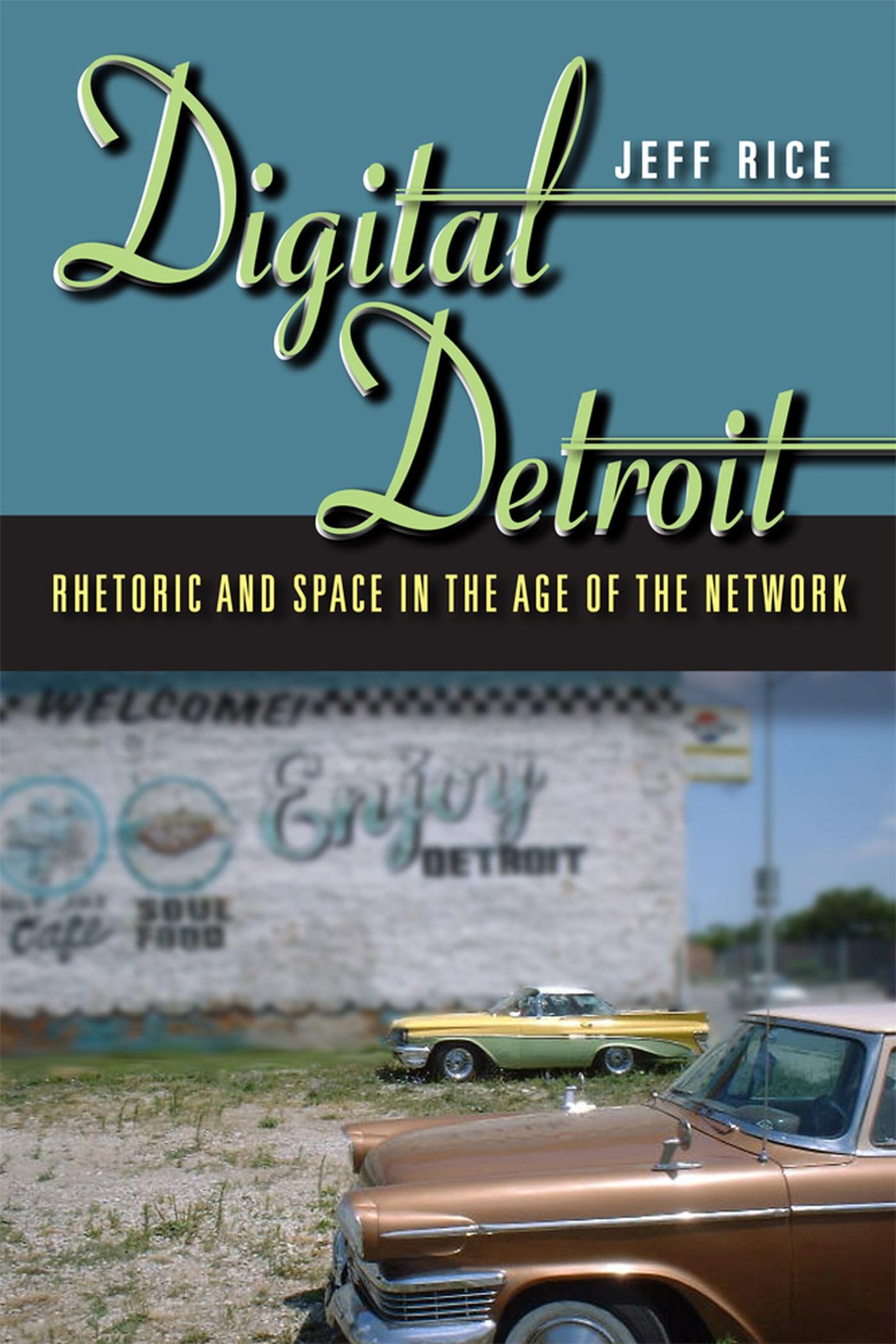
Since the 1967 riots that ripped apart the city, Detroit has traditionally been viewed either as a place in ruins or a metropolis on the verge of rejuvenation. In Digital Detroit: Rhetoric and Space in the Age of the Network, author Jeff Rice goes beyond the notion of Detroit as simply a city of two ideas. Instead he explores the city as a web of multiple meanings which, in the digital age, come together in the citys spaces to form a network that shapes the writing, the activity, and the very thinking of those around it.Rice focuses his study on four of Detroits most iconic placesWoodward Avenue, the Maccabees Building, Michigan Central Station, and 8 Milecovering each in a separate chapter. Each of these chapters explains one of the four features of network rhetoric: folksono(me), the affective interface, response, and decision making. As these rhetorical features connect, they form the overall network called Digital Detroit. Rice demonstrates how new media, such as podcasts, wikis, blogs, interactive maps, and the Internet in general, knit together Detroit into a digital network whose identity is fluid and everchanging. In telling Detroits spatial story, Rice deftly illustrates how this new media, as a rhetorical practice, ultimately shapes understandings of space in ways that computer applications and city planning often cannot. The result is a model for a new way of thinking and interacting with space and the imagination, and for a better understanding of the challenges network rhetorics pose for writing.
⚠️ WARNING (California Proposition 65):
This product may contain chemicals known to the State of California to cause cancer,
birth defects, or other reproductive harm.
For MAP (Minimum Advertised Price) violations and Intellectual Property (IP) or Trademark concerns, please contact:
support@ergodebooks.com
⚠️ California Proposition 65 Warning: Some products sold on this website may expose you to chemicals known to the State of California to cause cancer, birth defects, or other reproductive harm. For more information, visit www.P65Warnings.ca.gov.