
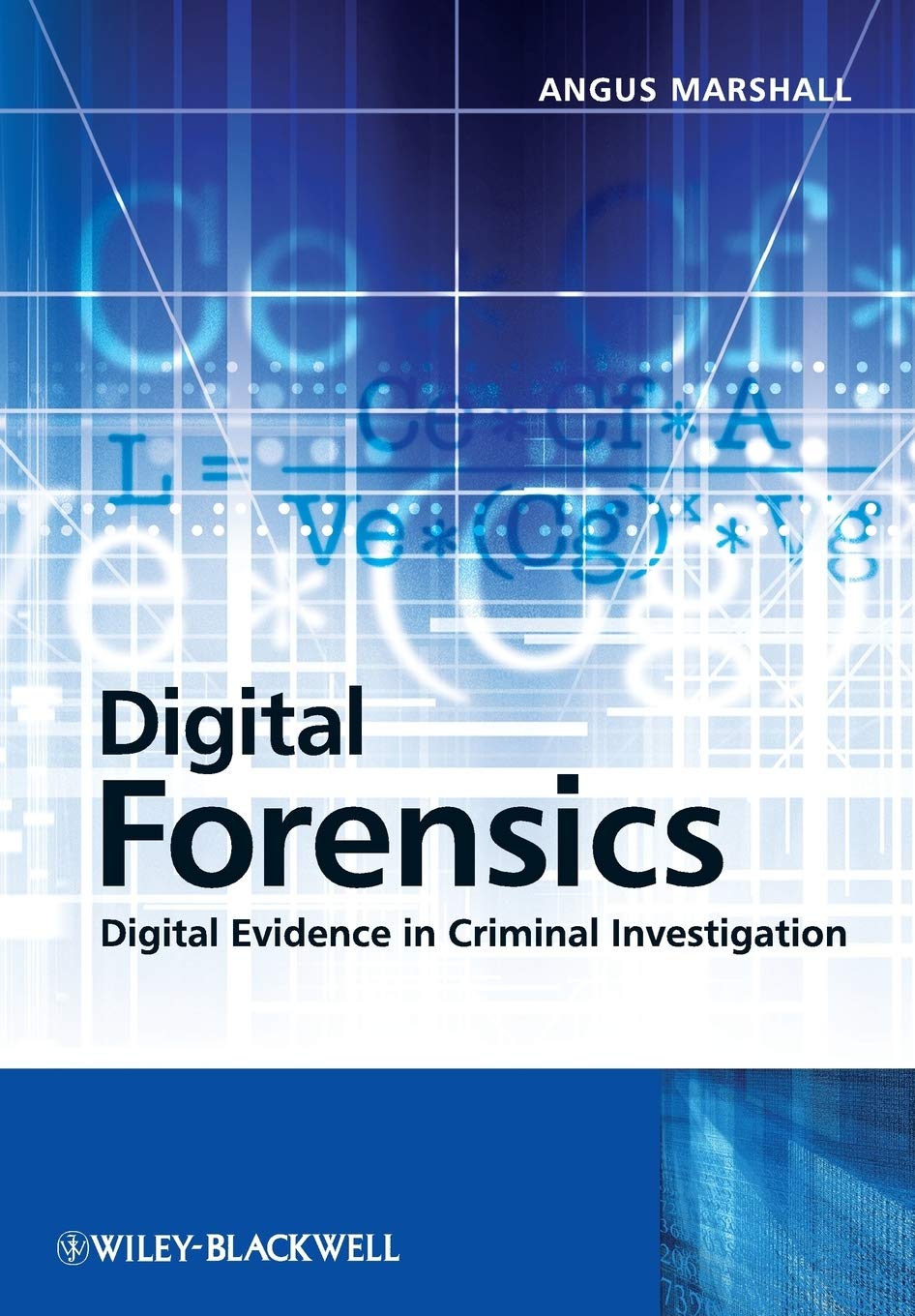
Title
Digital Forensics: Digital Evidence In Criminal Investigations,Used
Sold by Ergodebooks, an authorized reseller.
Returns accepted within 30 days | support@ergodebooks.com
Shipping Information
- Free Standard Shipping — United States only
- Processing Time: 3–5 business days
- Estimated Delivery: 6–10 business days after dispatch
- Double-boxed, fully insured & discreetly packaged
- Tracking number sent via email once dispatched
Returns & Refund
Returns accepted within 30 days of delivery.
Damaged or Defective Item
Free return shipping + replacement or full refund
Wrong Item Received
Free return shipping + replacement or full refund
Change of Mind
Return shipping at customer's expense · 25% restocking fee applies
Payment Option

The Vast Majority Of Modern Criminal Investigations Involve Some Element Of Digital Evidence, From Mobile Phones, Computers, Cctv And Other Devices. Digital Forensics: Digital Evidence In Criminal Investigations Provides The Reader With A Better Understanding Of How Digital Evidence Complements Traditional Scientific Evidence And Examines How It Can Be Used More Effectively And Efficiently In A Range Of Investigations.Taking A New Approach To The Topic, This Book Presents Digital Evidence As An Adjunct To Other Types Of Evidence And Discusses How It Can Be Deployed Effectively In Support Of Investigations. The Book Provides Investigators/Ssms/Other Managers With Sufficient Contextual And Technical Information To Be Able To Make More Effective Use Of Digital Evidence Sources In Support Of A Range Of Investigations. In Particular, It Considers The Roles Played By Digital Devices In Society And Hence In Criminal Activities. From This, It Examines The Role And Nature Of Evidential Data Which May Be Recoverable From A Range Of Devices, Considering Issues Relating To Reliability And Usefulness Of Those Data. Includes Worked Case Examples, Test Questions And Review Quizzes To Enhance Student Understanding Solutions Provided In An Accompanying Website Includes Numerous Case Studies Throughout To Highlight How Digital Evidence Is Handled At The Crime Scene And What Can Happen When Procedures Are Carried Out Incorrectly Considers Digital Evidence In A Broader Context Alongside Other Scientific Evidence Discusses The Role Of Digital Devices In Criminal Activities And Provides Methods For The Evaluation And Prioritizing Of Evidence Sources Includes Discussion Of The Issues Surrounding Modern Digital Evidence Examinations, For Example; Volume Of Material And Its Complexity Clear Overview Of All Types Of Digital Evidencedigital Forensics: Digital Evidence In Criminal Investigations Is An Invaluable Text For Undergraduate Students Taking Either General Forensic Science Courses Where Digital Forensics May Be A Module Or A Dedicated Computer/Digital Forensics Degree Course. The Book Is Also A Useful Overview Of The Subject For Postgraduate Students And Forensic Practitioners.
⚠️ WARNING (California Proposition 65):
This product may contain chemicals known to the State of California to cause cancer, birth defects, or other reproductive harm.
For more information, please visit www.P65Warnings.ca.gov.
- Q: How many pages does the book have? A: The book contains one hundred eighty-four pages. This length provides a comprehensive overview of digital evidence in criminal investigations.
- Q: What are the dimensions of the book? A: The book measures six point six five inches in length, zero point three nine inches in width, and nine point five three inches in height. These dimensions make it portable and easy to handle.
- Q: What type of binding does the book have? A: The book is available in a paperback binding. This type of binding is flexible and lightweight, ideal for students and practitioners alike.
- Q: Who is the author of this book? A: The author is Angus McKenzie Marshall. He provides valuable insights into the field of digital forensics and criminal investigations.
- Q: What is the main focus of this book? A: The main focus is on the integration of digital evidence in criminal investigations. It highlights how digital evidence complements traditional scientific evidence.
- Q: Is this book suitable for beginners? A: Yes, the book is suitable for beginners. It provides foundational knowledge for undergraduate students and those new to the field of digital forensics.
- Q: What type of audience would benefit from this book? A: Undergraduate and postgraduate students, as well as forensic practitioners, will benefit from this book. Its content is tailored for anyone interested in digital forensics.
- Q: Are there case studies included in the book? A: Yes, the book includes numerous case studies. These case studies illustrate how digital evidence is handled and the consequences of improper procedures.
- Q: How does the book address complexities in digital evidence? A: The book discusses the complexities related to the volume and nature of digital evidence. It aims to equip investigators with methods to effectively prioritize evidence.
- Q: Does the book provide any resources for further learning? A: Yes, there is an accompanying website with solutions and additional resources. This enhances the learning experience for readers.
- Q: How do I maintain the book in good condition? A: To keep the book in good condition, store it in a cool, dry place away from direct sunlight. Avoid bending the pages to preserve its integrity.
- Q: Is there a warranty or return policy for the book? A: Typically, books come with a standard return policy. Check with the retailer for specific return conditions if you encounter any issues.
- Q: What if the book arrives damaged? A: If the book arrives damaged, contact the retailer's customer service immediately. They can assist you with returns or exchanges.
- Q: Can this book help in criminal investigations? A: Yes, the book provides insights and methods to effectively use digital evidence in criminal investigations. It enhances understanding of digital forensics.
- Q: What unique approach does the book take on digital evidence? A: The book presents digital evidence as an adjunct to traditional evidence. It explores how to deploy digital sources effectively in investigations.
- Q: Does this book discuss the reliability of digital evidence? A: Yes, the book examines the reliability and usefulness of digital data. It addresses the challenges faced by investigators in modern digital evidence examinations.