If you have any questions, you are always welcome to contact us. We'll get back to you as soon as possible, withing 24 hours on weekdays.
Customer service
All questions about your order, return and delivery must be sent to our customer service team by e-mail at yourstore@yourdomain.com
Sale & Press
If you are interested in selling our products, need more information about our brand or wish to make a collaboration, please contact us at press@yourdomain.com
Help
If you have any questions, you are always welcome to contact us. We'll get back to you as soon as possible, withing 24 hours on weekdays.
Customer service
All questions about your order, return and delivery must be sent to our customer service team by e-mail at yourstore@yourdomain.com
Sale & Press
If you are interested in selling our products, need more information about our brand or wish to make a collaboration, please contact us at press@yourdomain.com
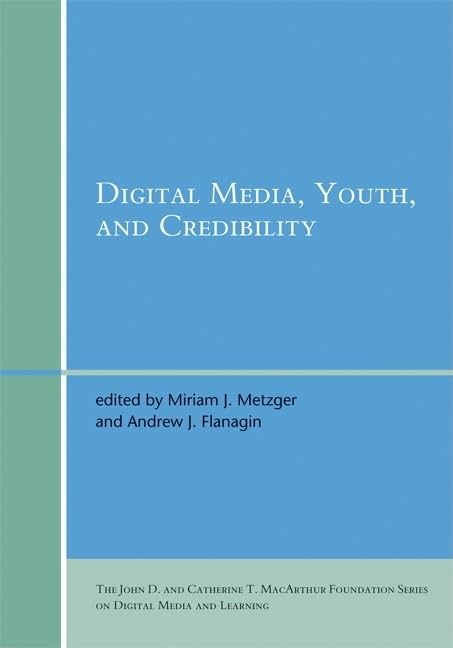
The difficulties in determining the quality of information on the Internetin particular, the implications of wide access and questionable credibility for youth and learning.Today we have access to an almost inconceivably vast amount of information, from sources that are increasingly portable, accessible, and interactive. The Internet and the explosion of digital media content have made more information available from more sources to more people than at any other time in human history. This brings an infinite number of opportunities for learning, social connection, and entertainment. But at the same time, the origin of information, its quality, and its veracity are often difficult to assess. This volume addresses the issue of credibilitythe objective and subjective components that make information believablein the contemporary media environment. The contributors look particularly at youth audiences and experiences, considering the implications of wide access and the questionable credibility of information for youth and learning. They discuss such topics as the credibility of health information online, how to teach credibility assessment, and public policy solutions. Much research has been done on credibility and new media, but little of it focuses on users younger than college students. Digital Media, Youth, and Credibility fills this gap in the literature.ContributorsMatthew S. Eastin, Gunther Eysenbach, Brian Hilligoss, Frances Jacobson Harris, R. David Lankes, Soo Young Rieh, S. Shyam Sundar, Fred W. Weingarten
⚠️ WARNING (California Proposition 65):
This product may contain chemicals known to the State of California to cause cancer,
birth defects, or other reproductive harm.
For MAP (Minimum Advertised Price) violations and Intellectual Property (IP) or Trademark concerns, please contact:
support@ergodebooks.com
⚠️ California Proposition 65 Warning: Some products sold on this website may expose you to chemicals known to the State of California to cause cancer, birth defects, or other reproductive harm. For more information, visit www.P65Warnings.ca.gov.