If you have any questions, you are always welcome to contact us. We'll get back to you as soon as possible, withing 24 hours on weekdays.
Customer service
All questions about your order, return and delivery must be sent to our customer service team by e-mail at yourstore@yourdomain.com
Sale & Press
If you are interested in selling our products, need more information about our brand or wish to make a collaboration, please contact us at press@yourdomain.com
Help
If you have any questions, you are always welcome to contact us. We'll get back to you as soon as possible, withing 24 hours on weekdays.
Customer service
All questions about your order, return and delivery must be sent to our customer service team by e-mail at yourstore@yourdomain.com
Sale & Press
If you are interested in selling our products, need more information about our brand or wish to make a collaboration, please contact us at press@yourdomain.com
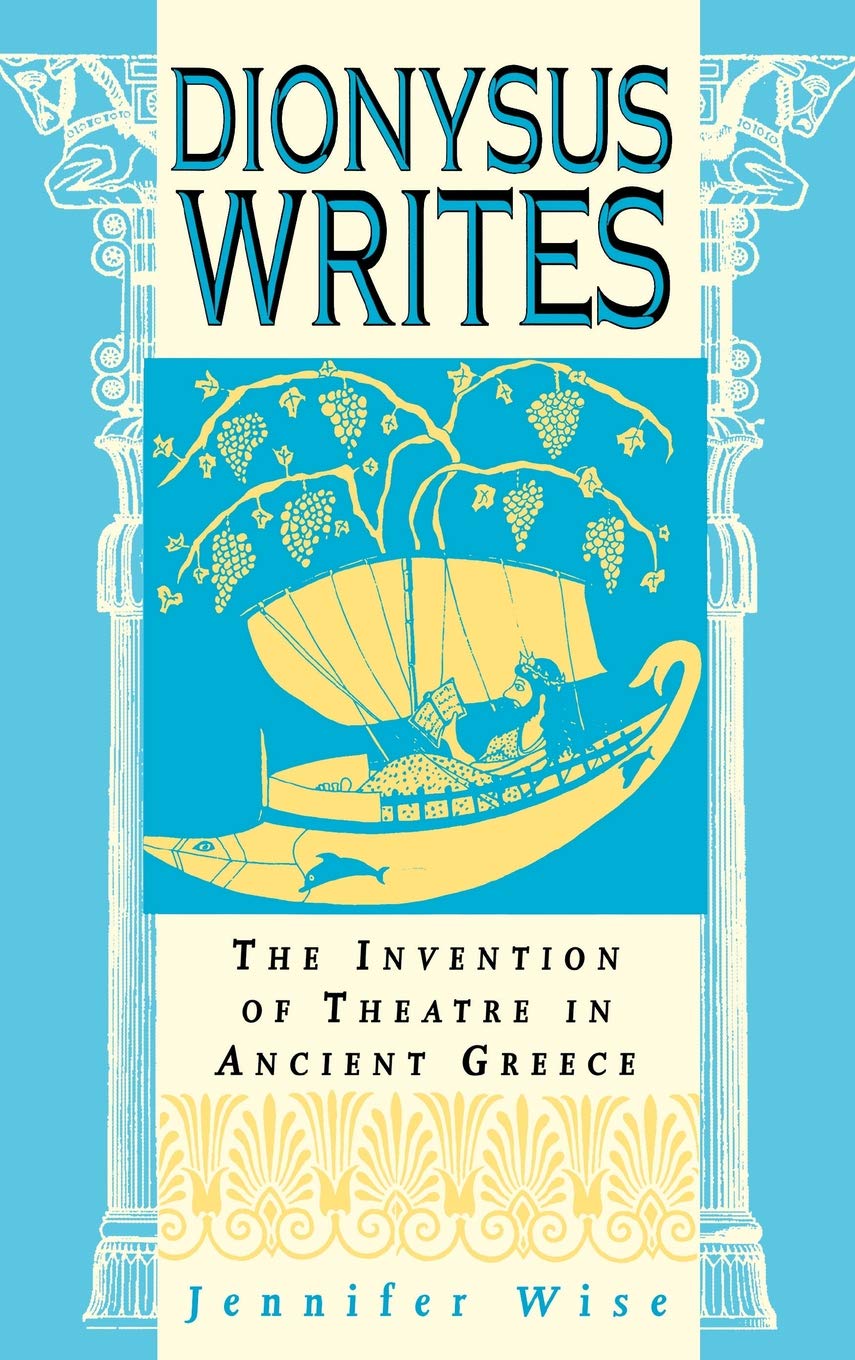
What is the nature of theatre's uneasy alliance with literature? Should theatre be viewed as a preliterate, ritualistic phenomenon that can only be compromised by writing? Or should theatre be grouped with other literary arts as essentially 'textual,' with even physical performance subsumed under the aegis of textuality? Jennifer Wise, a theatre historian and drama theorist who is also an actor, director, and designer, responds with a challenging and convincing reconstruction of the historical context from which Western theatre first emerged.Wise believes that a comparison of the performance style of oral epic with that of drama as it emerged in sixthcentury Greece shows the extent to which theatre was influenced by literate activities relatively new to the ancient world. These activities, foreign to Homer yet familiar to Aeschylus and his contemporaries, included the use of the alphabet, the teaching of texts in schools, the public inscription of laws, the sending and receiving of letters, the exchange of city coinage, and the making of lists. Having changed the way cultural material was processed and transmitted, the technology of writing also led to innovations in the way stories were told, and Wise contends that theatre was the result. However, the art of drama appeared in ancient Greece not only as a beneficiary of literacy but also in defiance of any tendency to see textuality as an end in itself.
⚠️ WARNING (California Proposition 65):
This product may contain chemicals known to the State of California to cause cancer,
birth defects, or other reproductive harm.
For MAP (Minimum Advertised Price) violations and Intellectual Property (IP) or Trademark concerns, please contact:
support@ergodebooks.com
⚠️ California Proposition 65 Warning: Some products sold on this website may expose you to chemicals known to the State of California to cause cancer, birth defects, or other reproductive harm. For more information, visit www.P65Warnings.ca.gov.