
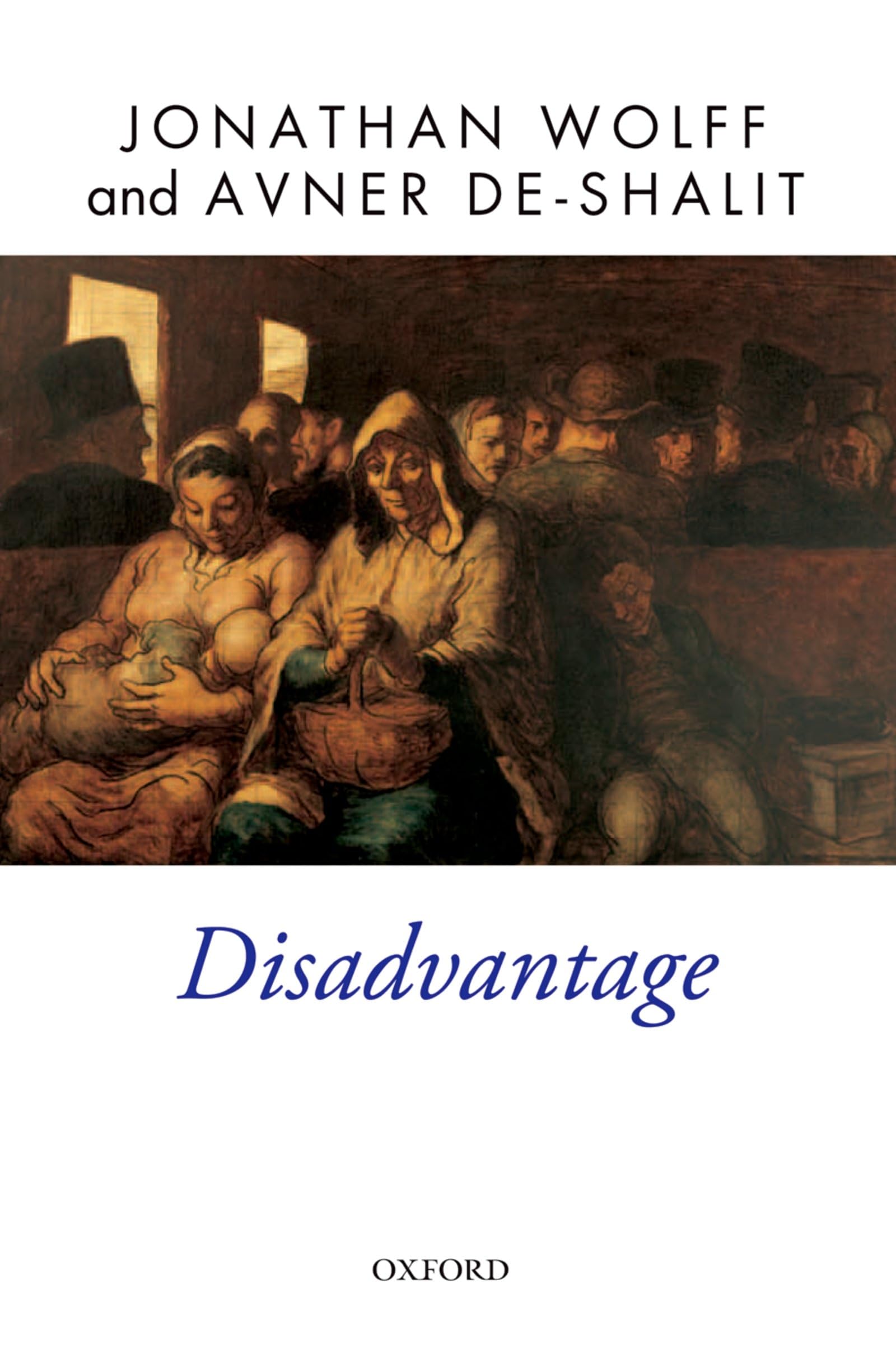
Title
Disadvantage (Oxford Political Theory),Used
Sold by Ergodebooks, an authorized reseller.
Returns accepted within 30 days | support@ergodebooks.com
Shipping Information
- Free Standard Shipping — United States only
- Processing Time: 3–5 business days
- Estimated Delivery: 6–10 business days after dispatch
- Double-boxed, fully insured & discreetly packaged
- Tracking number sent via email once dispatched
Returns & Refund
Returns accepted within 30 days of delivery.
Damaged or Defective Item
Free return shipping + replacement or full refund
Wrong Item Received
Free return shipping + replacement or full refund
Change of Mind
Return shipping at customer's expense · 25% restocking fee applies
Payment Option

What does it mean to be disadvantaged? Is it possible to compare different disadvantages? What should governments do to move their societies in the direction of equality, where equality is to be understood both in distributional and social terms? Linking rigorous analytical philosophical theory with broad empirical studies, including interviews conducted for the purpose of this book, Wolff and deShalit show how taking theory and practice together is essential if the theory is to be rich enough to be applied to the real world, and policy systematic enough to have purpose and justification.The book is in three parts. Part 1 presents a pluralist analysis of disadvantage, modifying the capability theory of Sen and Nussbaum to produce the 'genuine opportunity for secure functioning' view. This emphasises risk and insecurity as a central component of disadvantage. Part 2 shows how to identify the least advantaged in society even on a pluralist view. The authors suggest that disadvantage 'clusters' in the sense that some people are disadvantaged in several different respects. Thus identifying the least advantaged is not as problematic as it appears to be. Conversely, a society which has 'declustered disadvantaged' in the sense that no group lacks secure functioning on a range of functionings has made considerable progress in the direction of equality. Part 3 explores how to decluster disadvantage, by paying special attention to 'corrosive disadvantages' those disadvantages which cause further disadvantages and 'fertile functionings' those which are likely to secure other functionings.In sum this book presents a refreshing new analysis of disadvantage, and puts forward proposals to help governments improve the lives of the least advantaged in their societies, thereby moving in the direction of equality.Oxford Political Theory presents the best new work in contemporary political theory. It is intended to be broad in scope, including original contributions to political philosophy, and also work in applied political theory. The series will contain works of outstanding quality with no restriction as to approach or subject matter. Series Editors: Will Kymlicka, David Miller, and Alan Ryan.
⚠️ WARNING (California Proposition 65):
This product may contain chemicals known to the State of California to cause cancer, birth defects, or other reproductive harm.
For more information, please visit www.P65Warnings.ca.gov.