
Title
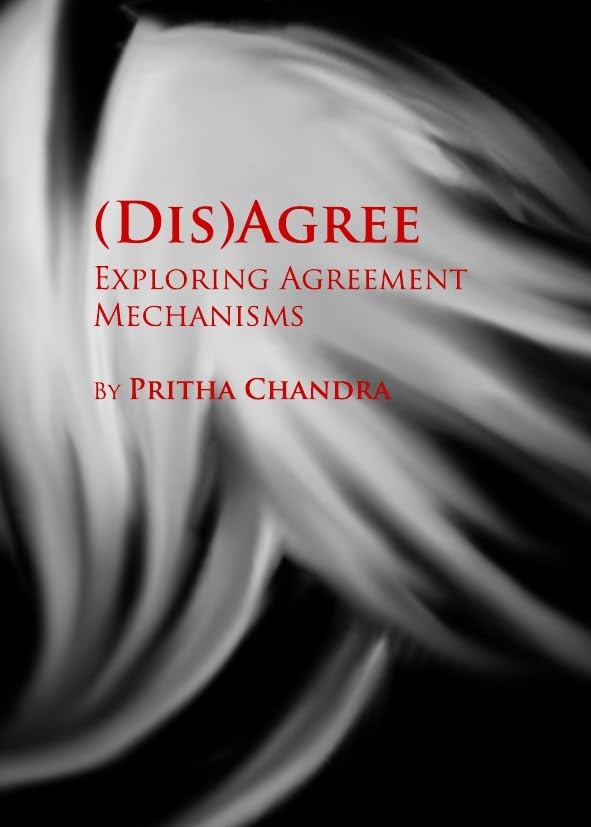
(Dis)Agree: Exploring Agreement Mechanisms,Used
Sold by Ergodebooks, an authorized reseller.
Returns accepted within 30 days | support@ergodebooks.com
Shipping Information
- Free Standard Shipping — United States only
- Processing Time: 3–5 business days
- Estimated Delivery: 6–10 business days after dispatch
- Double-boxed, fully insured & discreetly packaged
- Tracking number sent via email once dispatched
Returns & Refund
Returns accepted within 30 days of delivery.
Damaged or Defective Item
Free return shipping + replacement or full refund
Wrong Item Received
Free return shipping + replacement or full refund
Change of Mind
Return shipping at customer's expense · 25% restocking fee applies
Payment Option

Product DescriptionAgreement plays a pivotal role in the generative theory of natural language. More recently, the minimalist paradigm suggests positing a separate operation: Agree for agreement, alongside Merge the recursive structure building operation, and Move the displacement operation in grammar. Though Agree, it would seem, is wellsupported by ample empirical data, there is reason to doubt the existence of such an operation in grammar. The advent of minimalism in linguistic theory necessitates doubting all attributes of the language faculty that seem unique to it. If language is part of cognition, the rest of cognition should be reflected in its workings, thus ruling out the possibility of the language organ standing out for being too idiosyncratic. Agree is very languagespecific and yet the literature that readily accepts it hardly ever tries to locate it within the cognitive domain. This book makes an effort in this direction and shows that this operation is not conceptually necessary to the language system. It cannot be justified on general economy considerations. Alongside these conceptual arguments, the book also takes up longdistance agreement constructions from languages as diverse as Basque, Chamorro, Chukchee, HindiUrdu, Icelandic, Innuaimun, Itelmen, Japanese, Kashmiri, Passamaquoddy and Tsez to show that what seemingly appear as evidence for Agree at first glance, on closer inspection, turn out to be instances of local, sisterhood relations in grammar. (Dis)Agree: Exploring Agreement Mechanisms will interest linguists and cognitive scientists, especially students and scholars of syntactic theory and the mindlanguage interfaces at graduate level and above.About the AuthorPritha Chandra is Assistant Professor of Linguistics at the Indian Institute of Technology Delhi, New Delhi.
⚠️ WARNING (California Proposition 65):
This product may contain chemicals known to the State of California to cause cancer, birth defects, or other reproductive harm.
For more information, please visit www.P65Warnings.ca.gov.