
Title
Disappearing Acts: Spectacles Of Gender And Nationalism In Argentina'S 'Dirty War',Used
Sold by Ergodebooks, an authorized reseller.
Returns accepted within 30 days | support@ergodebooks.com
Shipping Information
- Free Standard Shipping — United States only
- Processing Time: 3–5 business days
- Estimated Delivery: 6–10 business days after dispatch
- Double-boxed, fully insured & discreetly packaged
- Tracking number sent via email once dispatched
Returns & Refund
Returns accepted within 30 days of delivery.
Damaged or Defective Item
Free return shipping + replacement or full refund
Wrong Item Received
Free return shipping + replacement or full refund
Change of Mind
Return shipping at customer's expense · 25% restocking fee applies
Payment Option

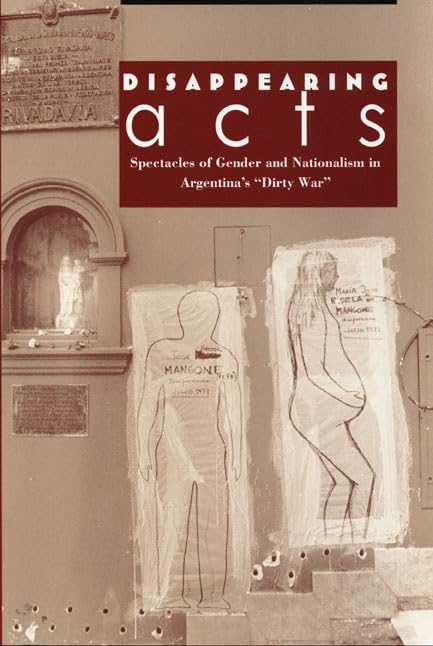
In Disappearing Acts, Diana Taylor Looks At How National Identity Is Shaped, Gendered, And Contested Through Spectacle And Spectatorship. The Specific Identity In Question Is That Of Argentina, And Taylors Focus Is Directed Toward The Years 1976 To 1983 In Which The Argentine Armed Forces Were Pitted Against The Argentine People In That Nations 'Dirty War.' Combining Feminism, Cultural Studies, And Performance Theory, Taylor Analyzes The Political Spectacles That Comprised The Warconcentration Camps, Torture, 'Disappearances'As Well As The Rise Of Theatrical Productions, Demonstrations, And Other Performative Practices That Attempted To Resist And Subvert The Argentine Military.Taylor Uses Performance Theory To Explore How Public Spectacle Both Builds And Dismantles A Sense Of National And Gender Identity. Here, Nation Is Understood As A Product Of Communal 'Imaginings' That Are Rehearsed, Written, And Stagedand Spectacle Is The Desiring Machine At Work In Those Imaginings. Taylor Argues That The Founding Scenario Of Argentineness Stages The Struggle For National Identity As A Battle Between Menfought On, Over, And Through The Feminine Body Of The Motherland. She Shows How The Militarys Representations Of Itself As The Model Of National Authenticity Established The Parameters Of The Conflict In The 70S And 80S, Feminized The Enemy, And Positioned The Publiclimiting Its Ability To Respond. Those Who Challenged The Dictatorship, From The Mothers Of The Plaza De Mayo To Progressive Theater Practitioners, Found Themselves In What Taylor Describes As 'Bad Scripts.' Describing The Images, Myths, Performances, And Explanatory Narratives That Have Informed Argentinas National Drama, Disappearing Acts Offers A Telling Analysis Of The Aesthetics Of Violence And The Disappearance Of Civil Society During Argentinas Spectacle Of Terror.
⚠️ WARNING (California Proposition 65):
This product may contain chemicals known to the State of California to cause cancer, birth defects, or other reproductive harm.
For more information, please visit www.P65Warnings.ca.gov.