
Title

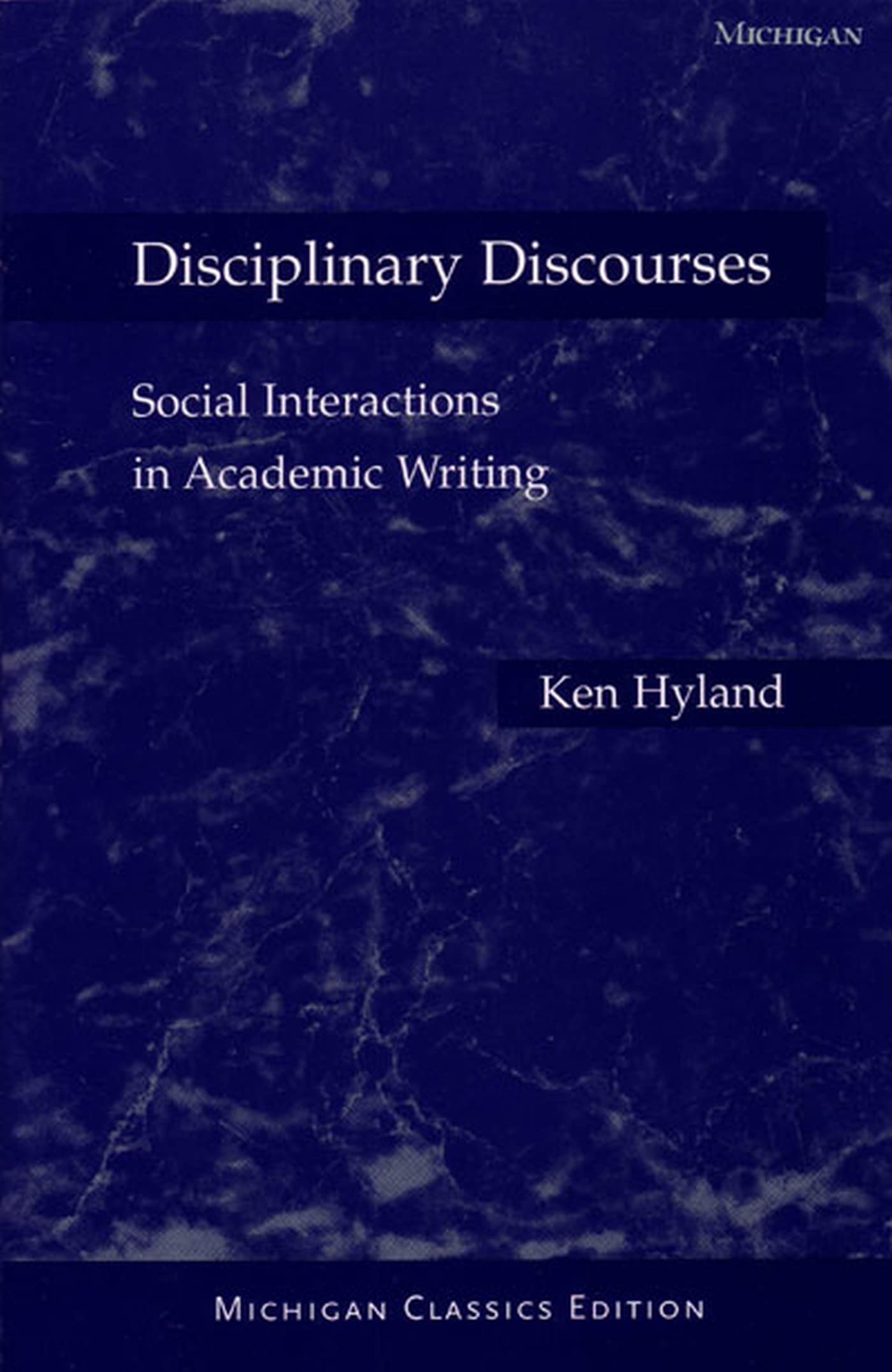
Disciplinary Discourses, Michigan Classics Ed.: Social Interactions In Academic Writing
Sold by Ergodebooks, an authorized reseller.
Returns accepted within 30 days | support@ergodebooks.com
Shipping Information
- Free Standard Shipping — United States only
- Processing Time: 3–5 business days
- Estimated Delivery: 6–10 business days after dispatch
- Double-boxed, fully insured & discreetly packaged
- Tracking number sent via email once dispatched
Returns & Refund
Returns accepted within 30 days of delivery.
Damaged or Defective Item
Free return shipping + replacement or full refund
Wrong Item Received
Free return shipping + replacement or full refund
Change of Mind
Return shipping at customer's expense · 25% restocking fee applies
Payment Option

Why Do Engineers Report While Philosophers Argue And Biologists Describe? In The Michigan Classics Edition Of Disciplinary Discourses: Social Interactions In Academicwriting, Ken Hyland Examines The Relationships Between The Cultures Of Academic Communities And Their Unique Discourses. Drawing On Discourse Analysis, Corpus Linguistics, And The Voices Of Professional Insiders, Ken Hyland Explores How Academics Use Language To Organize Their Professional Lives, Carry Out Intellectual Tasks, And Reach Agreement On What Will Count As Knowledge. In Addition, Disciplinary Discourses Presents A Useful Framework For Understanding The Interactions Between Writers And Their Readers In Published Academic Writing. From This Framework, Hyland Provides Practical Teaching Suggestions And Points Out Opportunities For Further Research Within The Subject Area.As Issues Of Linguistic And Rhetorical Expression Of Disciplinary Conventions Are Becoming More Central To Teachers, Students, And Researchers, The Careful Analysis And Straightforward Style Of Disciplinary Discourses Make It A Remarkable Asset.The Michigan Classics Edition Features A New Preface By The Author And A New Foreword By John M. Swales.
⚠️ WARNING (California Proposition 65):
This product may contain chemicals known to the State of California to cause cancer, birth defects, or other reproductive harm.
For more information, please visit www.P65Warnings.ca.gov.
- Q: What is the page count of this book? A: This book has two hundred thirty-two pages. It provides an in-depth exploration of academic writing styles across different disciplines.
- Q: What is the binding type of this book? A: This book is published in paperback format. This makes it lightweight and portable for easy reading.
- Q: What are the dimensions of this book? A: The book measures six point fourteen inches in length, zero point six inches in width, and nine point twenty-five inches in height. These dimensions make it convenient for shelving and carrying.
- Q: Who is the author of this book? A: The author is Ken Hyland. He is known for his contributions to discourse analysis and academic writing.
- Q: What academic subjects does this book discuss? A: This book focuses on social interactions in academic writing, particularly in engineering, philosophy, and biology. It analyzes how different academic cultures use language.
- Q: How do I apply the concepts from this book? A: You can apply the concepts by integrating its frameworks into your academic writing practice. The book also provides practical teaching suggestions for educators.
- Q: Is this book suitable for beginners in academic writing? A: Yes, this book is suitable for beginners. It offers straightforward analysis and teaching methods that are accessible to new learners.
- Q: Can this book help with understanding disciplinary conventions? A: Yes, it provides insights into the linguistic and rhetorical expressions of disciplinary conventions. This is valuable for students and teachers alike.
- Q: Does this book offer research opportunities? A: Yes, it points out opportunities for further research within the subject area of academic writing. This can help you explore new avenues in your studies.
- Q: How should I care for this book to maintain its condition? A: Store the book in a dry place away from direct sunlight. This will help preserve its quality and prevent fading.
- Q: Is it safe to lend this book to others? A: Yes, it is safe to lend this book. However, it's advisable to keep track of who you lend it to, as it is a valuable educational resource.
- Q: What if the book arrives damaged? A: If the book arrives damaged, you should contact the seller to arrange for a return or exchange. Most sellers will accommodate such requests.
- Q: Can I use this book for teaching purposes? A: Yes, this book is designed for educational use. It contains teaching suggestions that can be beneficial for instructors.
- Q: Is there a new edition of this book? A: Yes, this is the Michigan Classics Edition, featuring a new preface by the author and a new foreword by John M. Swales. This edition adds context to the original work.
- Q: Does this book include case studies or examples? A: Yes, it includes examples from various academic disciplines to illustrate its points. This enhances understanding of the application of theories discussed.