
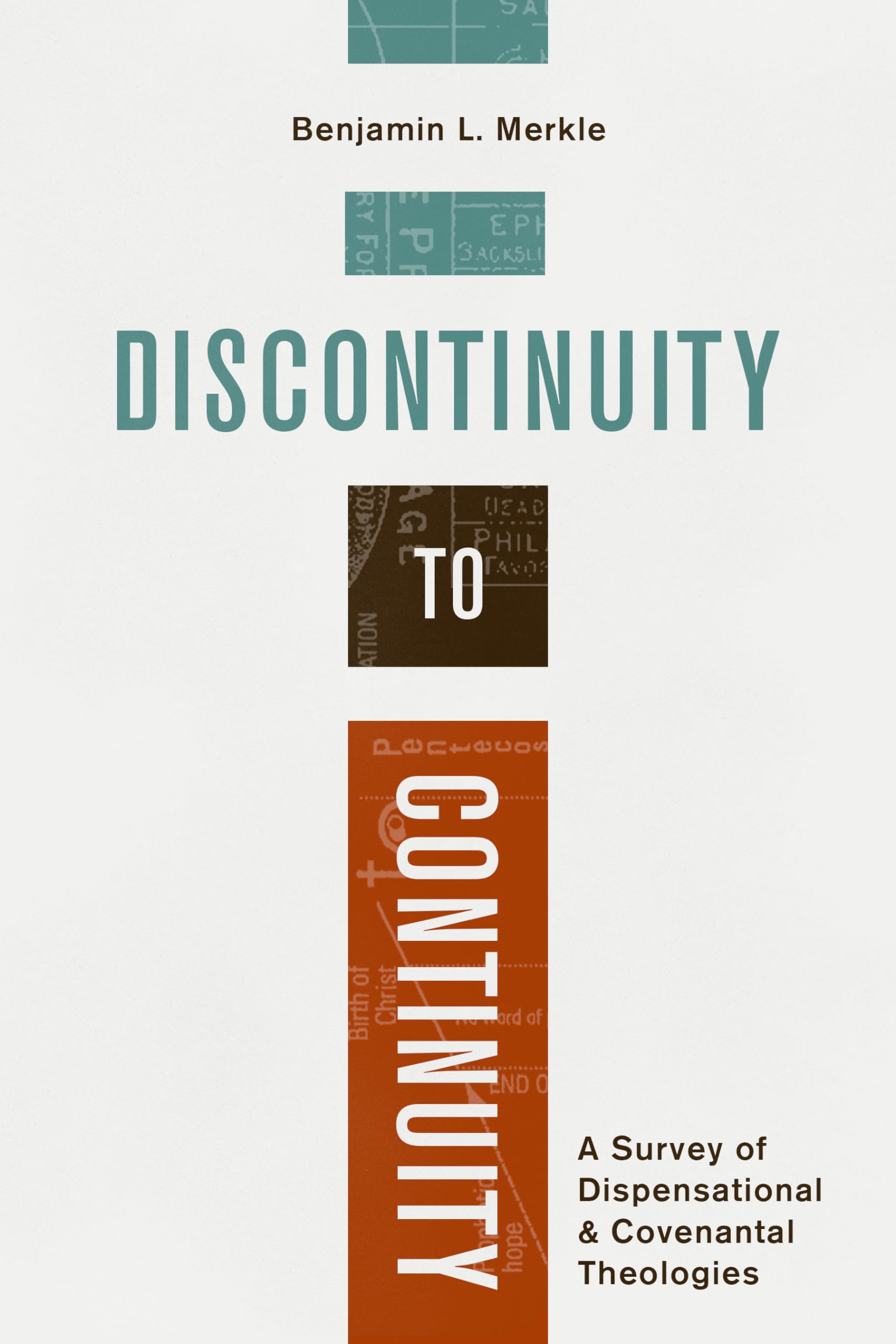
Title
Discontinuity to Continuity: A Survey of Dispensational and Covenantal Theologies,New
Sold by Ergodebooks, an authorized reseller.
Returns accepted within 30 days | support@ergodebooks.com
Shipping Information
- Free Standard Shipping — United States only
- Processing Time: 3–5 business days
- Estimated Delivery: 6–10 business days after dispatch
- Double-boxed, fully insured & discreetly packaged
- Tracking number sent via email once dispatched
Returns & Refund
Returns accepted within 30 days of delivery.
Damaged or Defective Item
Free return shipping + replacement or full refund
Wrong Item Received
Free return shipping + replacement or full refund
Change of Mind
Return shipping at customer's expense · 25% restocking fee applies
Payment Option

What is the best framework for reading the Bible?The question of how to relate the Old and New Testaments is as old as the Bible itself. While most Protestants are unified on the foundations, there are major disagreements on particular issues. Who should be baptized? Is the Christian obligated to obey the Law of Moses? Does the church supplant Israel? Who are the proper recipients of God's promises to Israel?In Discontinuity to Continuity, Benjamin Merkle brings light to the debates between dispensational and covenantal theological systems. Merkle identifies how Christians have attempted to relate the Testaments, placing viewpoints along a spectrum of discontinuity to continuity. Each system's concerns are sympathetically summarized and critically evaluated.Through his careful exposition of these frameworks, Merkle helps the reader understand the key issues in the debate. Providing more light than heat, Merkle's book will help all readers better appreciate other perspectives and articulate their own.
⚠️ WARNING (California Proposition 65):
This product may contain chemicals known to the State of California to cause cancer, birth defects, or other reproductive harm.
For more information, please visit www.P65Warnings.ca.gov.
- Q: What topics are covered in 'Discontinuity to Continuity'? A: The book addresses key theological debates such as baptism, the obligation to obey the Law of Moses, the relationship between the church and Israel, and the recipients of God's promises to Israel, providing a comprehensive survey of dispensational and covenantal theologies.
- Q: Who is the author of 'Discontinuity to Continuity'? A: The author is Benjamin Merkle, who examines the spectrum of theological perspectives on how to relate the Old and New Testaments.
- Q: What is the format of the book? A: 'Discontinuity to Continuity' is available in paperback format, making it accessible for readers who prefer physical books.
- Q: How many pages does the book have? A: The book contains a total of 288 pages.
- Q: When was 'Discontinuity to Continuity' published? A: The book was published on June 3, 2020.
- Q: Is the book suitable for beginners in theology? A: Yes, the book is written to help readers understand complex theological issues, making it suitable for both beginners and those with more advanced knowledge.
- Q: What is the main argument presented by the author? A: The main argument is that there are various viewpoints along a spectrum of discontinuity to continuity in how Christians interpret the relationship between the Old and New Testaments.
- Q: Does the book provide critical evaluations of theological systems? A: Yes, Benjamin Merkle sympathetically summarizes and critically evaluates the concerns of each theological system discussed in the book.
- Q: What can readers expect to gain from this book? A: Readers will gain a deeper understanding of the key issues in the debates between dispensational and covenantal theologies and will be better equipped to articulate their own perspectives.
- Q: Is 'Discontinuity to Continuity' a scholarly work? A: While it is well-researched and presents theological arguments, the book is also accessible to general readers, making it both scholarly and approachable.