If you have any questions, you are always welcome to contact us. We'll get back to you as soon as possible, withing 24 hours on weekdays.
Customer service
All questions about your order, return and delivery must be sent to our customer service team by e-mail at yourstore@yourdomain.com
Sale & Press
If you are interested in selling our products, need more information about our brand or wish to make a collaboration, please contact us at press@yourdomain.com
Help
If you have any questions, you are always welcome to contact us. We'll get back to you as soon as possible, withing 24 hours on weekdays.
Customer service
All questions about your order, return and delivery must be sent to our customer service team by e-mail at yourstore@yourdomain.com
Sale & Press
If you are interested in selling our products, need more information about our brand or wish to make a collaboration, please contact us at press@yourdomain.com
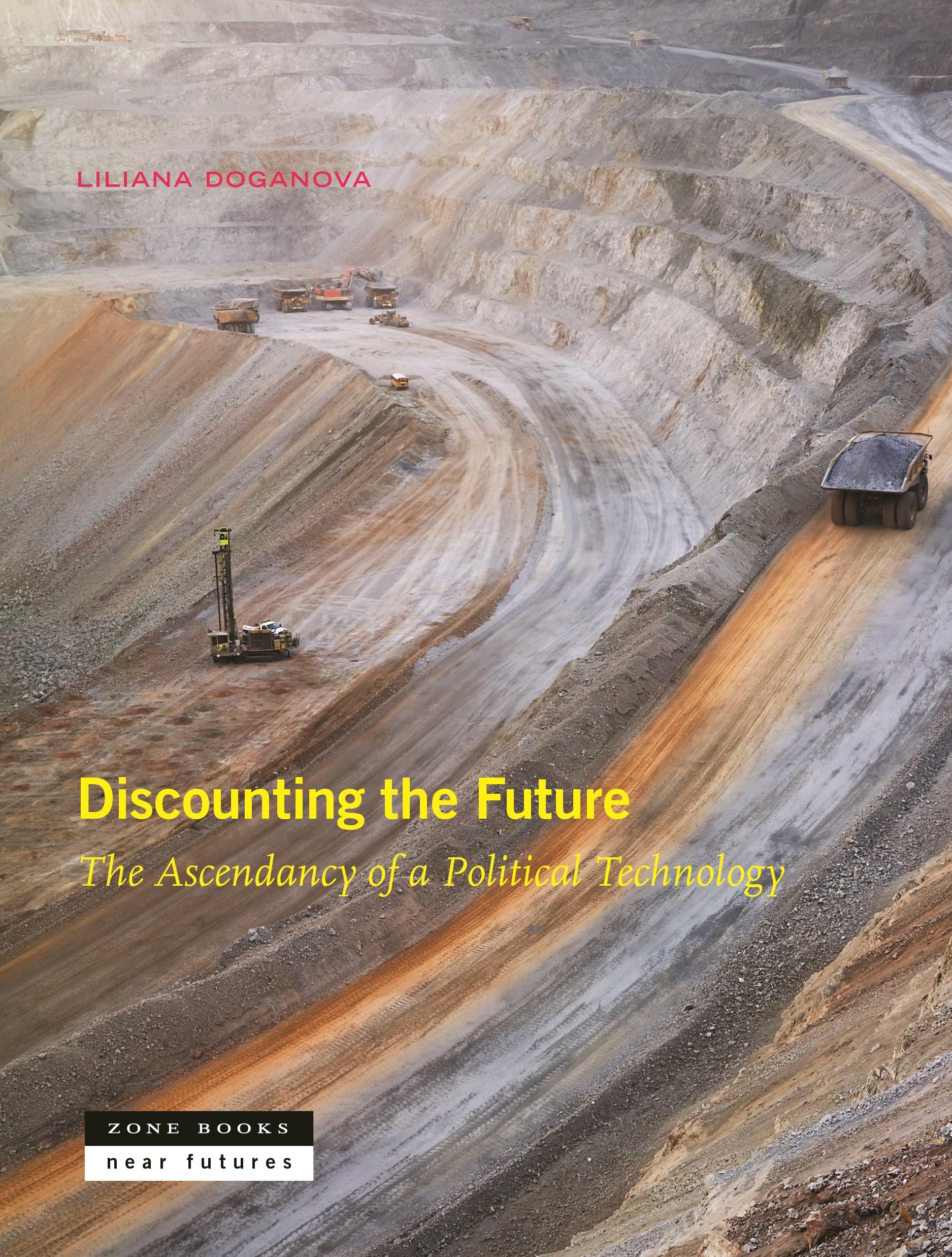
A pioneering exploration of the defining traits and contradictions of our relationship to the future through the lens of discountingForest fires, droughts, and rising sea levels beg a nagging question: have we lost our capacity to act on the future? Liliana Doganovas book sheds new light on this anxious query. It argues that our relationship to the future has been trapped in the gears of a device called discounting. While its incidence remains little known, discounting has long been entrenched in market and policy practices, shaping the ways firms and governments look to the future and make decisions accordingly. Thus, a sociological account of discounting formulas has become urgent.Discounting means valuing things through the flows of costs and benefits that they are likely to generate in the future, with these future flows being literally discounted as they are translated in the present. How have we come to think of the future, and of valuation, in such terms? Building on original empirical research in the historical sociology of discounting, Doganova takes us to some of the sites and moments in which discounting took shape and gained momentum: valuation of European forests in the eighteenth and nineteenth centuries; economic theories devised in the early 1900s; debates over business strategies in the postwar era; investorstate disputes over the nationalization of natural resources; and drug development in the biopharmaceutical industry today. Weaving these threads together, the book pleads for an understanding of discounting as a political technology, and of the future as a contested domain.
⚠️ WARNING (California Proposition 65):
This product may contain chemicals known to the State of California to cause cancer,
birth defects, or other reproductive harm.
For MAP (Minimum Advertised Price) violations and Intellectual Property (IP) or Trademark concerns, please contact:
support@ergodebooks.com
⚠️ California Proposition 65 Warning: Some products sold on this website may expose you to chemicals known to the State of California to cause cancer, birth defects, or other reproductive harm. For more information, visit www.P65Warnings.ca.gov.