
Title
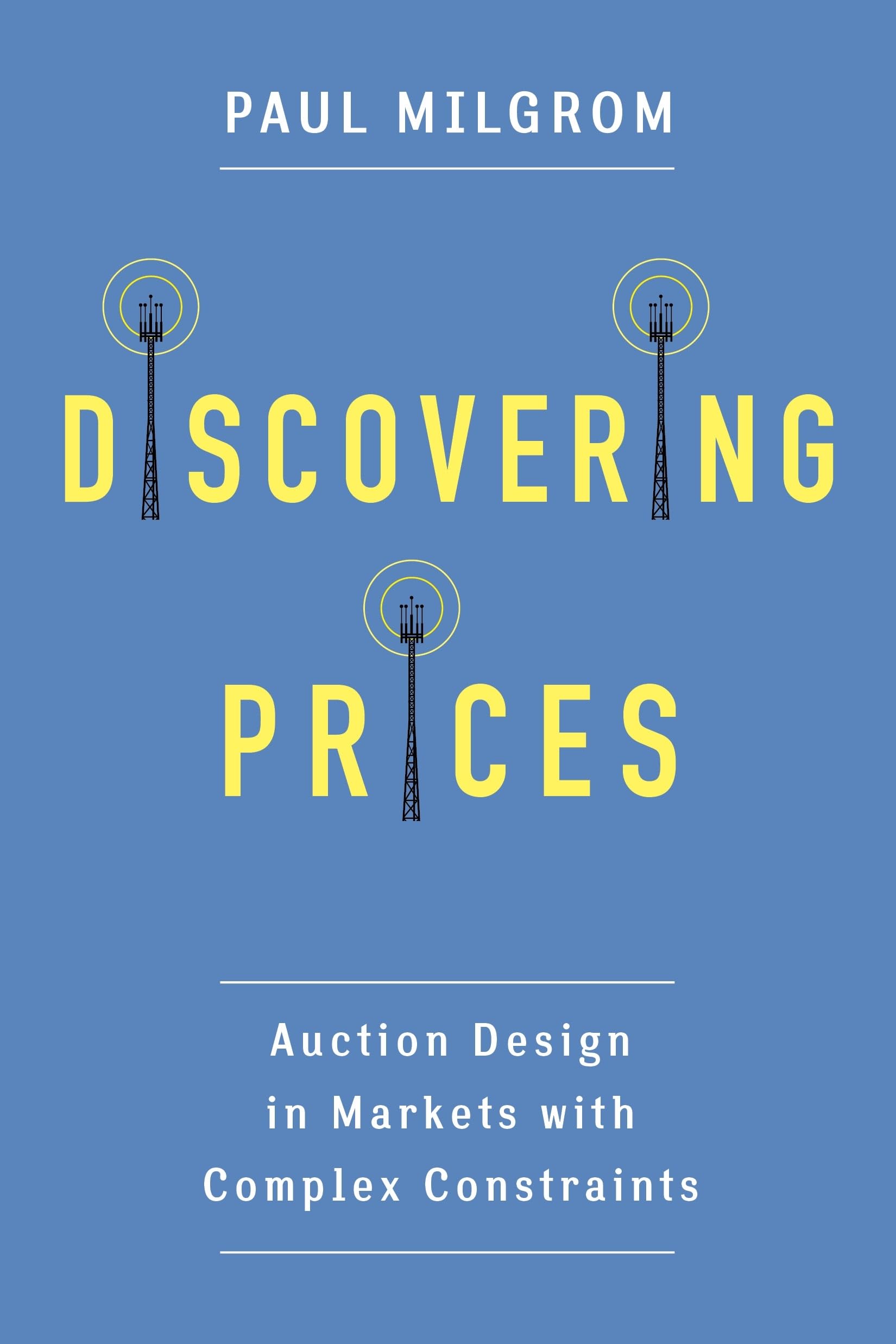
Discovering Prices: Auction Design in Markets with Complex Constraints (Kenneth J. Arrow Lecture Series),New
Sold by Ergodebooks, an authorized reseller.
Returns accepted within 30 days | support@ergodebooks.com
Shipping Information
- Free Standard Shipping — United States only
- Processing Time: 3–5 business days
- Estimated Delivery: 6–10 business days after dispatch
- Double-boxed, fully insured & discreetly packaged
- Tracking number sent via email once dispatched
Returns & Refund
Returns accepted within 30 days of delivery.
Damaged or Defective Item
Free return shipping + replacement or full refund
Wrong Item Received
Free return shipping + replacement or full refund
Change of Mind
Return shipping at customer's expense · 25% restocking fee applies
Payment Option

Traditional economic theory studies idealized markets in which prices alone can guide efficient allocation, with no need for central organization. Such models build from Adam Smiths famous concept of an invisible hand, which guides markets and renders regulation or interference largely unnecessary. Yet for many markets, prices alone are not enough to guide feasible and efficient outcomes, and regulation alone is not enough, either. Consider air traffic control at major airports. While prices could encourage airlines to take off and land at less congested times, prices alone do just part of the job; an air traffic control system is still indispensable to avoid disastrous consequences. With just an air traffic controller, however, limited resources can be wasted or poorly used. Whats needed in this and many other realworld cases is an auction system that can effectively reveal prices while still maintaining enough direct control to ensure that complex constraints are satisfied.In Discovering Prices, Paul Milgromthe worlds most frequently cited academic expert on auction designdescribes how auctions can be used to discover prices and guide efficient resource allocations, even when resources are diverse, constraints are critical, and marketclearing prices may not even exist. Economists have long understood that externalities and market power both necessitate market organization. In this book, Milgrom introduces complex constraints as another reason for market design. Both lively and technical, Milgrom roots his new theories in realworld examples (including the ambitious U.S. incentive auction of radio frequencies, whose design he led) and provides economists with crucial new tools for dealing with the worlds growing complex resourceallocation problems.
⚠️ WARNING (California Proposition 65):
This product may contain chemicals known to the State of California to cause cancer, birth defects, or other reproductive harm.
For more information, please visit www.P65Warnings.ca.gov.