If you have any questions, you are always welcome to contact us. We'll get back to you as soon as possible, withing 24 hours on weekdays.
Customer service
All questions about your order, return and delivery must be sent to our customer service team by e-mail at yourstore@yourdomain.com
Sale & Press
If you are interested in selling our products, need more information about our brand or wish to make a collaboration, please contact us at press@yourdomain.com
Help
If you have any questions, you are always welcome to contact us. We'll get back to you as soon as possible, withing 24 hours on weekdays.
Customer service
All questions about your order, return and delivery must be sent to our customer service team by e-mail at yourstore@yourdomain.com
Sale & Press
If you are interested in selling our products, need more information about our brand or wish to make a collaboration, please contact us at press@yourdomain.com
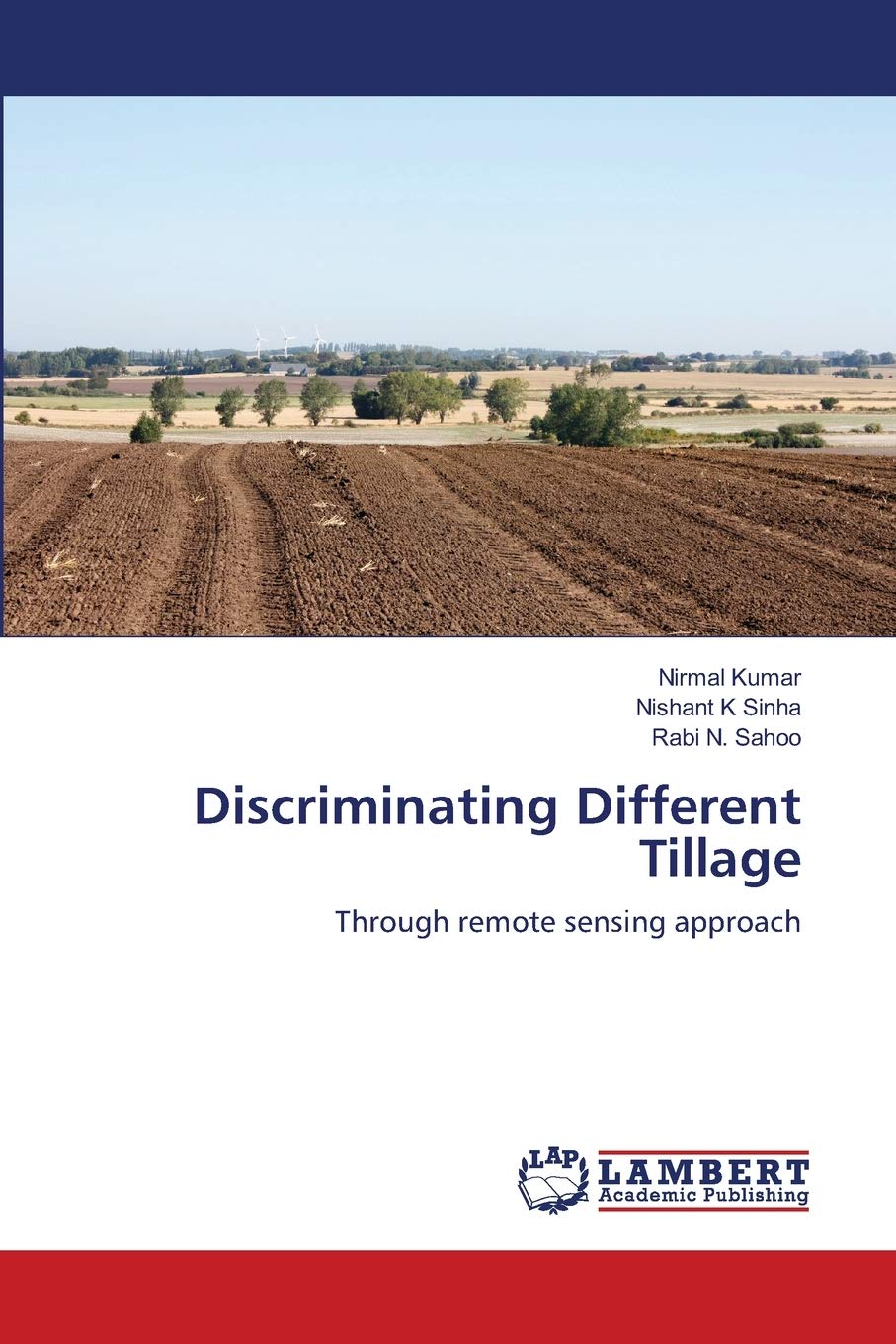
Conservation tillage has evolved in past three decades toward less soil inversion and maintenance of crop residue on the soil surface. Knowledge of area under conservation tillage would be important for various ecological models. Remote sensing techniques show promise in providing such spatial data over a large area in a time and costeffective manner. A study was conducted with the objectives to characterize the spectral behaviour of wheat crop under different tillage practices and, to discriminate different tillage adopted areas through multispectral remote sensing satellite data. Spectral behaviour of wheat crop were evaluated to characterize temporal crop growth behaviour as affected by tillage options and to find suitable band, time and index/indices for capturing the differential crop response to tillage options. Rice wheat area was estimated using temporal NDVI profile of preprocessed satellite data of IRS P6, LISS III and decision tree classification. Satellite image of November, when mostly land remains fallow, was used for mapping for RCT and CT areas using logistic regression and spectral angle mapper techniques.
⚠️ WARNING (California Proposition 65):
This product may contain chemicals known to the State of California to cause cancer,
birth defects, or other reproductive harm.
For MAP (Minimum Advertised Price) violations and Intellectual Property (IP) or Trademark concerns, please contact:
support@ergodebooks.com
⚠️ California Proposition 65 Warning: Some products sold on this website may expose you to chemicals known to the State of California to cause cancer, birth defects, or other reproductive harm. For more information, visit www.P65Warnings.ca.gov.