
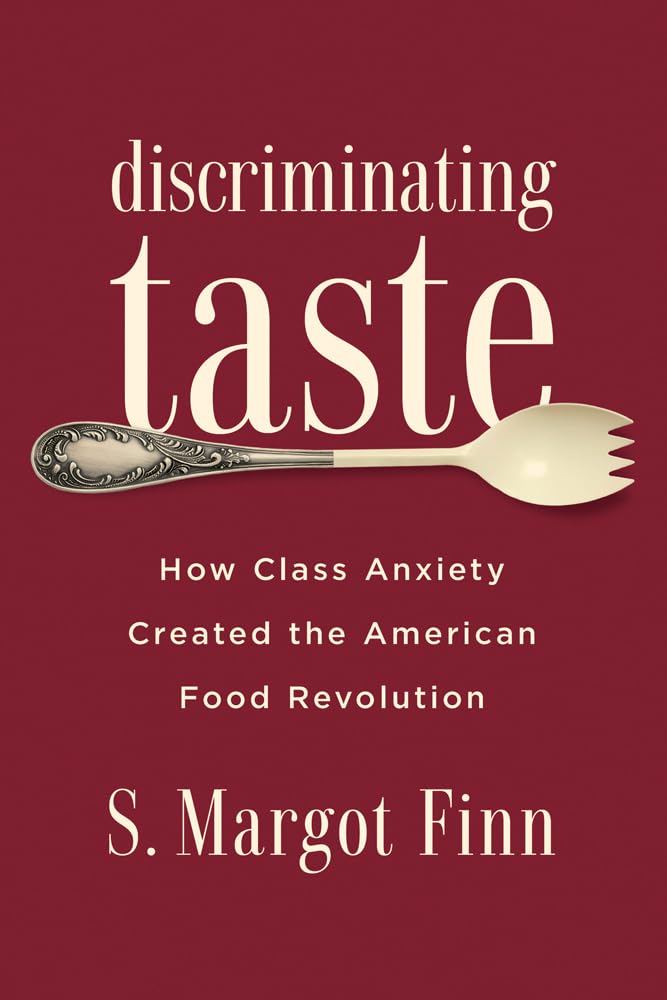
Discriminating Taste: How Class Anxiety Created The American Food Revolution
$36.45
Title
Discriminating Taste: How Class Anxiety Created The American Food Revolution
Free Standard Shipping Across USA
Quantity
Sold by Ergodebooks, an authorized reseller.
Returns accepted within 30 days | support@ergodebooks.com
Shipping Information
- Free Standard Shipping — United States only
- Processing Time: 3–5 business days
- Estimated Delivery: 6–10 business days after dispatch
- Double-boxed, fully insured & discreetly packaged
- Tracking number sent via email once dispatched
Returns & Refund
Returns accepted within 30 days of delivery.
Damaged or Defective Item
Free return shipping + replacement or full refund
Wrong Item Received
Free return shipping + replacement or full refund
Change of Mind
Return shipping at customer's expense · 25% restocking fee applies
All returns require a Return Authorization (RA) number before sending.
View Full Return & Refund Policy
Payment Option

⚠️ WARNING (California Proposition 65):
This product may contain chemicals known to the State of California to cause cancer, birth defects, or other reproductive harm.
For more information, please visit www.P65Warnings.ca.gov.
- Q: How many pages does the book have? A: This book has two hundred eighty-eight pages. It provides a comprehensive exploration of food culture and class dynamics.
- Q: What is the binding type of the book? A: The binding type is paperback. This makes it lightweight and easy to handle for reading.
- Q: Who is the author of the book? A: The author is S. Margot Finn. She provides insightful commentary on the relationship between food and class.
- Q: What is the book about? A: The book discusses how class anxiety has influenced American food preferences. It explores the rise of gourmet and organic foods alongside income inequality.
- Q: Is this book suitable for academic study? A: Yes, it is suitable for academic study. It won the 2018 First Book Prize from the Association for the Study of Food and Society.
- Q: What themes are covered in the book? A: The book covers themes such as class divisions, food culture, and the impact of economic inequality on dietary choices.
- Q: How does the author approach food culture? A: The author examines food culture through historical analysis and contemporary examples, linking it to class status.
- Q: Is this book appropriate for food enthusiasts? A: Yes, it is perfect for food enthusiasts. It delves into the trends and ideologies shaping modern dining experiences.
- Q: What perspectives does the book offer? A: The book offers a critical perspective on how food choices reflect social status and economic conditions.
- Q: Can this book be used for research on income inequality? A: Yes, it can be used for research on income inequality. It draws parallels between food trends and economic disparities.
- Q: What kind of reading level is this book? A: The book is suitable for adult readers. It contains complex themes that may not be appropriate for younger audiences.
- Q: How should I store this book? A: Store the book in a cool, dry place. Keep it upright to prevent damage to the spine.
- Q: Can I lend this book to a friend? A: Yes, you can lend this book to a friend. Just ensure it is returned in good condition.
- Q: What if the book arrives damaged? A: If the book arrives damaged, contact the seller for a return or exchange. Keep all packaging for reference.
- Q: Is there a warranty for this book? A: No, there is typically no warranty for books. However, returns may be accepted based on the seller's policy.
- Q: What should I do if I lose this book? A: If you lose the book, consider purchasing another copy. Check with local libraries for availability.