If you have any questions, you are always welcome to contact us. We'll get back to you as soon as possible, withing 24 hours on weekdays.
Customer service
All questions about your order, return and delivery must be sent to our customer service team by e-mail at yourstore@yourdomain.com
Sale & Press
If you are interested in selling our products, need more information about our brand or wish to make a collaboration, please contact us at press@yourdomain.com
Help
If you have any questions, you are always welcome to contact us. We'll get back to you as soon as possible, withing 24 hours on weekdays.
Customer service
All questions about your order, return and delivery must be sent to our customer service team by e-mail at yourstore@yourdomain.com
Sale & Press
If you are interested in selling our products, need more information about our brand or wish to make a collaboration, please contact us at press@yourdomain.com
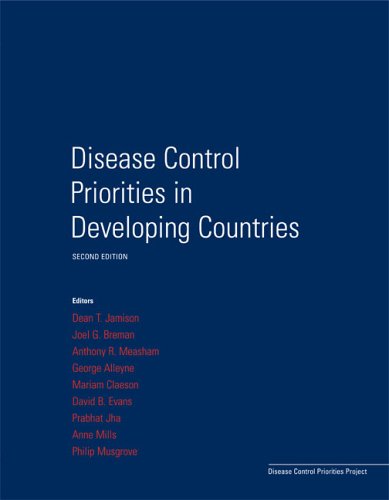
In the late 1980s the World Bank initiated a process designed both to generate analytic background on priorities for control of specific diseases and to use this information as input for comparative costeffectiveness estimates for interventions addressing the full range of conditions important in developing countries. The purpose of the comparative costeffectiveness work was to provide one input into decisionmaking within the health sectors of highly resourceconstrained low and middleincome countries. This process resulted in the 1993 publication of Disease Control Priorities in Developing Countries. A decade after publication of the first edition, the World Bank, the World Health Organization, and the Fogarty International Center of the U.S. National Institutes of Health have initiated a Disease Control Priorities Project that will, among other outcomes, result in a second edition of Disease Control Priorities in Developing Countries (DCP2).DCP2 will provide integrative chapterse.g. school health systems or surgery or Integrated Management of Childhood Illness (IMCI) that draw together the implementationrelated responses to a number of conditions. Case studies and lessons from implementation success will be highlighted.
⚠️ WARNING (California Proposition 65):
This product may contain chemicals known to the State of California to cause cancer,
birth defects, or other reproductive harm.
For MAP (Minimum Advertised Price) violations and Intellectual Property (IP) or Trademark concerns, please contact:
support@ergodebooks.com
⚠️ California Proposition 65 Warning: Some products sold on this website may expose you to chemicals known to the State of California to cause cancer, birth defects, or other reproductive harm. For more information, visit www.P65Warnings.ca.gov.