
Title
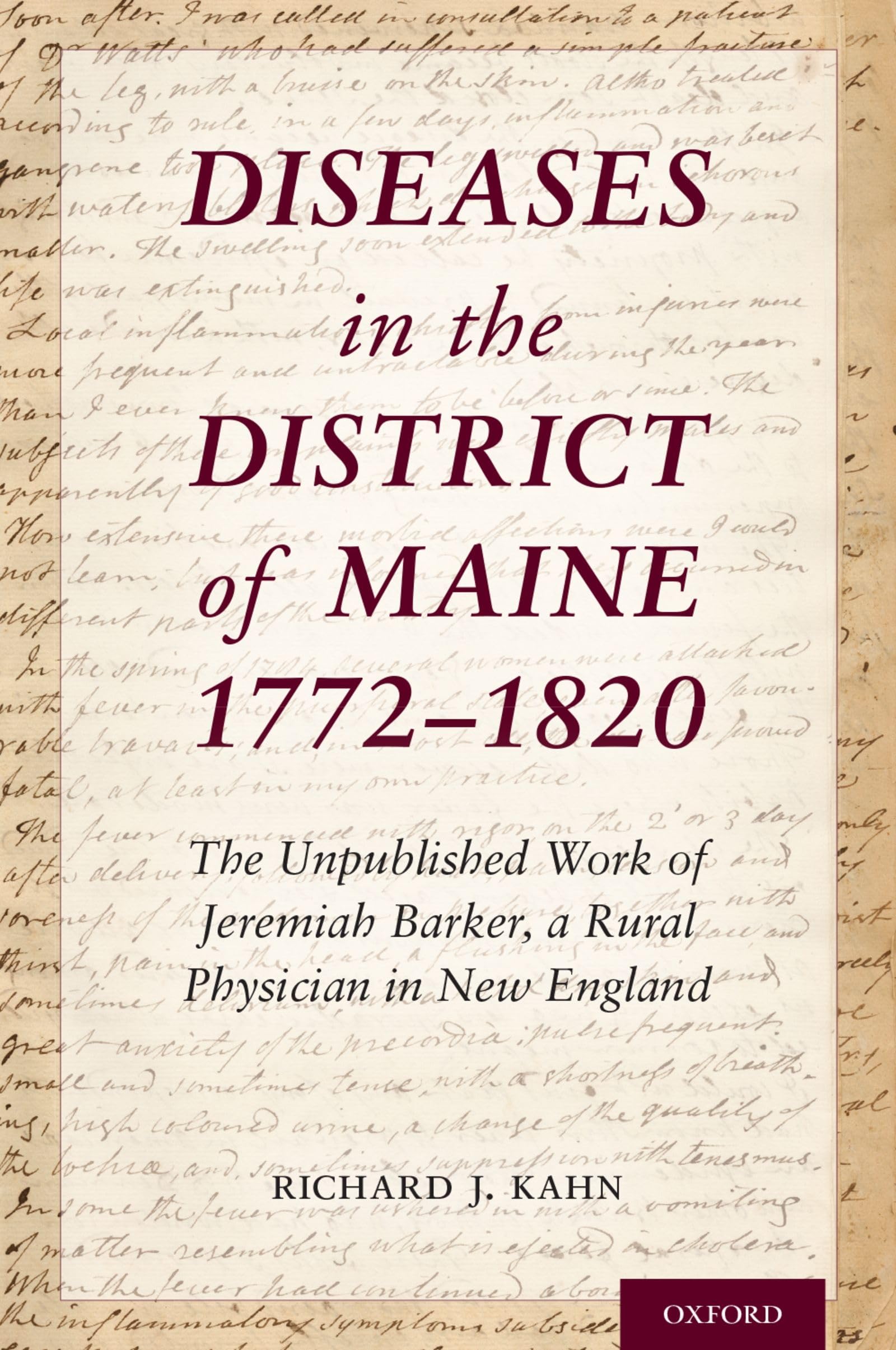
Diseases in the District of Maine 1772 1820: The Unpublished Work of Jeremiah Barker, a Rural Physician in New England (OXM OX,Used
Sold by Ergodebooks, an authorized reseller.
Returns accepted within 30 days | support@ergodebooks.com
Shipping Information
- Free Standard Shipping — United States only
- Processing Time: 3–5 business days
- Estimated Delivery: 6–10 business days after dispatch
- Double-boxed, fully insured & discreetly packaged
- Tracking number sent via email once dispatched
Returns & Refund
Returns accepted within 30 days of delivery.
Damaged or Defective Item
Free return shipping + replacement or full refund
Wrong Item Received
Free return shipping + replacement or full refund
Change of Mind
Return shipping at customer's expense · 25% restocking fee applies
Payment Option

Jeremiah Barker practiced medicine in rural Maine up until his retirement in 1818. Throughout his practice of fifty years, he documented his constant efforts to keep up with and contribute to the medical literature in a changing medical landscape, as practice and authority shifted from historical to scientific methods. He performed experiments and autopsies, became interested in the new chemistry of Lavoisier, risked scorn in his use of alkaline remedies, studied epidemic fever and approaches to bloodletting, and struggled to understand epidemic fever, childbed fever, cancer, public health, consumption, mental illness, and the 'dangers of spirituous liquors.'Dr. Barker intended to publish his Diseases in the District of Maine 17721820 by subscription advance pledges to purchase the published volume but for reasons that remain uncertain, that never happened. For the first time, Barker's never before published work has been transcribed and presented in its entirety with extensive annotations, a fivechapter introduction to contextualize the work, and a glossary to make it accessible to 21st century general readers, genealogists, students, and historians.This engaging and insightful new publication allows modern readers to reimagine medicine as practiced by a rural physician in New England. We know much about how elite physicians practiced 200 years ago, but very little about the daily practice of an ordinary rural doctor, attending the ordinary rural patient. Barker's manuscript is written in a clear and engaging style, easily enjoyed by general readers as well as historians, with extensive footnotes and a glossary of terms. Barker himself intended his book to be 'understood by those destitute of medical science.'
⚠️ WARNING (California Proposition 65):
This product may contain chemicals known to the State of California to cause cancer, birth defects, or other reproductive harm.
For more information, please visit www.P65Warnings.ca.gov.
- Q: What is the main subject of 'Diseases in the District of Maine 1772 - 1820'? A: The book focuses on the unpublished work of Jeremiah Barker, a rural physician in Maine, documenting his medical practice and experiences from 1772 to 1820.
- Q: Who is the author of the book? A: The author of this publication is Richard J. Kahn.
- Q: What type of binding does the book have? A: The book is bound in hardcover, providing durability and a classic look.
- Q: How many pages are in the book? A: The book contains 568 pages.
- Q: Is this book suitable for general readers? A: Yes, the book is written in a clear and engaging style, making it accessible to general readers, genealogists, students, and historians.
- Q: What unique features does this book offer? A: The book includes extensive annotations, a five-chapter introduction to contextualize the work, and a glossary to aid understanding.
- Q: When was the book published? A: The book was published on August 18, 2020.
- Q: What historical period does the book cover? A: The book covers the period from 1772 to 1820, highlighting medical practices during that time in rural Maine.
- Q: Can this book help with understanding historical medical practices? A: Yes, it provides insights into the daily practice of a rural doctor and the transition from historical to scientific medical methods.
- Q: Is this book intended for medical professionals? A: While it is accessible to general readers, it also offers valuable context and information that may interest medical professionals studying historical practices.