
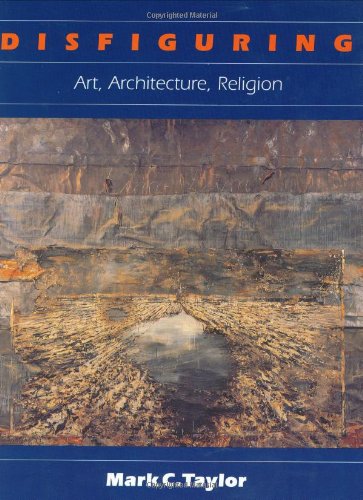
Title
Disfiguring: Art, Architecture, Religion (Religion And Postmodernism)-new
Sold by Ergodebooks, an authorized reseller.
Returns accepted within 30 days | support@ergodebooks.com
Shipping Information
- Free Standard Shipping — United States only
- Processing Time: 3–5 business days
- Estimated Delivery: 6–10 business days after dispatch
- Double-boxed, fully insured & discreetly packaged
- Tracking number sent via email once dispatched
Returns & Refund
Returns accepted within 30 days of delivery.
Damaged or Defective Item
Free return shipping + replacement or full refund
Wrong Item Received
Free return shipping + replacement or full refund
Change of Mind
Return shipping at customer's expense · 25% restocking fee applies
Payment Option

Disfiguring Is The First Sustained Interpretation Of The Deep But Often Hidden Links Among Twentiethcentury Art, Architecture, And Religion. While Many Of The Greatest Modern Painters And Architects Have Insisted On The Spiritual Significance Of Their Work, Historians Of Modern Art And Architecture Have Largely Avoided Questions Of Religion. Likewise, Contemporary Philosophers And Theologians Have, For The Most Part, Ignored Visual Arts. Taylor Presents A Carefully Structured And Subtly Nuanced Analysis Of The Religious Presuppositions That Inform Recent Artistic Theory And Practiceand, In Doing So, Recasts The Cultural Landscape Of Our Era.
⚠️ WARNING (California Proposition 65):
This product may contain chemicals known to the State of California to cause cancer, birth defects, or other reproductive harm.
For more information, please visit www.P65Warnings.ca.gov.
- Q: What is the page count of the book? A: The book has three hundred sixty pages. It offers a comprehensive analysis of art, architecture, and religion.
- Q: What are the dimensions of the book? A: The book measures eight and a half inches in length, one inch in width, and eleven and twenty-six hundredths inches in height.
- Q: What type of binding does this book have? A: This book is available in paperback binding. It provides a flexible and durable format for readers.
- Q: Who is the author of this book? A: The author is Mark C. Taylor. He explores the connections between modern art, architecture, and spirituality.
- Q: What is the genre of this book? A: The book falls under the category of Criticism. It critically examines the intersection of art and religion.
- Q: How do I read this book? A: You can read it in a traditional manner, either by holding it or using a book stand. The narrative is designed for a general audience.
- Q: Is this book suitable for beginners? A: Yes, the book is suitable for beginners. It presents complex ideas in an accessible manner.
- Q: What themes does this book cover? A: The book covers themes of spirituality, modernity, and the relationship between art and religion.
- Q: Is there an age recommendation for this book? A: This book is intended for adults and older teens. It addresses sophisticated concepts related to art and philosophy.
- Q: How do I keep this book in good condition? A: Store it in a dry location away from direct sunlight. Avoid bending the spine to preserve its integrity.
- Q: Can I clean this book? A: Yes, you can clean the cover gently with a damp cloth. Avoid using harsh chemicals that may damage the material.
- Q: What should I do if the book arrives damaged? A: If the book arrives damaged, contact customer support for return or replacement options. Retain the original packaging for easier returns.
- Q: Where can I find additional support for this book? A: For additional support, you can visit the publisher's website or contact their customer service directly.
- Q: Is there a warranty on this book? A: Books typically do not come with a warranty. Check the seller's return policy for any specific guarantees.
- Q: How does this book compare to others in its genre? A: This book offers a unique perspective on the interrelation of art and religion, distinguishing it from typical criticism texts.
- Q: What audience is this book best suited for? A: This book is best suited for readers interested in art theory, philosophy, and religious studies.