
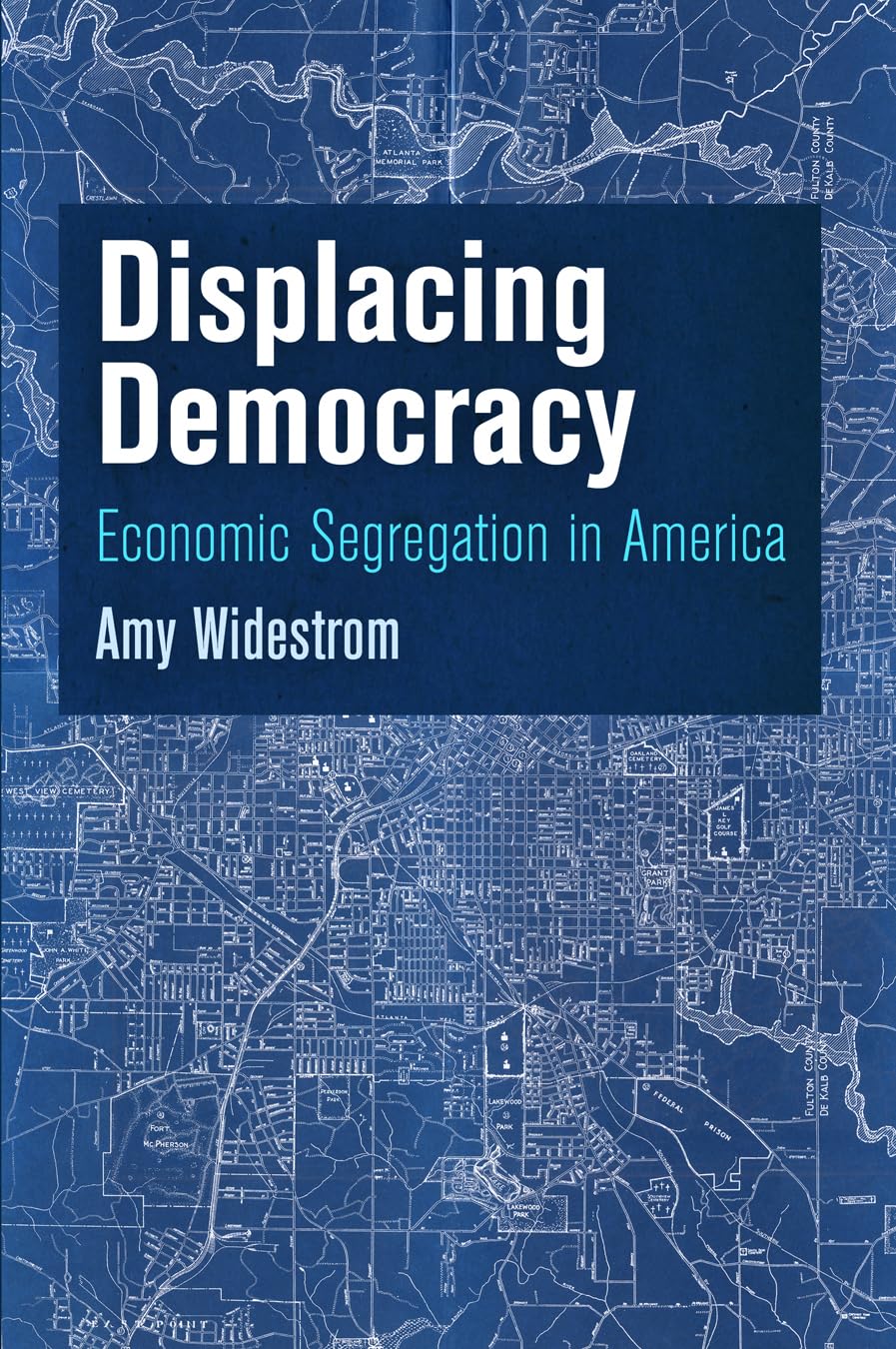
Title
Displacing Democracy: Economic Segregation In America (American Governance: Politics, Policy, And Public Law),Used
Sold by Ergodebooks, an authorized reseller.
Returns accepted within 30 days | support@ergodebooks.com
Shipping Information
- Free Standard Shipping — United States only
- Processing Time: 3–5 business days
- Estimated Delivery: 6–10 business days after dispatch
- Double-boxed, fully insured & discreetly packaged
- Tracking number sent via email once dispatched
Returns & Refund
Returns accepted within 30 days of delivery.
Damaged or Defective Item
Free return shipping + replacement or full refund
Wrong Item Received
Free return shipping + replacement or full refund
Change of Mind
Return shipping at customer's expense · 25% restocking fee applies
Payment Option

In recent decades, economically disadvantaged Americans have become more residentially segregated from other communities: they are increasingly likely to live in highpoverty neighborhoods that are spatially isolated with few civic resources. Lowincome citizens are also less likely to be politically engaged, a trend that is most glaring in terms of voter turnout. Examining neighborhoods in Atlanta, Kansas City, Milwaukee, and Rochester, Amy Widestrom challenges the assumption that the 'class gap' in political participation is largely the result of individual choices and dispositions. Displacing Democracy demonstrates that neighborhoods segregated along economic lines create conditions that encourage high levels of political activity, including political and civic mobilization and voting, among wealthier citizens while discouraging and impeding the poor from similar forms of civic engagement.Drawing on quantitative research, case studies, and interviews, Widestrom shows that neighborhoodlevel resources and characteristics affect political engagement in distinct ways that are not sufficiently appreciated in the current understanding of American politics and political behavior. In addition to the roles played by individual traits and assets, increasing economic segregation in the United States denies lowincome citizens the civic and social resources vital for political mobilization and participation. People living in poverty lack the time, money, and skills for active civic engagement, and this is compounded by the fact that residential segregation creates a barren civic environment incapable of supporting a vibrant civic community. Over time, this creates a balance of political power that is dramatically skewed not only toward individuals with greater incomes but toward entire neighborhoods with more economic resources.
⚠️ WARNING (California Proposition 65):
This product may contain chemicals known to the State of California to cause cancer, birth defects, or other reproductive harm.
For more information, please visit www.P65Warnings.ca.gov.