
Title
Disposable People: New Slavery In The Global Economy,New
Sold by Ergodebooks, an authorized reseller.
Returns accepted within 30 days | support@ergodebooks.com
Shipping Information
- Free Standard Shipping — United States only
- Processing Time: 1–3 business days
- Estimated Delivery: 3–5 business days after dispatch
- Double-boxed, fully insured & discreetly packaged
- Tracking number sent via email once dispatched
- Orders over $250 require signature upon delivery. Taxes calculated at checkout.
Returns & Refund
Returns accepted within 30 days of delivery.
Damaged or Defective Item
Free return shipping + replacement or full refund
Wrong Item Received
Free return shipping + replacement or full refund
Change of Mind
Return shipping at customer's expense · 25% restocking fee applies
Payment Option

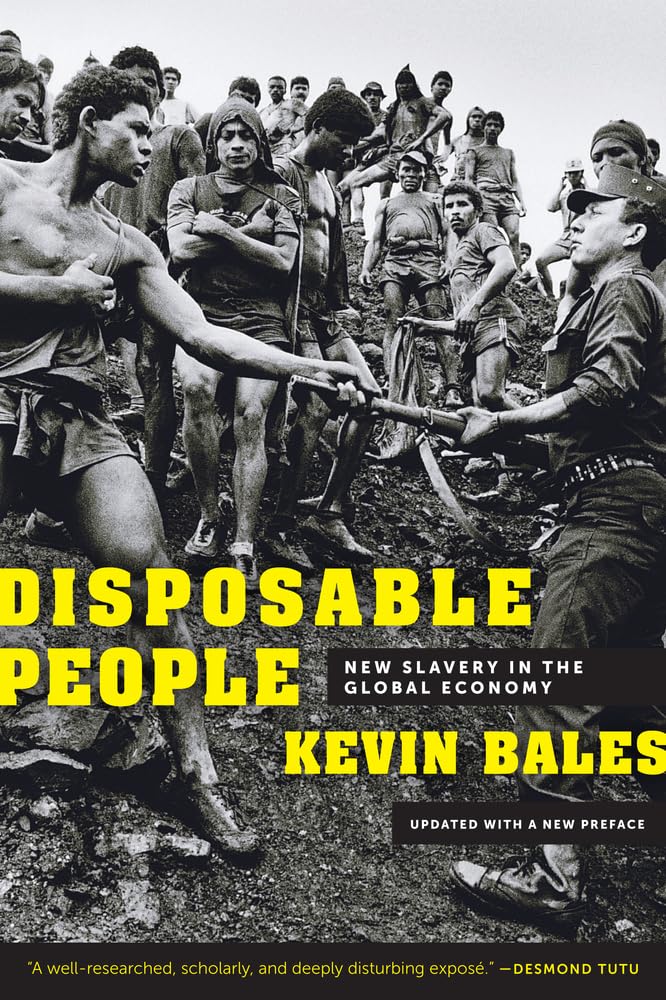
Slavery Is Illegal Throughout The World, Yet More Than Twentyseven Million People Are Still Trapped In One Of History'S Oldest Social Institutions. Kevin Bales'S Disturbing Story Of Slavery Today Reaches From Brick Kilns In Pakistan And Brothels In Thailand To The Offices Of Multinational Corporations. His Investigation Of Conditions In Mauritania, Brazil, Thailand, Pakistan, And India Reveals The Tragic Emergence Of A 'New Slavery,' One Intricately Linked To The Global Economy. The New Slaves Are Not A Longterm Investment As Was True With Older Forms Of Slavery, Explains Bales. Instead, They Are Cheap, Require Little Care, And Are Disposable.Three Interrelated Factors Have Helped Create The New Slavery. The Enormous Population Explosion Over The Past Three Decades Has Flooded The World'S Labor Markets With Millions Of Impoverished, Desperate People. The Revolution Of Economic Globalization And Modernized Agriculture Has Dispossessed Poor Farmers, Making Them And Their Families Ready Targets For Enslavement. And Rapid Economic Change In Developing Countries Has Bred Corruption And Violence, Destroying Social Rules That Might Once Have Protected The Most Vulnerable Individuals.Bales'S Vivid Case Studies Present Actual Slaves, Slaveholders, And Public Officials In Welldrawn Historical, Geographical, And Cultural Contexts. He Observes The Complex Economic Relationships Of Modern Slavery And Is Aware That Liberation Is A Bitter Victory For A Child Prostitute Or A Bondaged Miner If The Result Is Starvation.Bales Offers Suggestions For Combating The New Slavery And Provides Examples Of Very Positive Results From Organizations Such As Antislavery International, The Pastoral Land Commission In Brazil, And The Human Rights Commission In Pakistan. He Also Calls For Researchers To Follow The Flow Of Raw Materials And Products From Slave To Marketplace In Order To Effectively Target Campaigns Of 'Naming And Shaming' Corporations Linked To Slavery. Disposable People Is The First Book To Point The Way To Abolishing Slavery In Today'S Global Economy.All Of The Author'S Royalties From This Book Go To Fund Antislavery Projects Around The World.
⚠️ WARNING (California Proposition 65):
This product may contain chemicals known to the State of California to cause cancer, birth defects, or other reproductive harm.
For more information, please visit www.P65Warnings.ca.gov.
- Q: How many pages does 'Disposable People' have? A: This book has three hundred thirty-six pages. It provides a deep dive into modern slavery and its links to the global economy.
- Q: What is the binding type of 'Disposable People'? A: The book is a paperback edition. This makes it lightweight and easy to handle.
- Q: What are the dimensions of 'Disposable People'? A: The dimensions are six inches in length, nine inches in height, and zero point ninety-one inches in width. These dimensions make it convenient for reading and storage.
- Q: What is the main theme of 'Disposable People'? A: The main theme is modern slavery in the global economy. It examines how economic factors contribute to the persistence of slavery today.
- Q: Who is the author of 'Disposable People'? A: The author is Kevin Bales. He is a noted expert on human trafficking and modern slavery.
- Q: Is 'Disposable People' suitable for young readers? A: No, this book is not specifically aimed at young readers. Its content addresses mature themes related to slavery and exploitation.
- Q: How can I apply the concepts from 'Disposable People'? A: You can apply its concepts by advocating for anti-slavery initiatives and supporting organizations that combat human trafficking.
- Q: Is there a specific audience for 'Disposable People'? A: Yes, it is targeted towards those interested in social justice, economics, and human rights. It provides insights suitable for activists, educators, and scholars.
- Q: Are there any suggestions in 'Disposable People' for combating slavery? A: Yes, Bales offers suggestions like supporting anti-slavery organizations and promoting awareness campaigns. These strategies aim to reduce the prevalence of modern slavery.
- Q: How should I store 'Disposable People'? A: Store it in a cool, dry place away from direct sunlight. This will help preserve the book's physical condition over time.
- Q: What if 'Disposable People' arrives damaged? A: If it arrives damaged, you should contact the seller for a return or exchange. Most retailers have policies in place for defective products.
- Q: Can I find case studies in 'Disposable People'? A: Yes, the book includes vivid case studies. These case studies illustrate the realities of modern slavery in various countries.
- Q: Does 'Disposable People' provide historical context? A: Yes, it provides historical context. Bales discusses the evolution of slavery and how it relates to contemporary issues.
- Q: Is 'Disposable People' part of a larger series? A: No, it is a standalone work. However, it contributes significantly to the discourse on human rights.
- Q: Are there any organizations mentioned in 'Disposable People'? A: Yes, it mentions organizations like Anti-Slavery International and the Human Rights Commission in Pakistan. These groups work towards combating slavery.