If you have any questions, you are always welcome to contact us. We'll get back to you as soon as possible, withing 24 hours on weekdays.
Customer service
All questions about your order, return and delivery must be sent to our customer service team by e-mail at yourstore@yourdomain.com
Sale & Press
If you are interested in selling our products, need more information about our brand or wish to make a collaboration, please contact us at press@yourdomain.com
Help
If you have any questions, you are always welcome to contact us. We'll get back to you as soon as possible, withing 24 hours on weekdays.
Customer service
All questions about your order, return and delivery must be sent to our customer service team by e-mail at yourstore@yourdomain.com
Sale & Press
If you are interested in selling our products, need more information about our brand or wish to make a collaboration, please contact us at press@yourdomain.com
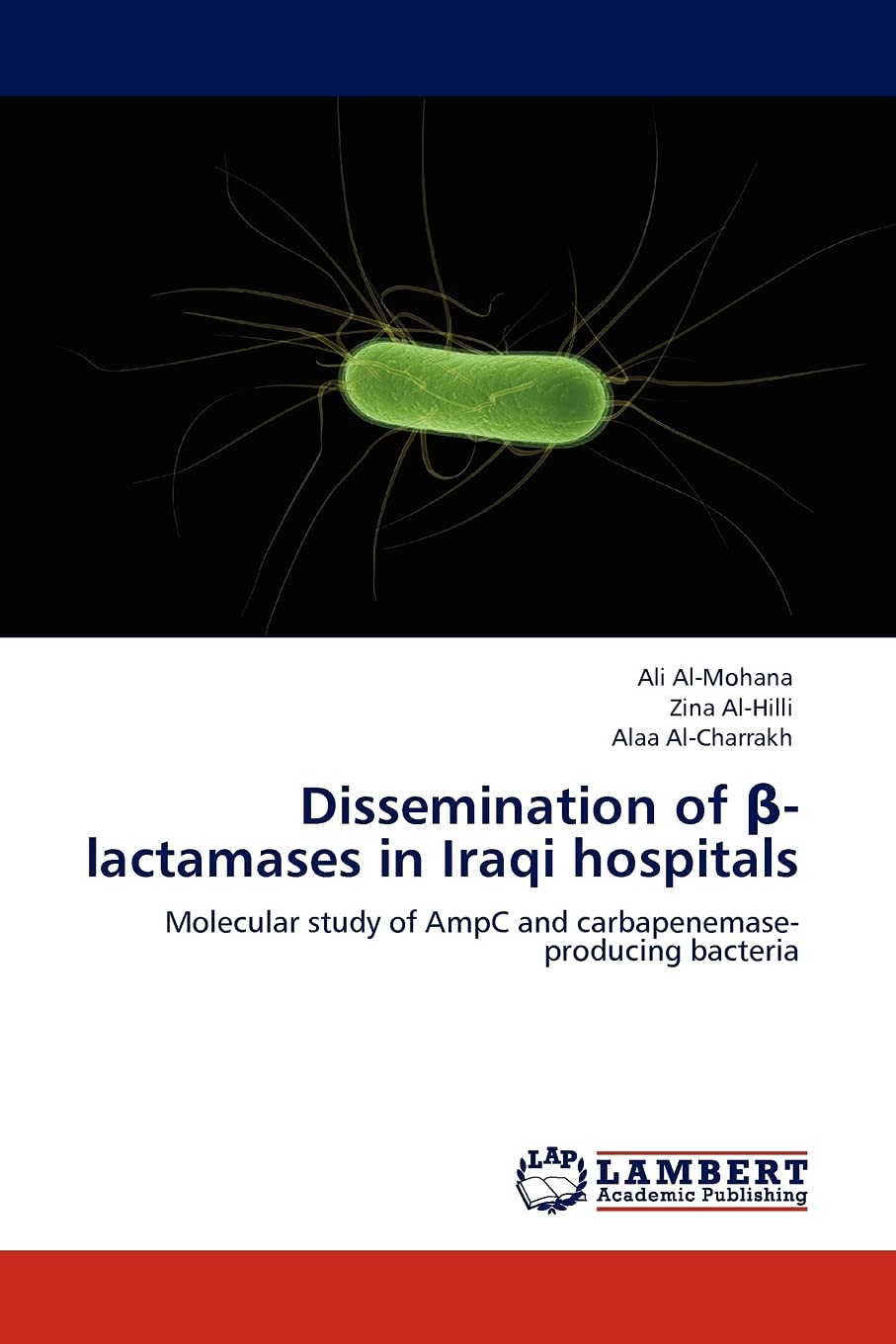
The persistent exposure of bacterial strains to a multitude of betalactams has led to overproduction and mutation of Betalactamases. These lactamases are capable of hydrolyzing penicillins, broadspectrum cephalosporins, monobactams, cephamycins, carbapenems, in addition to other classes of antimicrobial agents. Thus, these new lactamases are called as extendedspectrumlactamases (ESBLs), AmpC lactamases and carbapenemases. In Iraq, little attention has been paid to the genetic factors controlling production of AmpC and carbapenemases by Gramnegative bacteria. Therefore, there is an increase demand to investigate the role of these bacterial isolates in hospital infections. This book provides a new data on the dissemination of AmpC and carbapenemaseproducing E. coli and Klebsiella species in Iraqi hospitals as well as detection the genetic factors controlling production of these lactamases.
⚠️ WARNING (California Proposition 65):
This product may contain chemicals known to the State of California to cause cancer,
birth defects, or other reproductive harm.
For MAP (Minimum Advertised Price) violations and Intellectual Property (IP) or Trademark concerns, please contact:
support@ergodebooks.com
⚠️ California Proposition 65 Warning: Some products sold on this website may expose you to chemicals known to the State of California to cause cancer, birth defects, or other reproductive harm. For more information, visit www.P65Warnings.ca.gov.