
Title
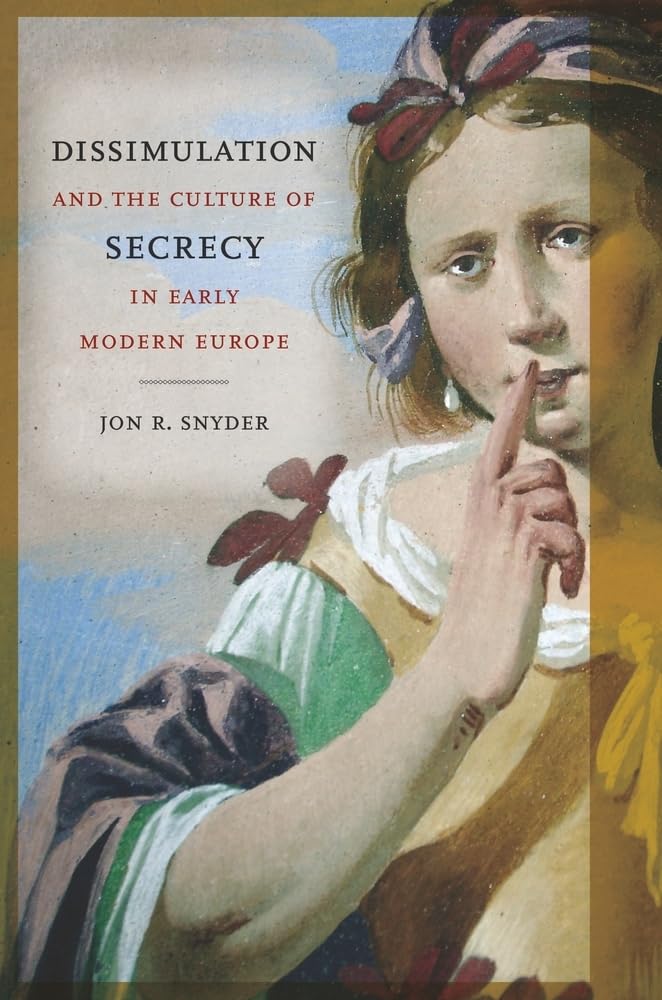
Dissimulation and the Culture of Secrecy in Early Modern Europe,New
Sold by Ergodebooks, an authorized reseller.
Returns accepted within 30 days | support@ergodebooks.com
Shipping Information
- Free Standard Shipping — United States only
- Processing Time: 3–5 business days
- Estimated Delivery: 6–10 business days after dispatch
- Double-boxed, fully insured & discreetly packaged
- Tracking number sent via email once dispatched
Returns & Refund
Returns accepted within 30 days of delivery.
Damaged or Defective Item
Free return shipping + replacement or full refund
Wrong Item Received
Free return shipping + replacement or full refund
Change of Mind
Return shipping at customer's expense · 25% restocking fee applies
Payment Option

Larvatus prodeo, announced Ren Descartes at the beginning of the seventeenth century: I come forward, masked. Deliberately disguising or silencing their most intimate thoughts and emotions, many early modern Europeans besides Descartesprinces, courtiers, aristocrats and commoners alikechose to practice the shadowy art of dissimulation. For men and women who could not risk revealing their inner lives to those around them, this art of incommunicativity was crucial, both personally and politically. Many writers and intellectuals sought to explain, expose, justify, or condemn the emergence of this new culture of secrecy, and from Naples to the Netherlands controversy swirled for two centuries around the powers and limits of dissimulation, whether in affairs of state or affairs of the heart. This beautifully written work crisscrosses Europe, with a special focus on Italy, to explore attitudes toward the art of dissimulation in the sixteenth and seventeenth centuries. Discussing many canonical and lesserknown works, Jon R. Snyder examines the treatment of dissimulation in early modern treatises and writings on the court, civility, moral philosophy, political theory, and in the visual arts.
⚠️ WARNING (California Proposition 65):
This product may contain chemicals known to the State of California to cause cancer, birth defects, or other reproductive harm.
For more information, please visit www.P65Warnings.ca.gov.
- Q: What is the main theme of 'Dissimulation and the Culture of Secrecy in Early Modern Europe'? A: The book explores the art of dissimulation practiced by individuals in early modern Europe, examining how people, including prominent figures like René Descartes, concealed their true thoughts and emotions due to societal pressures.
- Q: Who is the author of this book? A: The author of 'Dissimulation and the Culture of Secrecy in Early Modern Europe' is Jon R. Snyder.
- Q: What is the publication date of this book? A: This book was published on August 6, 2012.
- Q: What is the format of the book? A: The book is available in paperback format.
- Q: How many pages does the book have? A: The book contains 308 pages.
- Q: Is this book suitable for academic study? A: Yes, the book provides in-depth analysis and discussion on dissimulation in literature, philosophy, and political theory, making it suitable for academic study.
- Q: What condition is the book in? A: The book is listed as 'New'.
- Q: Can this book be beneficial for understanding European history? A: Yes, it offers insights into the cultural and political climate of early modern Europe, making it beneficial for those studying European history.
- Q: Are there any illustrations in the book? A: The book discusses visual arts as part of its exploration of the theme, but specific details about illustrations depend on the edition.
- Q: Is this book part of a series or a standalone work? A: The book is a standalone work and does not appear to be part of a series.