
Title
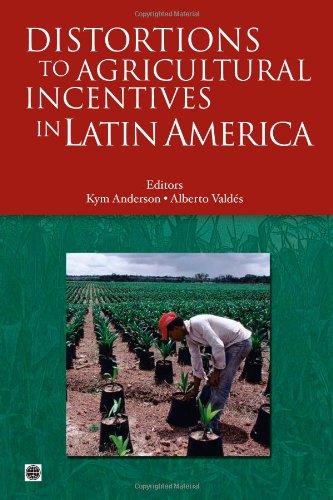
Distortions to Agricultural Incentives in Latin America (World Bank Trade and Development Series),Used
Sold by Ergodebooks, an authorized reseller.
Returns accepted within 30 days | support@ergodebooks.com
Shipping Information
- Free Standard Shipping — United States only
- Processing Time: 3–5 business days
- Estimated Delivery: 6–10 business days after dispatch
- Double-boxed, fully insured & discreetly packaged
- Tracking number sent via email once dispatched
Returns & Refund
Returns accepted within 30 days of delivery.
Damaged or Defective Item
Free return shipping + replacement or full refund
Wrong Item Received
Free return shipping + replacement or full refund
Change of Mind
Return shipping at customer's expense · 25% restocking fee applies
Payment Option

The vast majority of the world's poorest households depend on farming for their livelihood. During the 1960s and 1970s, most developing countries imposed prourban and antiagricultural policies, while many highincome countries restricted agricultural imports and subsidized their farmers. Both sets of policies inhibited economic growth and poverty alleviation in developing countries. Although progress has been made over the past two decades to reduce those policy biases, many trade and welfarereducing price distortions remain between agriculture and other sectors as well as within the agricultural sector of both rich and poor countries. Comprehensive empirical studies of the disarray in world agricultural markets first appeared approximately 20 years ago. Since then the OECD has provided estimates each year of market distortions in highincome countries, but there has been no comparable estimates for the world's developing countries. This volume is the second in a series that not only fills that void for recent years but extends the estimates in a consistent and comparable way back in time and provides analytical narratives for scores of countries that shed light on the evolving nature and extent of policy interventions over the past halfcentury. Distortions to Agricultural Incentives in Latin America provides an overview of the evolution of distortions to agricultural incentives caused by price and trade policies in the economies of South America, plus the Dominican Republic, Nicaragua, and Mexico. Together these countries constitute about 80 percent of the region s population, agricultural output, and overall GDP. The title assesses the successes and failures of the past and evaluates policy options for the years ahead.
⚠️ WARNING (California Proposition 65):
This product may contain chemicals known to the State of California to cause cancer, birth defects, or other reproductive harm.
For more information, please visit www.P65Warnings.ca.gov.