If you have any questions, you are always welcome to contact us. We'll get back to you as soon as possible, withing 24 hours on weekdays.
Customer service
All questions about your order, return and delivery must be sent to our customer service team by e-mail at yourstore@yourdomain.com
Sale & Press
If you are interested in selling our products, need more information about our brand or wish to make a collaboration, please contact us at press@yourdomain.com
Help
If you have any questions, you are always welcome to contact us. We'll get back to you as soon as possible, withing 24 hours on weekdays.
Customer service
All questions about your order, return and delivery must be sent to our customer service team by e-mail at yourstore@yourdomain.com
Sale & Press
If you are interested in selling our products, need more information about our brand or wish to make a collaboration, please contact us at press@yourdomain.com
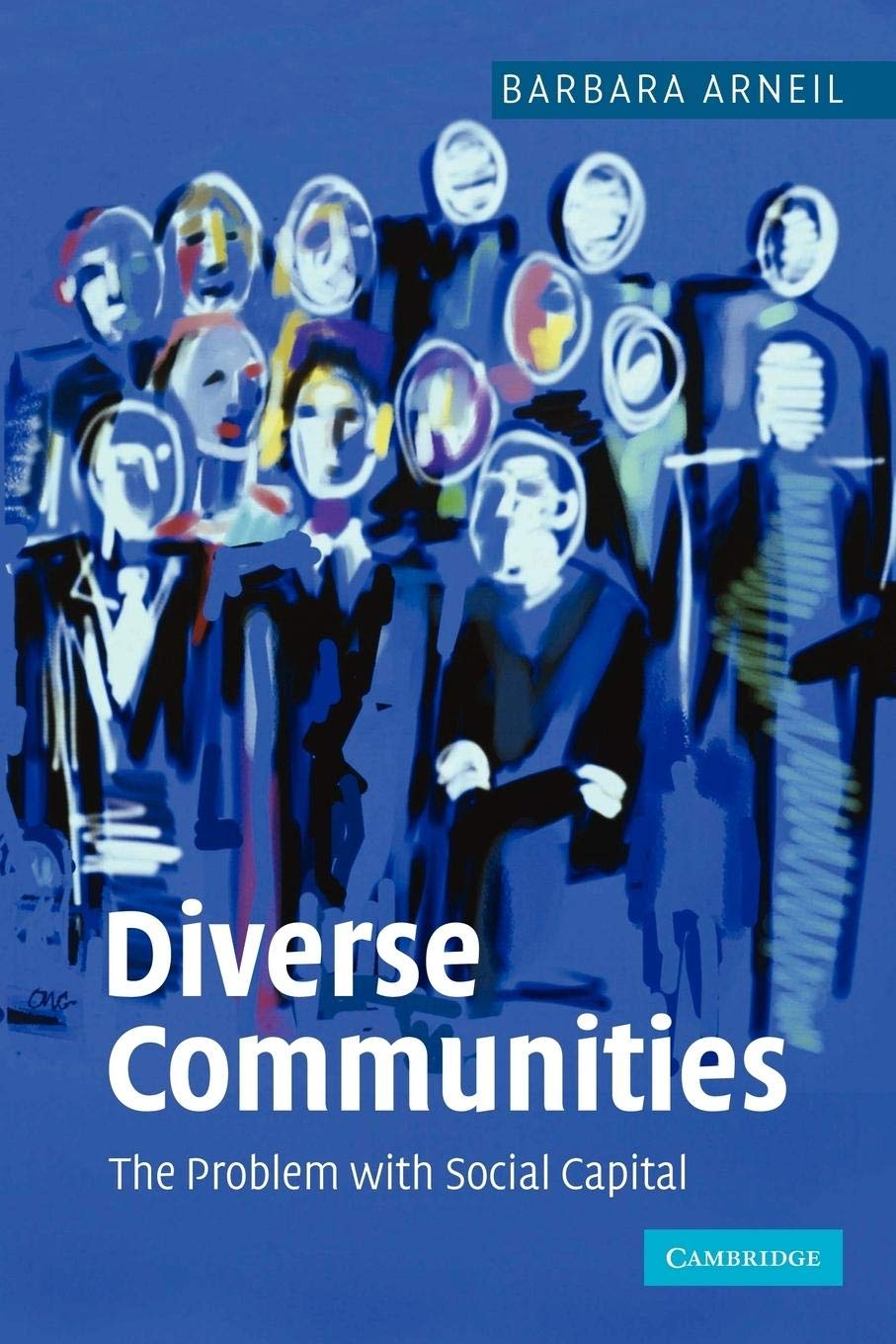
Diverse Communities is a critique of Robert Putnam's social capital thesis, reexamined from the perspective of women and cultural minorities in America over the last century. Barbara Arneil argues that the idyllic communities of the past were less positive than Putnam envisions and that the current 'collapse' in participation is better understood as change rather than decline. Arneil suggests that the changes in American civil society in the last half century are not so much the result of generational change or television as the unleashing of powerful economic, social and cultural forces that, despite leading to division and distrust within American society, also contributed to greater justice for women and cultural minorities. She concludes by proposing that the lessons learned from this fuller history of American civil society provide the normative foundation to enumerate the principles of justice by which diverse communities might be governed in the twentyfirst century.
⚠️ WARNING (California Proposition 65):
This product may contain chemicals known to the State of California to cause cancer,
birth defects, or other reproductive harm.
For MAP (Minimum Advertised Price) violations and Intellectual Property (IP) or Trademark concerns, please contact:
support@ergodebooks.com
⚠️ California Proposition 65 Warning: Some products sold on this website may expose you to chemicals known to the State of California to cause cancer, birth defects, or other reproductive harm. For more information, visit www.P65Warnings.ca.gov.