
Title
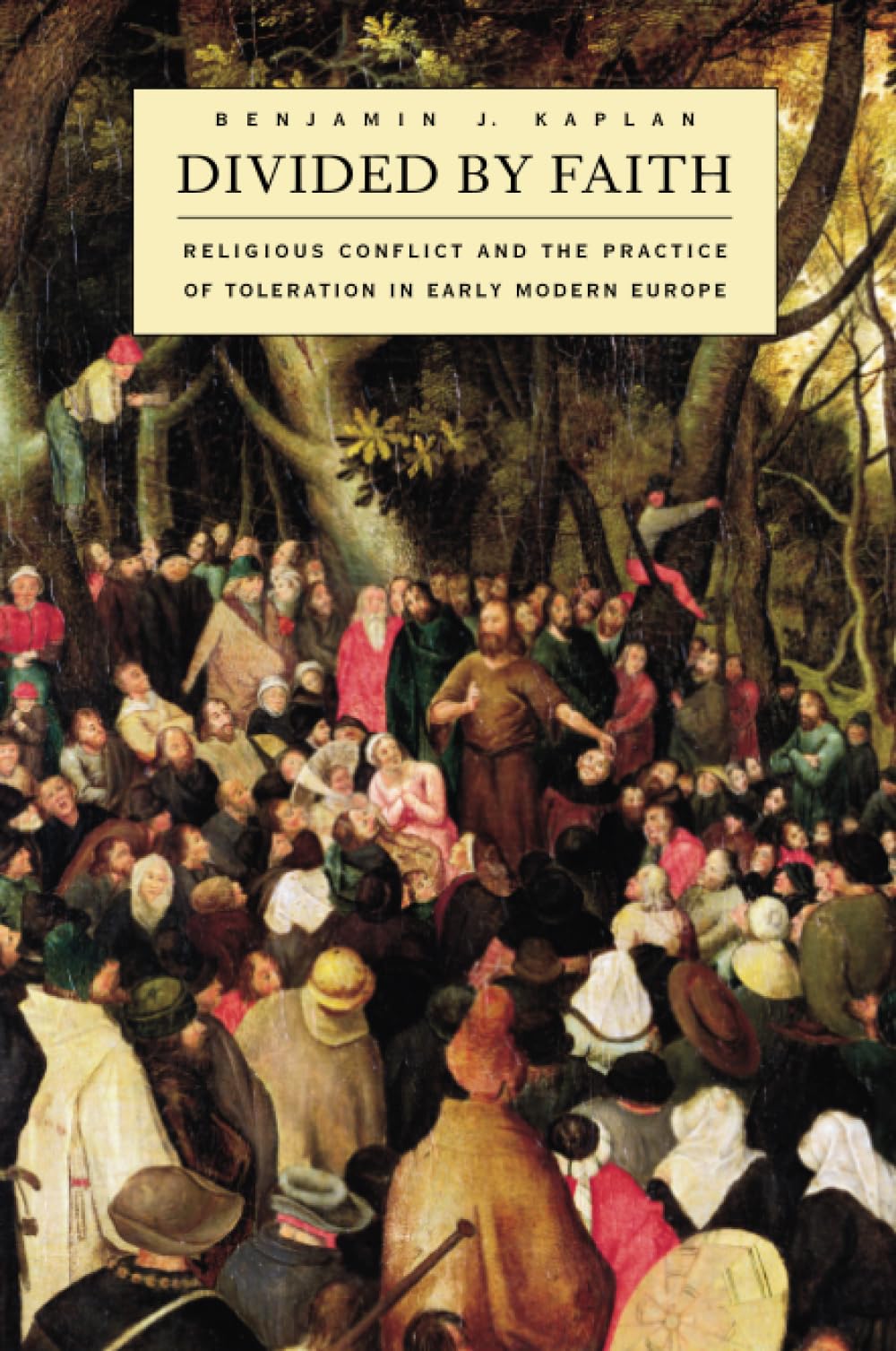
Divided by Faith: Religious Conflict and the Practice of Toleration in Early Modern Europe,Used
Sold by Ergodebooks, an authorized reseller.
Returns accepted within 30 days | support@ergodebooks.com
Shipping Information
- Free Standard Shipping — United States only
- Processing Time: 3–5 business days
- Estimated Delivery: 6–10 business days after dispatch
- Double-boxed, fully insured & discreetly packaged
- Tracking number sent via email once dispatched
Returns & Refund
Returns accepted within 30 days of delivery.
Damaged or Defective Item
Free return shipping + replacement or full refund
Wrong Item Received
Free return shipping + replacement or full refund
Change of Mind
Return shipping at customer's expense · 25% restocking fee applies
Payment Option

As religious violence flares around the world, we are confronted with an acute dilemma: Can people coexist in peace when their basic beliefs are irreconcilable? Benjamin Kaplan responds by taking us back to early modern Europe, when the issue of religious toleration was no less pressing than it is today.Divided by Faith begins in the wake of the Protestant Reformation, when the unity of western Christendom was shattered, and takes us on a panoramic tour of Europe's religious landscapeand its deep fault linesover the next three centuries. Kaplan's grand canvas reveals the patterns of conflict and toleration among Christians, Jews, and Muslims across the continent, from the British Isles to Poland. It lays bare the complex realities of daytoday interactions and calls into question the received wisdom that toleration underwent an evolutionary rise as Europe grew more 'enlightened.' We are given vivid examples of the improvised arrangements that made peaceful coexistence possible, and shown how common folk contributed to toleration as significantly as did intellectuals and rulers. Bloodshed was prevented not by the high ideals of tolerance and individual rights upheld today, but by the pragmatism, charity, and social ties that continued to bind people divided by faith.Divided by Faith is both history from the bottom up and a muchneeded challenge to our belief in the triumph of reason over faith. This compelling story reveals that toleration has taken many guises in the past and suggests that it may well do the same in the future.
⚠️ WARNING (California Proposition 65):
This product may contain chemicals known to the State of California to cause cancer, birth defects, or other reproductive harm.
For more information, please visit www.P65Warnings.ca.gov.
- Q: What is the main theme of 'Divided by Faith'? A: 'Divided by Faith' explores the theme of religious conflict and the practice of toleration in early modern Europe, focusing on how people coexisted despite irreconcilable beliefs.
- Q: Who is the author of 'Divided by Faith'? A: The author of 'Divided by Faith' is Benjamin Kaplan, who provides a historical perspective on religious toleration.
- Q: How many pages does 'Divided by Faith' have? A: 'Divided by Faith' contains a total of 432 pages.
- Q: What edition of the book is available? A: The available edition of 'Divided by Faith' is from 2/28/10.
- Q: What condition is the book in? A: 'Divided by Faith' is listed as a used book in good condition.
- Q: When was 'Divided by Faith' published? A: 'Divided by Faith' was published on October 1, 2009.
- Q: What type of binding does 'Divided by Faith' have? A: 'Divided by Faith' is available in paperback binding.
- Q: What historical period does 'Divided by Faith' cover? A: 'Divided by Faith' covers the historical period following the Protestant Reformation and spans the next three centuries in Europe.
- Q: Does 'Divided by Faith' include discussions on the interactions between different religions? A: Yes, 'Divided by Faith' discusses the interactions and toleration among Christians, Jews, and Muslims across Europe.
- Q: What key insights does 'Divided by Faith' provide about toleration? A: 'Divided by Faith' provides insights into the complex realities of day-to-day interactions that contributed to peaceful coexistence, challenging the notion of an evolutionary rise in toleration.