
Title
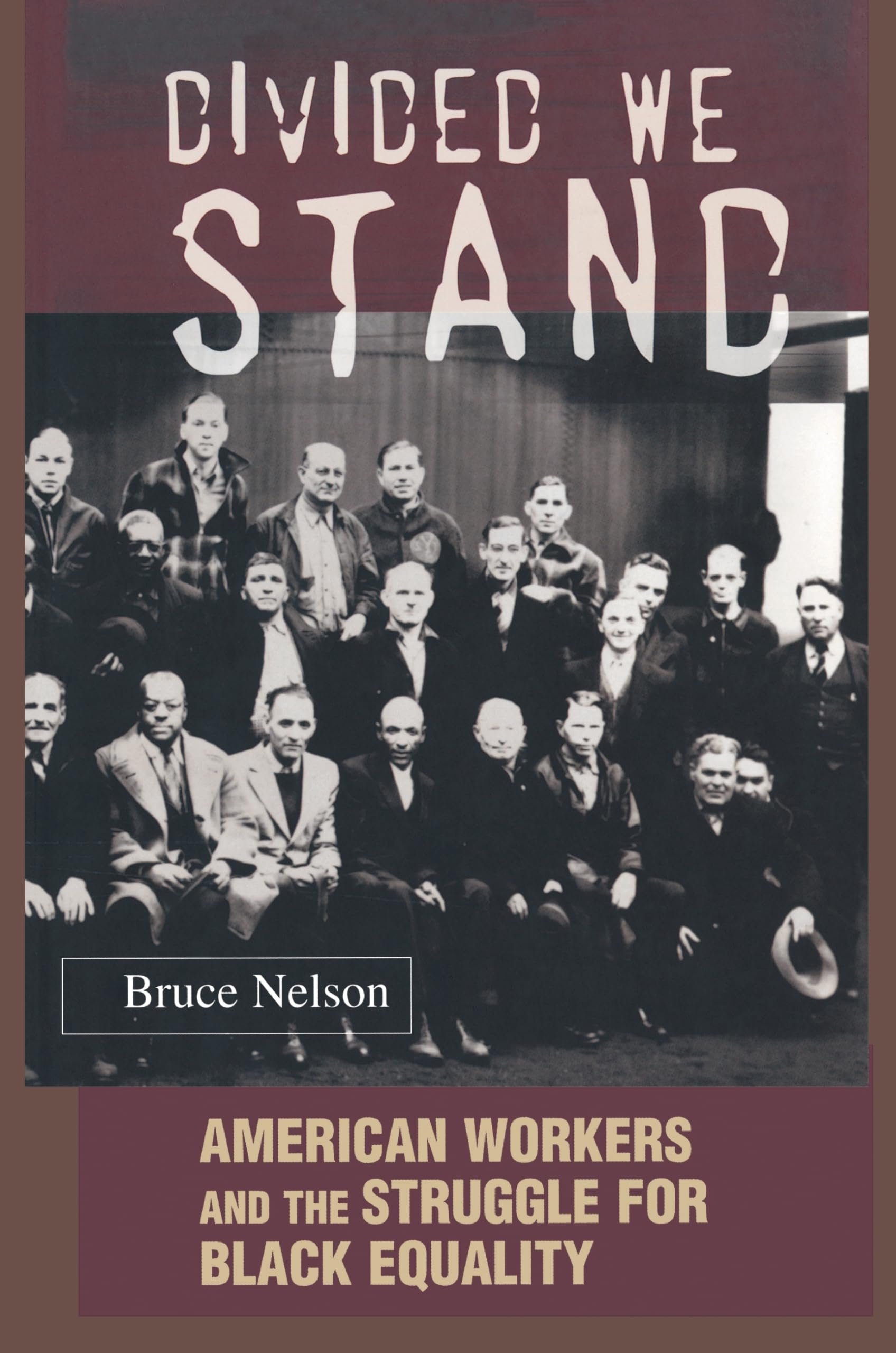
Divided We Stand: American Workers and the Struggle for Black Equality (Politics and Society in Modern America),Used
Sold by Ergodebooks, an authorized reseller.
Returns accepted within 30 days | support@ergodebooks.com
Shipping Information
- Free Standard Shipping — United States only
- Processing Time: 3–5 business days
- Estimated Delivery: 6–10 business days after dispatch
- Double-boxed, fully insured & discreetly packaged
- Tracking number sent via email once dispatched
Returns & Refund
Returns accepted within 30 days of delivery.
Damaged or Defective Item
Free return shipping + replacement or full refund
Wrong Item Received
Free return shipping + replacement or full refund
Change of Mind
Return shipping at customer's expense · 25% restocking fee applies
Payment Option

Divided We Stand is a study of how class and race have intersected in American societyabove all, in the 'making' and remaking of the American working class in the nineteenth and twentieth centuries. Focusing mainly on longshoremen in the ports of New York, New Orleans, and Los Angeles, and on steelworkers in many of the nation's steel towns, it examines how European immigrants became American and 'white' in the crucible of the industrial workplace and the ethnic and workingclass neighborhood.As workers organized on the job, especially during the overlapping CIO and civil rights eras in the middle third of the twentieth century, trade unions became a vital arena in which 'old' and 'new' immigrants and black migrants forged new alliances and identities and tested the limits not only of class solidarity but of American democracy. The most volatile force in this regard was the civil rights movement. As it crested in the 1950s and '60s, 'the Movement' confronted unions anew with the question, 'Which side are you on?' This book demonstrates the complex ways in which labor organizations answered that question and the complex relationships between union leaders and diverse rankandfile constituencies in addressing it.Divided We Stand includes vivid examples of white workingclass 'agency' in the construction of racially discriminatory employment structures. But Nelson is less concerned with racism as such than with the concrete historical circumstances in which racialized class identities emerged and developed. This leads him to a detailed and often fascinating consideration of white, workingclass ethnicity but also to a careful analysis of black workerstheir conditions of work, their aspirations and identities, their struggles for equality. Making its case with passion and clarity, Divided We Stand will be a compelling and controversial book.
⚠️ WARNING (California Proposition 65):
This product may contain chemicals known to the State of California to cause cancer, birth defects, or other reproductive harm.
For more information, please visit www.P65Warnings.ca.gov.