
Title
Dividing Citizens: Gender and Federalism in New Deal Public Policy,Used
Sold by Ergodebooks, an authorized reseller.
Returns accepted within 30 days | support@ergodebooks.com
Shipping Information
- Free Standard Shipping — United States only
- Processing Time: 3–5 business days
- Estimated Delivery: 6–10 business days after dispatch
- Double-boxed, fully insured & discreetly packaged
- Tracking number sent via email once dispatched
Returns & Refund
Returns accepted within 30 days of delivery.
Damaged or Defective Item
Free return shipping + replacement or full refund
Wrong Item Received
Free return shipping + replacement or full refund
Change of Mind
Return shipping at customer's expense · 25% restocking fee applies
Payment Option

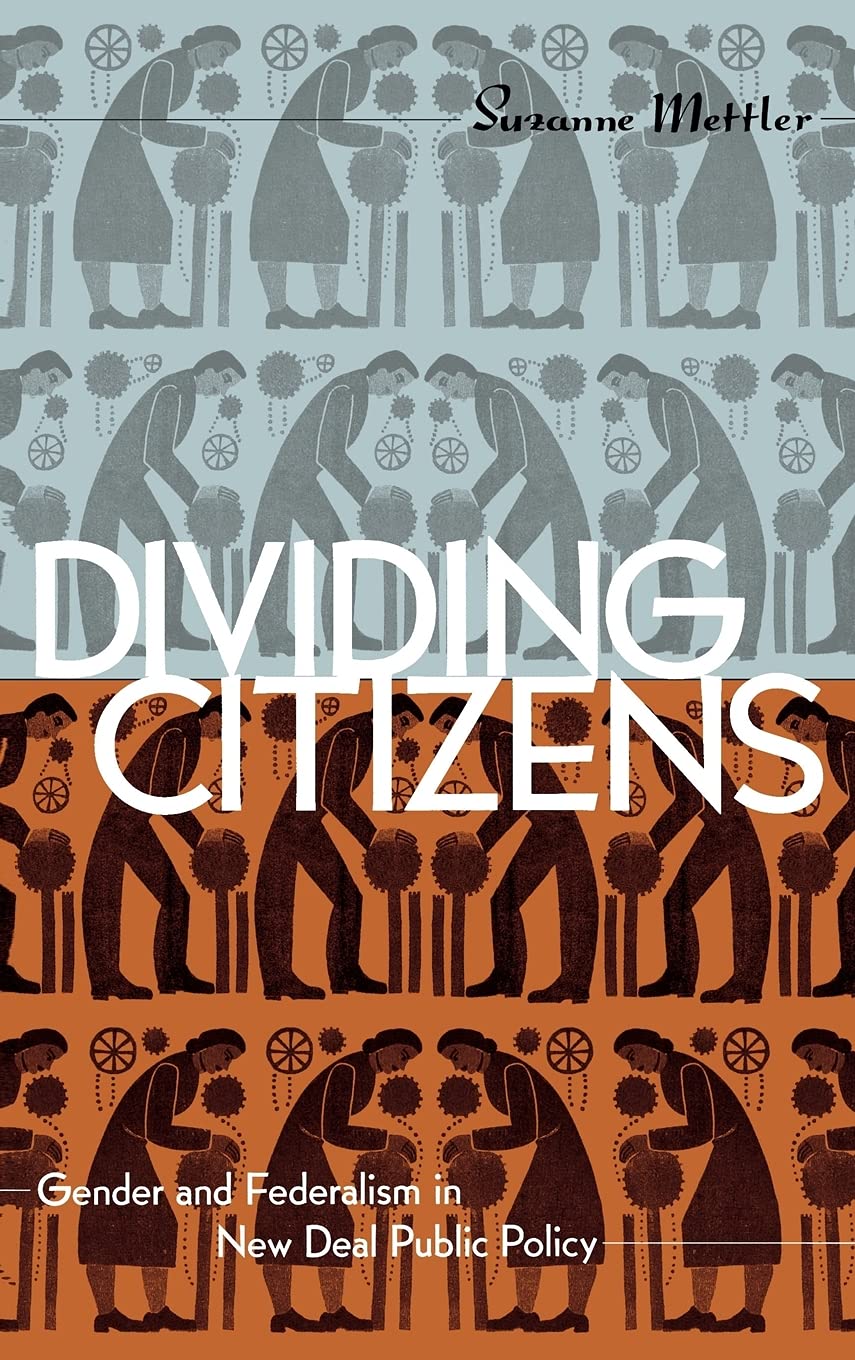
The New Deal was not the same deal for men and womena finding strikingly demonstrated in Dividing Citizens. Rich with implications for current debates over citizenship and welfare policy, this book provides a detailed historical account of how governing institutions and public policies shape social status and civic life. In her examination of the impact of New Deal social and labor policies on the organization and character of American citizenship, Suzanne Mettler offers an incisive analysis of the formation and implementation of the pillars of the modern welfare state: the Social Security Act, including Old Age and Survivors' Insurance, Old Age Assistance, Unemployment Insurance, and Aid to Dependent Children (later known simply as 'welfare'), as well as the Fair Labor Standards Act, which guaranteed the minimum wage.Mettler draws on the methods of historicalinstitutionalists to develop a 'structured governance' approach to her analysis of the New Deal. She shows how the new welfare state institutionalized gender politically, most clearly by incorporating men, particularly white men, into nationally administered policies and consigning women to more variable staterun programs. Differential incorporation of citizens, in turn, prompted different types of participation in politics. These genderspecific consequences were the outcome of a complex interplay of institutional dynamics, political imperatives, and the unintended consequences of policy implementation actions. By tracing the subtle and complicated political dynamics that emerged with New Deal policies, Mettler sounds a cautionary note as we once again negotiate the bounds of American federalism and public policy.
⚠️ WARNING (California Proposition 65):
This product may contain chemicals known to the State of California to cause cancer, birth defects, or other reproductive harm.
For more information, please visit www.P65Warnings.ca.gov.