
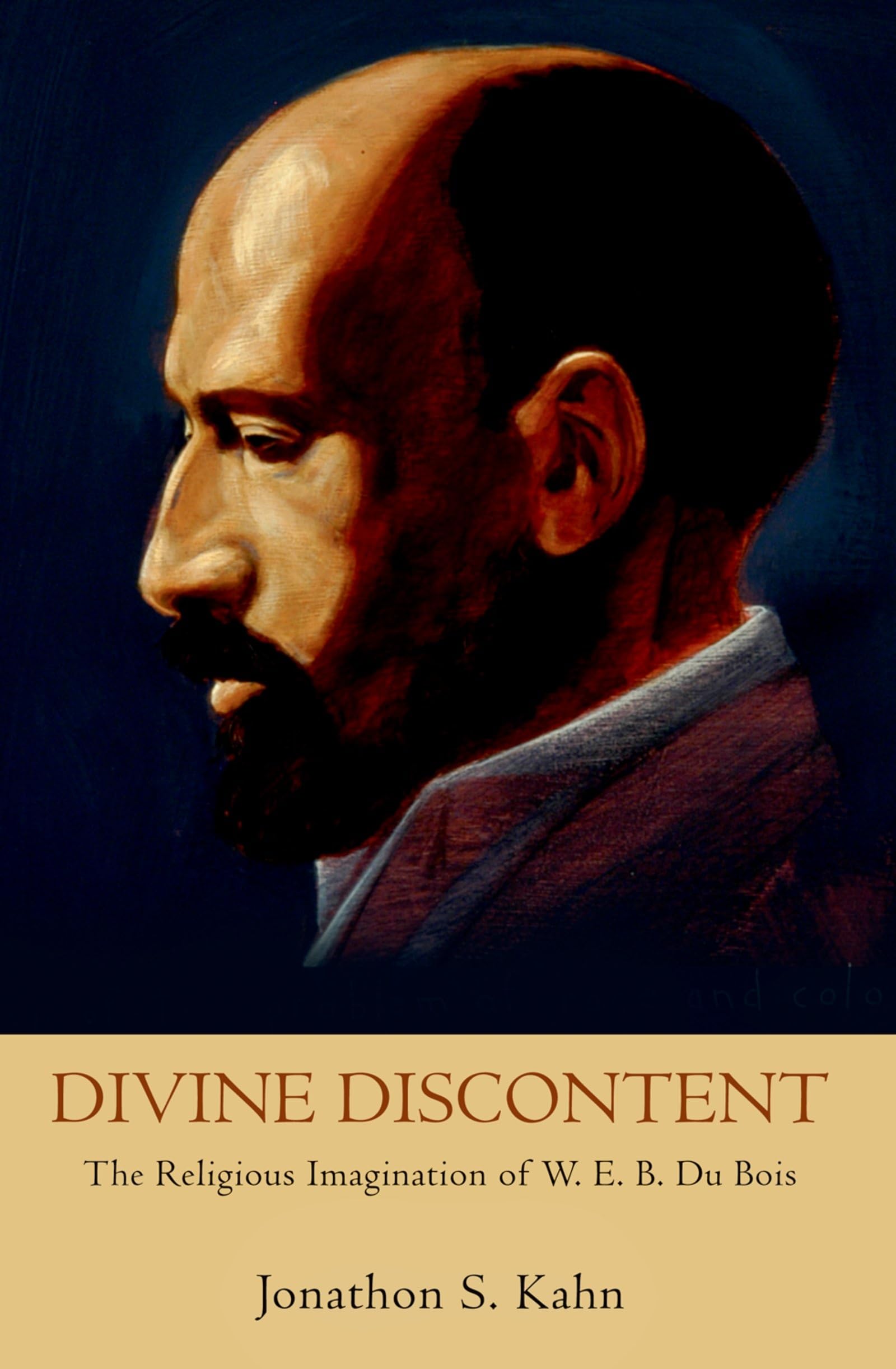
Title
Divine Discontent: The Religious Imagination Of W. E. B. Du Bois
Sold by Ergodebooks, an authorized reseller.
Returns accepted within 30 days | support@ergodebooks.com
Shipping Information
- Free Standard Shipping — United States only
- Processing Time: 3–5 business days
- Estimated Delivery: 6–10 business days after dispatch
- Double-boxed, fully insured & discreetly packaged
- Tracking number sent via email once dispatched
Returns & Refund
Returns accepted within 30 days of delivery.
Damaged or Defective Item
Free return shipping + replacement or full refund
Wrong Item Received
Free return shipping + replacement or full refund
Change of Mind
Return shipping at customer's expense · 25% restocking fee applies
Payment Option

W. E. B. Du Bois is an improbable candidate for a project in religion. His skepticism of and, even, hostility toward religion is readily established and canonically accepted. Indeed, he spent his career rejecting normative religious commitments to institutions and supernatural beliefs. In this book, Jonathon Kahn offers a fresh and controversial reading of Du Bois that seeks to overturn this view. Kahn contends that the standard treatment of Du Bois turns a deaf ear to his writings. For if we're open to their religious timbre, those writingsfrom his epochmaking The Souls of Black Folk to his unstudied series of parables that depict the lynching of an African American Christreveal a virtual obsession with religion. Du Bois's moral, literary, and political imagination is inhabited by religious rhetoric, concepts and stories. Divine Discontent recovers and introduces readers to the remarkably complex and varied religious world in Du Bois's writings. It's a world of sermons, of religious virtues such as sacrifice and piety, of jeremiads that fight for a black American nation within the larger nation. Unlike other African American religious voices at the time, however, Du Bois's religious orientation is distinctly heterodoxit exists outside the bounds of institutional Christianity. Kahn shows how Du Bois selfconsciously marshals religious rhetoric, concepts, typologies, narratives, virtues, and moods in order to challenge traditional Christian worldview in which events function to confirm a divine order. Du Bois's antimetaphysical religious voice, he argues, places him firmly in the American tradition of pragmatic religious naturalism typified by William James. This innovative reading of Du Bois should appeal to scholars of American religion, intellectual history, African American Studies, and philosophy of religion.
⚠️ WARNING (California Proposition 65):
This product may contain chemicals known to the State of California to cause cancer, birth defects, or other reproductive harm.
For more information, please visit www.P65Warnings.ca.gov.