
Title
Divine Powers in Late Antiquity,Used
Sold by Ergodebooks, an authorized reseller.
Returns accepted within 30 days | support@ergodebooks.com
Shipping Information
- Free Standard Shipping — United States only
- Processing Time: 3–5 business days
- Estimated Delivery: 6–10 business days after dispatch
- Double-boxed, fully insured & discreetly packaged
- Tracking number sent via email once dispatched
Returns & Refund
Returns accepted within 30 days of delivery.
Damaged or Defective Item
Free return shipping + replacement or full refund
Wrong Item Received
Free return shipping + replacement or full refund
Change of Mind
Return shipping at customer's expense · 25% restocking fee applies
Payment Option

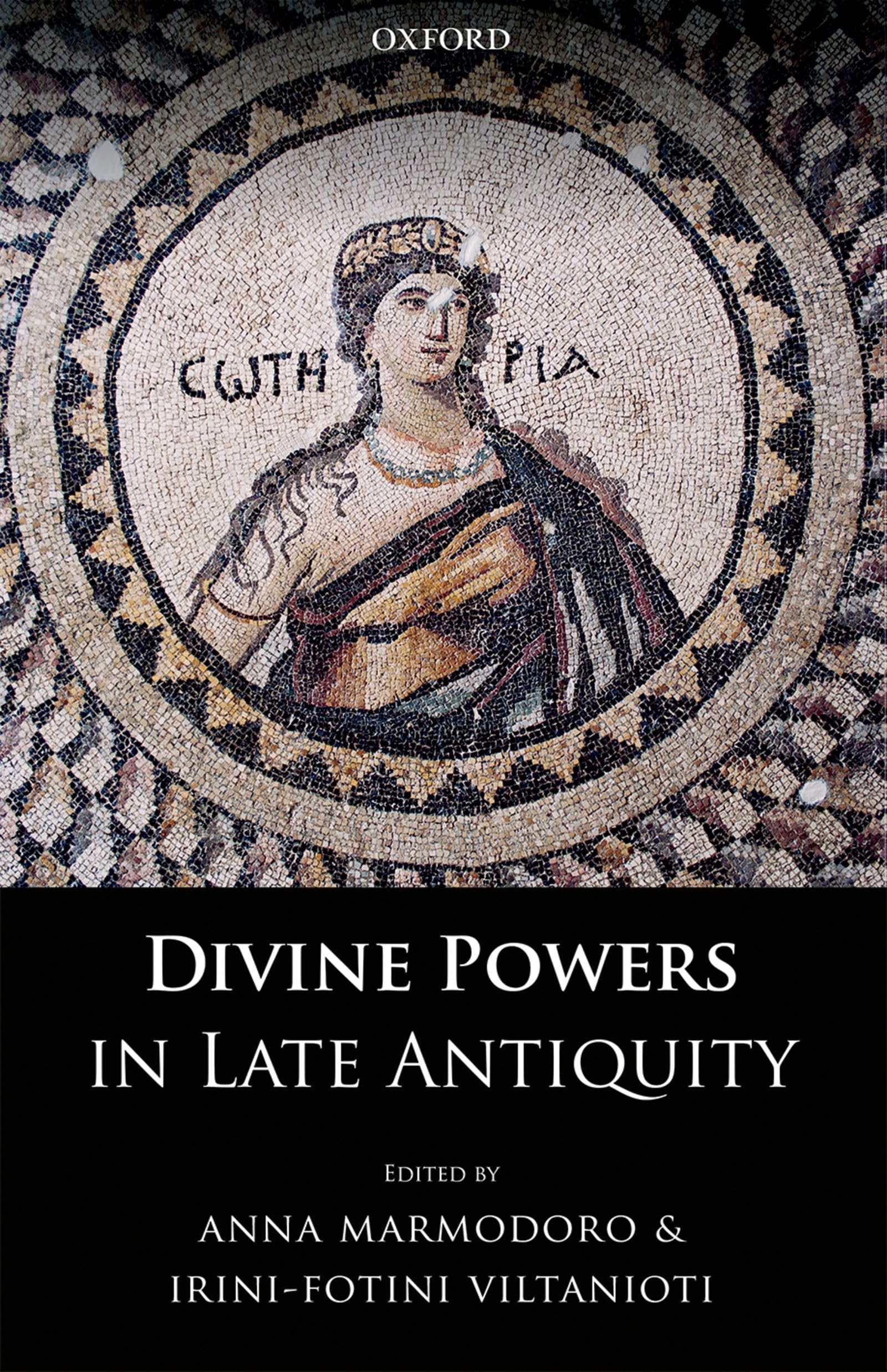
Is power the essence of divinity, or are divine powers distinct from divine essence? Are they divine hypostases or are they divine attributes? Are powers such as omnipotence, omniscience, etc. modes of divine activity? How do they manifest? In which way can we apprehend them? Is there a multiplicity of gods whose powers fill the cosmos or is there only one God from whom all power(s) derive(s) and whose power(s) permeate(s) everything? These are questions that become central to philosophical and theological debates in Late Antiquity (roughly corresponding to the period second to the sixth centuries). On the one hand, the Pagan Neoplatonic thinkers of this era postulate a complex hierarchy of gods, whose powers express the unlimited power of the ineffable One. On the other hand, Christians proclaim the existence of only one God, one divine power or one "Lord of all powers."Divided into two main sections, the first part of Divine Powers in Late Antiquity examines aspects of the notion of divine power as developed by the four major figures of Neoplatonism: Plotinus (c. 204270), Porphyry (c. 234305), Iamblichus (c.245325), and Proclus (412485). It focuses on an aspect of the notion of divine power that has been so far relatively neglected in the literature. Part two investigates the notion of divine power in early Christian authors, from the New Testament to the Alexandrian school (Clement of Alexandria, Origen, Athanasius the Great) and, further, to the Cappadocian Fathers (Basil the Great, Gregory of Nyssa), as well as in some of these authors' sources (the Septuagint, Philo of Alexandria). The traditional view tends to overlook the fact that the Bible, particularly the New Testament, was at least as important as Platonic philosophical texts in the shaping of the early Christian thinking about the Church's doctrines. Whilst challenging the received interpretation by redressing the balance between the Bible and Greek philosophical texts, the essays in the second section of this book nevertheless argue for the philosophical value of early Christian reflections on the notion of divine power. The two groups of thinkers that each of the sections deal with (the PlatonicPagan and the Christian one) share largely the same intellectual and cultural heritage; they are concerned with the same fundamental questions; and they often engage in more or less public philosophical and theological dialogue, directly influencing one another.
⚠️ WARNING (California Proposition 65):
This product may contain chemicals known to the State of California to cause cancer, birth defects, or other reproductive harm.
For more information, please visit www.P65Warnings.ca.gov.