
Title
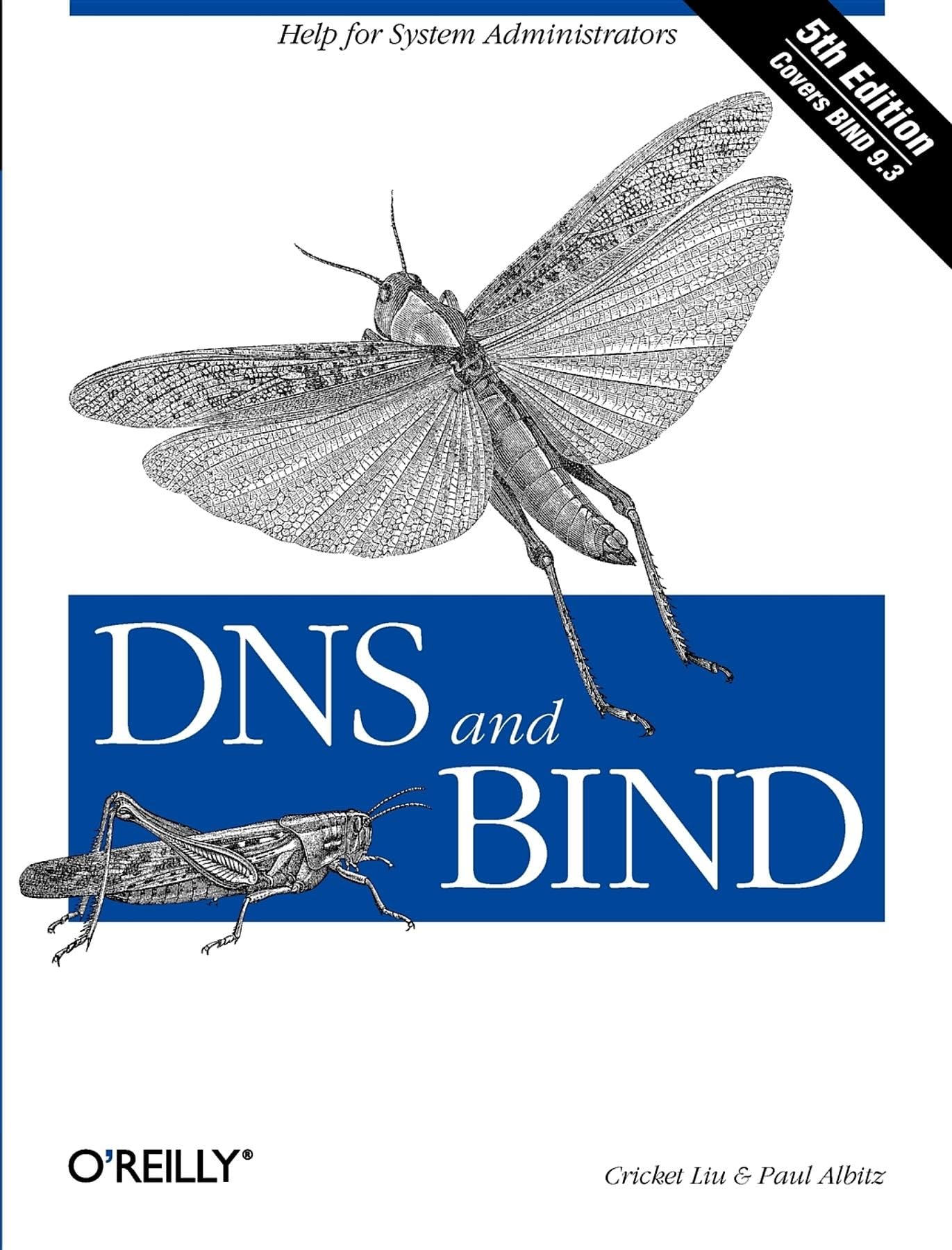
DNS and BIND: Help for System Administrators,New
Sold by Ergodebooks, an authorized reseller.
Returns accepted within 30 days | support@ergodebooks.com
Shipping Information
- Free Standard Shipping — United States only
- Processing Time: 3–5 business days
- Estimated Delivery: 6–10 business days after dispatch
- Double-boxed, fully insured & discreetly packaged
- Tracking number sent via email once dispatched
Returns & Refund
Returns accepted within 30 days of delivery.
Damaged or Defective Item
Free return shipping + replacement or full refund
Wrong Item Received
Free return shipping + replacement or full refund
Change of Mind
Return shipping at customer's expense · 25% restocking fee applies
Payment Option

DNS and BIND tells you everything you need to work with one of the Internet's fundamental building blocks: the distributed host information database that's responsible for translating names into addresses, routing mail to its proper destination, and even listing phone numbers with the new ENUM standard. This book brings you uptodate with the latest changes in this crucial service.The fifth edition covers BIND 9.3.2, the most recent release of the BIND 9 series, as well as BIND 8.4.7. BIND 9.3.2 contains further improvements in security and IPv6 support, and important new features such as internationalized domain names, ENUM (electronic numbering), and SPF (the Sender Policy Framework).Whether you're an administrator involved with DNS on a daily basis or a user who wants to be more informed about the Internet and how it works, you'll find that this book is essential reading. Topics include: What DNS does, how it works, and when you need to use it How to find your own place in the Internet's namespace Setting up name servers Using MX records to route mail Configuring hosts to use DNS name servers Subdividing domains (parenting) Securing your name server: restricting who can query your server, preventing unauthorized zone transfers, avoiding bogus servers, etc. The DNS Security Extensions (DNSSEC) and Transaction Signatures (TSIG) Mapping one name to several servers for load sharing Dynamic updates, asynchronous notification of change to a zone, and incremental zone transfers Troubleshooting: using nslookup and dig, reading debugging output, common problems DNS programming using the resolver library and Perl's Net::DNS module
⚠️ WARNING (California Proposition 65):
This product may contain chemicals known to the State of California to cause cancer, birth defects, or other reproductive harm.
For more information, please visit www.P65Warnings.ca.gov.