
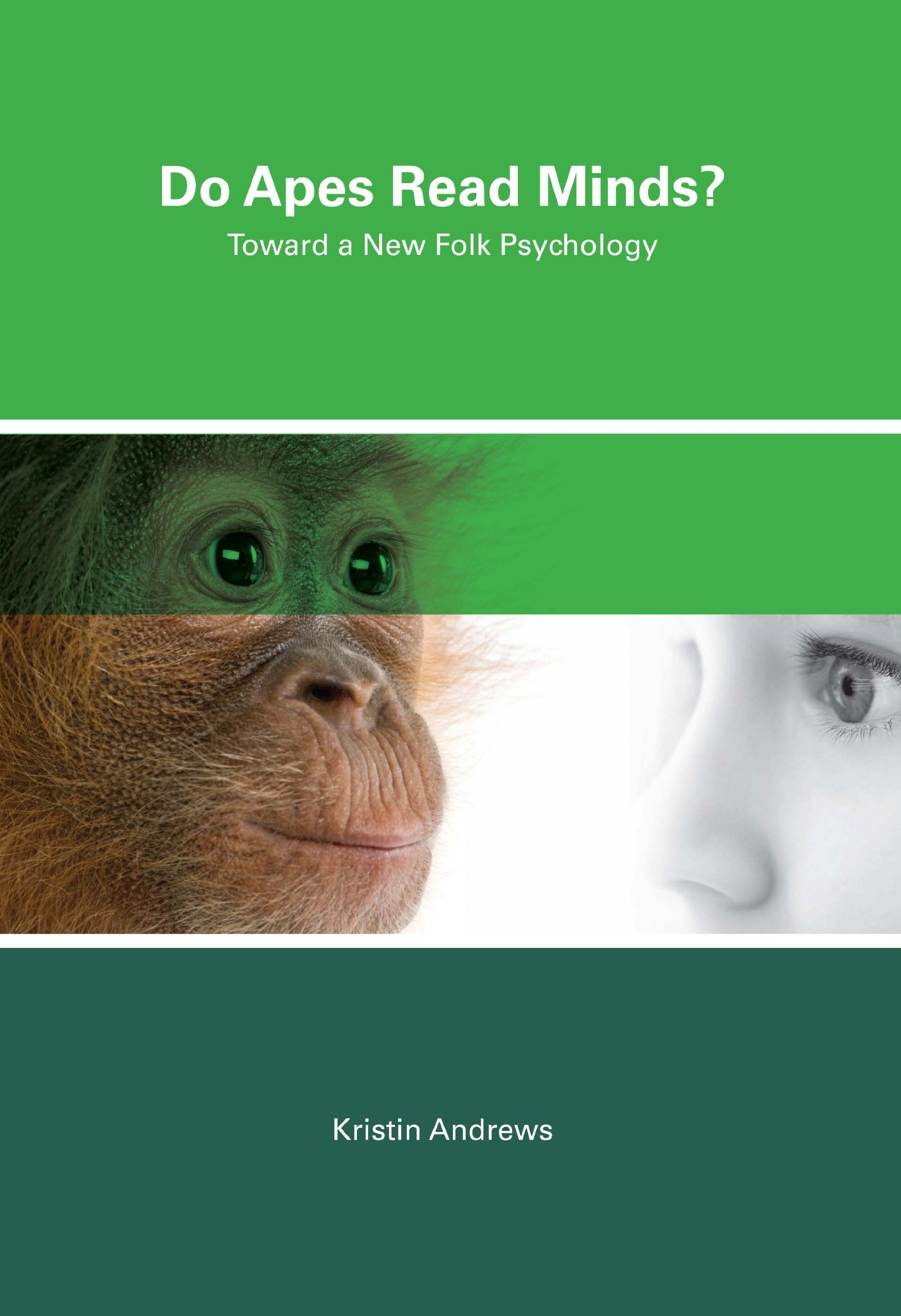
Title
Do Apes Read Minds?: Toward a New Folk Psychology,Used
Sold by Ergodebooks, an authorized reseller.
Returns accepted within 30 days | support@ergodebooks.com
Shipping Information
- Free Standard Shipping — United States only
- Processing Time: 3–5 business days
- Estimated Delivery: 6–10 business days after dispatch
- Double-boxed, fully insured & discreetly packaged
- Tracking number sent via email once dispatched
Returns & Refund
Returns accepted within 30 days of delivery.
Damaged or Defective Item
Free return shipping + replacement or full refund
Wrong Item Received
Free return shipping + replacement or full refund
Change of Mind
Return shipping at customer's expense · 25% restocking fee applies
Payment Option

An argument that as folk psychologists humans (and perhaps other animals) don't so much read minds as see one another as persons with traits, emotions, and social relations.By adulthood, most of us have become experts in human behavior, able to make sense of the myriad behaviors we find in environments ranging from the family home to the local mall and beyond. In philosophy of mind, our understanding of others has been largely explained in terms of knowing others' beliefs and desires; describing others' behavior in these terms is the core of what is known as folk psychology. In Do Apes Read Minds? Kristin Andrews challenges this view of folk psychology, arguing that we don't consider others' beliefs and desires when predicting most quotidian behavior, and that our explanations in these terms are often inaccurate or unhelpful. Rather than mindreading, or understanding others as receptacles for propositional attitudes, Andrews claims that folk psychologists see others first as whole persons with traits, emotions, and social relations.Drawing on research in developmental psychology, social psychology, and animal cognition, Andrews argues for a pluralistic folk psychology that employs different kinds of practices (including prediction, explanation, and justification) and different kinds of cognitive tools (including personality trait attribution, stereotype activation, inductive reasoning about past behavior, and generalization from self) that are involved in our folk psychological practices. According to this understanding of folk psychologywhich does not require the sophisticated cognitive machinery of secondorder metacognition associated with having a theory of mindanimals (including the other great apes) may be folk psychologists, too.
⚠️ WARNING (California Proposition 65):
This product may contain chemicals known to the State of California to cause cancer, birth defects, or other reproductive harm.
For more information, please visit www.P65Warnings.ca.gov.
- Q: How many pages does the book have? A: This book has two hundred ninety-four pages. It offers an extensive exploration of folk psychology and its implications.
- Q: What is the binding type of the book? A: The book is a hardcover edition. This binding type provides durability and a premium feel.
- Q: What are the dimensions of the book? A: The book measures six point twenty-six inches in length, zero point seventy-five inches in width, and nine point twenty-five inches in height. These dimensions make it a suitable size for both reading and display.
- Q: Who is the author of the book? A: The author of the book is Kristin Andrews. She presents a unique argument regarding folk psychology in humans and animals.
- Q: What is the main topic of this book? A: The book discusses folk psychology and challenges traditional views on understanding others' minds. It provides insights from various psychological research fields.
- Q: Is this book suitable for beginners in psychology? A: Yes, this book is suitable for beginners. It presents complex ideas in an accessible manner for those new to the field.
- Q: What themes does the book cover? A: The book covers themes such as understanding behavior, social relations, and the cognitive tools used in folk psychology. It draws on research from multiple disciplines.
- Q: Can this book be used as a textbook? A: Yes, this book can be used as a textbook. It provides valuable insights and discussions that are relevant for academic study in psychology.
- Q: How should I store this book to keep it in good condition? A: Store this book upright on a shelf in a cool, dry place. Avoid exposing it to direct sunlight to prevent fading and damage.
- Q: What is the recommended care for this hardcover book? A: To care for the hardcover book, avoid bending the spine and keep it dust-free. Use a soft cloth to gently clean the cover.
- Q: Is the book safe for young readers? A: Yes, the book is safe for young readers, though it is more suitable for older teens and adults due to its complex themes. Parental guidance is recommended.
- Q: What if the book arrives damaged? A: If the book arrives damaged, contact customer support for a return or exchange. Most retailers have policies in place to assist with damaged items.
- Q: Can I return the book if I don't like it? A: Yes, you can typically return the book if you don't like it. Be sure to check the specific return policy of the retailer.
- Q: Does the book include references or a bibliography? A: Yes, the book includes references and a bibliography. This allows readers to explore the sources and further readings on the topic.
- Q: What makes this book different from other psychology books? A: This book stands out by challenging conventional views of folk psychology and incorporating insights from animal cognition and developmental psychology.