
Title
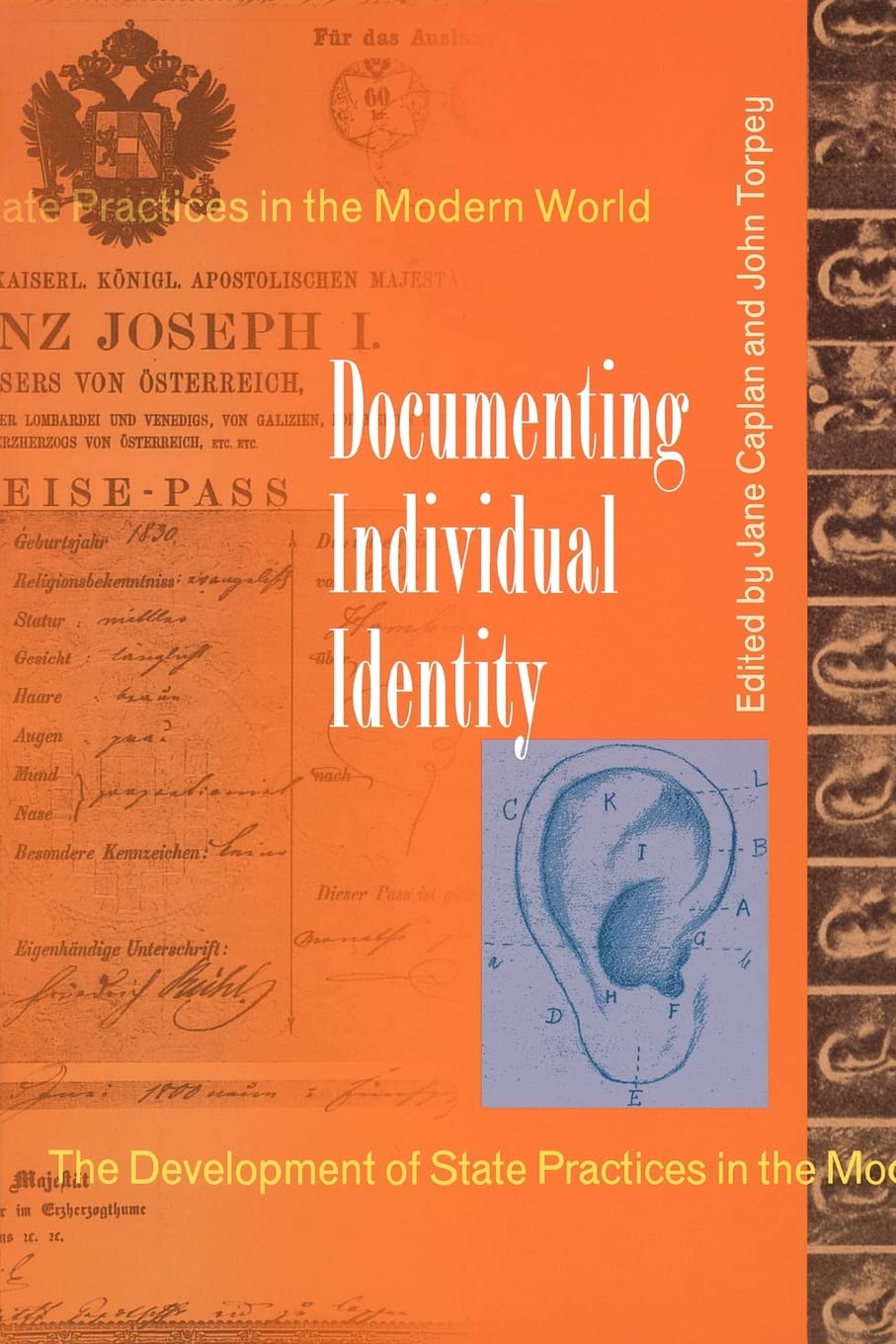
Documenting Individual Identity: The Development of State Practices in the Modern World.,Used
Sold by Ergodebooks, an authorized reseller.
Returns accepted within 30 days | support@ergodebooks.com
Shipping Information
- Free Standard Shipping — United States only
- Processing Time: 3–5 business days
- Estimated Delivery: 6–10 business days after dispatch
- Double-boxed, fully insured & discreetly packaged
- Tracking number sent via email once dispatched
Returns & Refund
Returns accepted within 30 days of delivery.
Damaged or Defective Item
Free return shipping + replacement or full refund
Wrong Item Received
Free return shipping + replacement or full refund
Change of Mind
Return shipping at customer's expense · 25% restocking fee applies
Payment Option

This book addresses one of the least studied yet most pervasive aspects of modern lifethe techniques and mechanisms by which official agencies certify individual identity. From passports and identity cards to labor registration and alien documentation, from fingerprinting to muchdebated contemporary issues such as DNAtyping, body surveillance, and the catastrophic results of colonialera identity documentation in postcolonial Rwanda, Documenting Individual Identity offers the most comprehensive historical overview of this fascinating topic ever published.The nineteen essays in this volume represent the collaborative effort of historians, sociologists, historians of science, political scientists, economists, and specialists in international relations. Together they cover a period from the emergence of systematic practices of written identification in early modern Europe through to the present day, and a geographic range that includes Europe, the Soviet Union, North and South America, and Africa. While the book is attuned to the nefarious possibilities of states' increasing capacity to identify individuals, it recognizes that these same techniques also certify citizens' eligibility for significant positive rights, such as welfare benefits and voting.Unprecedented in subject and scope, Documenting Individual Identity promises to shape a whole new field of research that crosses disciplinary boundaries and is of broad public and academic significance. In addition to the editors, the contributors are Valentin Groebner, Grard Noiriel, Charles Steinwedel, Marc Garcelon, Jon Agar, Martine Kaluszynski, Peter Becker, Anne Joseph, Kristin Ruggiero, Andrea Geselle, Andreas Fahrmeier, Leo Lucassen, Pamela Sankar, David Lyon, Gary Marx, Dita Vogel, and Timothy Longman.
⚠️ WARNING (California Proposition 65):
This product may contain chemicals known to the State of California to cause cancer, birth defects, or other reproductive harm.
For more information, please visit www.P65Warnings.ca.gov.
- Q: How many pages does this book have? A: This book contains three hundred ninety-two pages. It provides a comprehensive overview of the mechanisms of individual identity certification.
- Q: What is the binding type of this book? A: This book is published in paperback binding. It is designed for durability and ease of handling.
- Q: What are the dimensions of this book? A: The book measures six inches in length, zero point ninety-eight inches in width, and nine point twenty-five inches in height. These dimensions make it portable for reading.
- Q: Who is the author of this book? A: The author of this book is Jane Caplan. She is known for her expertise in history and identity studies.
- Q: What is the main topic of this book? A: The main topic of this book is the documentation of individual identity across different cultures and historical contexts. It discusses various methods of identity certification.
- Q: Is this book suitable for academic study? A: Yes, this book is suitable for academic study. It features contributions from historians, sociologists, and political scientists.
- Q: How can I use the information in this book? A: You can use the information in this book to understand the historical context of identity documentation. It is valuable for research and academic purposes.
- Q: Is this book appropriate for general readers? A: Yes, this book is appropriate for general readers interested in history and identity. It is written in an accessible manner.
- Q: What themes are explored in this book? A: This book explores themes such as state practices of identity certification, colonial impacts, and the implications of contemporary identification methods.
- Q: How should I store this book? A: Store this book in a cool, dry place, away from direct sunlight. This helps preserve the quality of the paperback.
- Q: How do I care for this book? A: To care for this book, avoid exposing it to moisture and handle it with clean hands. This will prevent damage and discoloration.
- Q: What should I do if my book arrives damaged? A: If your book arrives damaged, please contact customer support for assistance. They will guide you through the return or replacement process.
- Q: Is there a warranty on this book? A: No, there is no warranty on this book. However, you may return it if it is damaged upon arrival.
- Q: Can this book be used for a research project? A: Yes, this book can be used for a research project. It provides extensive insights into identity practices across various regions.
- Q: What makes this book unique? A: This book is unique due to its interdisciplinary approach to the study of identity documentation. It combines perspectives from multiple fields.
- Q: Who are some contributors to this book? A: Contributors include Valentin Groebner, Gérard Noiriel, and Gary Marx, among others. Their diverse expertise enhances the book's depth.