
Title
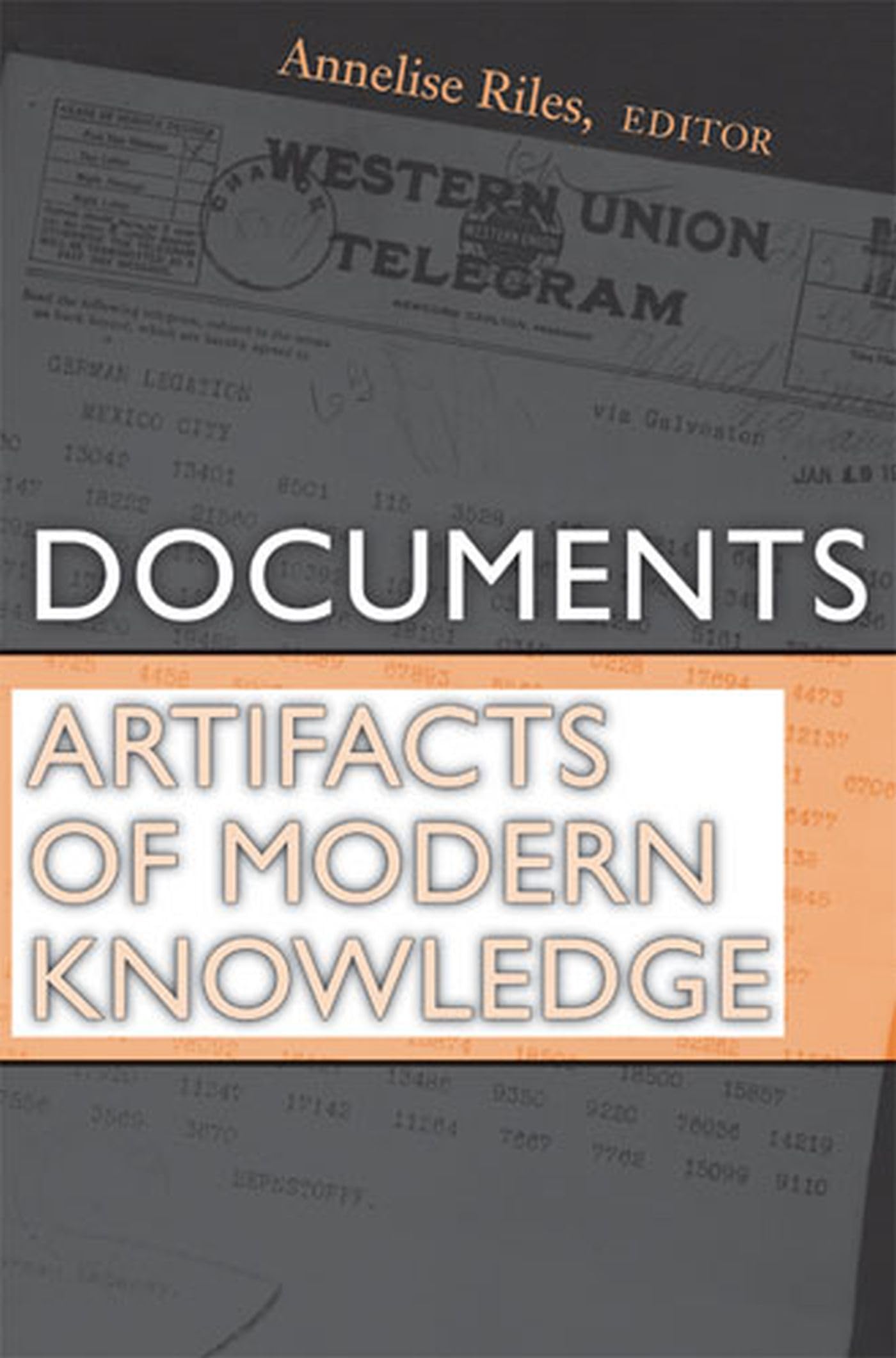
Documents: Artifacts of Modern Knowledge,Used
Sold by Ergodebooks, an authorized reseller.
Returns accepted within 30 days | support@ergodebooks.com
Shipping Information
- Free Standard Shipping — United States only
- Processing Time: 3–5 business days
- Estimated Delivery: 6–10 business days after dispatch
- Double-boxed, fully insured & discreetly packaged
- Tracking number sent via email once dispatched
Returns & Refund
Returns accepted within 30 days of delivery.
Damaged or Defective Item
Free return shipping + replacement or full refund
Wrong Item Received
Free return shipping + replacement or full refund
Change of Mind
Return shipping at customer's expense · 25% restocking fee applies
Payment Option

Documents reflects on the new challenges to humanistic social science in a world in which the subjects of research increasingly share the professional passions and problems of the researcher.Documents are everywhere in modern life, from the sciences to bureaucracy to law; at the same time, fieldworkers document social realities by collecting, producing, and exchanging documents of their own. Capping off a generation of reflection and critique about the promises and pitfalls of ethnographic methods, the contributors explore how ethnographers conceive, grasp, appreciate, and see patterns, demonstrating that the core of the ethnographic method now lies in the way ethnographers respond to, and increasingly share the professional passions and problems of, their subjects.'Sophisticated and provocative. The original and unique focus of this volume effectively opens up a new arena of critique that will move ethnography and qualitative inquiry forward in a way that few other works do.'George Marcus, Department of Anthropology, Rice University'This edited collection asks how an understanding of documentary forms sheds light on the creation and circulation of modern forms of knowledge, expertise, and governance. This is a major intervention in how we understand the everyday practice and techne of the documentary impulse and documentary apparatuses of law, bureaucratic review, and other institutions of modernity, as well as linguistic anthropology, literary theory, and law. The topic of Documents is not just of interest because of epistemological quandaries in the human sciences over textualization and interpretation, but also because the domains to which we increasingly turn our attention are themselves autodocumentary.' William M. Maurer, Chair and Associate Professor, Anthropology, University of California, IrvineContributors: Mario Biagioli, Donald Brenneis, Carol Heimer, Hirokazu Miyazaki, Adam Reed, Annelise Riles, and Marilyn Strathern.Annelise Riles is Professor of Law and Anthropology at Cornell University.
⚠️ WARNING (California Proposition 65):
This product may contain chemicals known to the State of California to cause cancer, birth defects, or other reproductive harm.
For more information, please visit www.P65Warnings.ca.gov.
- Q: What is the main focus of 'Documents: Artifacts of Modern Knowledge'? A: The book focuses on the challenges faced by humanistic social sciences in documenting social realities and how ethnographers engage with the professional passions and problems of their subjects.
- Q: Who are the contributors to this book? A: Contributors include Mario Biagioli, Donald Brenneis, Carol Heimer, Hirokazu Miyazaki, Adam Reed, Annelise Riles, and Marilyn Strathern.
- Q: When was 'Documents: Artifacts of Modern Knowledge' published? A: The book was published on October 16, 2006.
- Q: What is the format of 'Documents: Artifacts of Modern Knowledge'? A: The book is available in paperback format.
- Q: How many pages are in this book? A: The book contains a total of 256 pages.
- Q: What are the main themes explored in this book? A: Main themes include the creation and circulation of modern knowledge, documentary forms, and the implications for ethnographic methods and qualitative inquiry.
- Q: Is this book suitable for students of anthropology? A: Yes, the book is suitable for students and professionals in anthropology, social sciences, and related fields due to its critical exploration of documentary practices.
- Q: What type of insights can readers expect from this book? A: Readers can expect sophisticated critiques of ethnographic methods and insights into how documentary forms affect knowledge production and expertise in modern contexts.
- Q: Does this book include illustrations? A: Yes, 'Documents: Artifacts of Modern Knowledge' is an illustrated edition.
- Q: What is Annelise Riles' role in this book? A: Annelise Riles is the editor of the book and is also a Professor of Law and Anthropology at Cornell University.