
Title
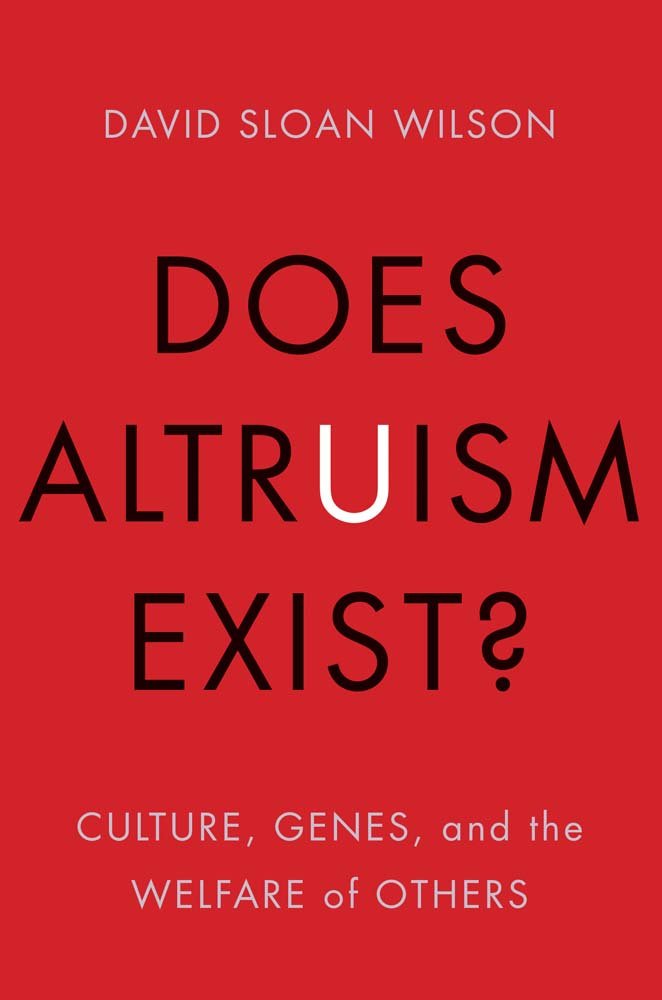
Does Altruism Exist?: Culture, Genes, and the Welfare of Others (Foundational Questions in Science),Used
Sold by Ergodebooks, an authorized reseller.
Returns accepted within 30 days | support@ergodebooks.com
Shipping Information
- Free Standard Shipping — United States only
- Processing Time: 3–5 business days
- Estimated Delivery: 6–10 business days after dispatch
- Double-boxed, fully insured & discreetly packaged
- Tracking number sent via email once dispatched
Returns & Refund
Returns accepted within 30 days of delivery.
Damaged or Defective Item
Free return shipping + replacement or full refund
Wrong Item Received
Free return shipping + replacement or full refund
Change of Mind
Return shipping at customer's expense · 25% restocking fee applies
Payment Option

A powerful treatise that demonstrates the existence of altruism in nature, with surprising implications for human societyDoes altruism exist? Or is human nature entirely selfish? In this eloquent and accessible book, famed biologist David Sloan Wilson provides new answers to this ageold question based on the latest developments in evolutionary science.From an evolutionary viewpoint, Wilson argues, altruism is inextricably linked to the functional organization of groups. Groups that work undeniably exist in nature and human society, although special conditions are required for their evolution. Humans are one of the most groupish species on earth, in some ways comparable to social insect colonies and multicellular organisms. The case that altruism evolves in all social species is surprisingly simple to make.Yet the implications for human society are far from obvious. Some of the most venerable criteria for defining altruism arent worth caring much about, any more than we care much whether we are paid by cash or check. Altruism defined in terms of thoughts and feelings is notably absent from religion, even though altruism defined in terms of action is notably present. The economic case for selfishness can be decisively rejected. The quality of everyday life depends critically on people who overtly care about the welfare of others. Yet, like any other adaptation, altruism can have pathological manifestations. Wilson concludes by showing how a social theory that goes beyond altruism by focusing on group function can help to improve the human condition.Copublished with Templeton Press
⚠️ WARNING (California Proposition 65):
This product may contain chemicals known to the State of California to cause cancer, birth defects, or other reproductive harm.
For more information, please visit www.P65Warnings.ca.gov.