If you have any questions, you are always welcome to contact us. We'll get back to you as soon as possible, withing 24 hours on weekdays.
Customer service
All questions about your order, return and delivery must be sent to our customer service team by e-mail at yourstore@yourdomain.com
Sale & Press
If you are interested in selling our products, need more information about our brand or wish to make a collaboration, please contact us at press@yourdomain.com
Help
If you have any questions, you are always welcome to contact us. We'll get back to you as soon as possible, withing 24 hours on weekdays.
Customer service
All questions about your order, return and delivery must be sent to our customer service team by e-mail at yourstore@yourdomain.com
Sale & Press
If you are interested in selling our products, need more information about our brand or wish to make a collaboration, please contact us at press@yourdomain.com
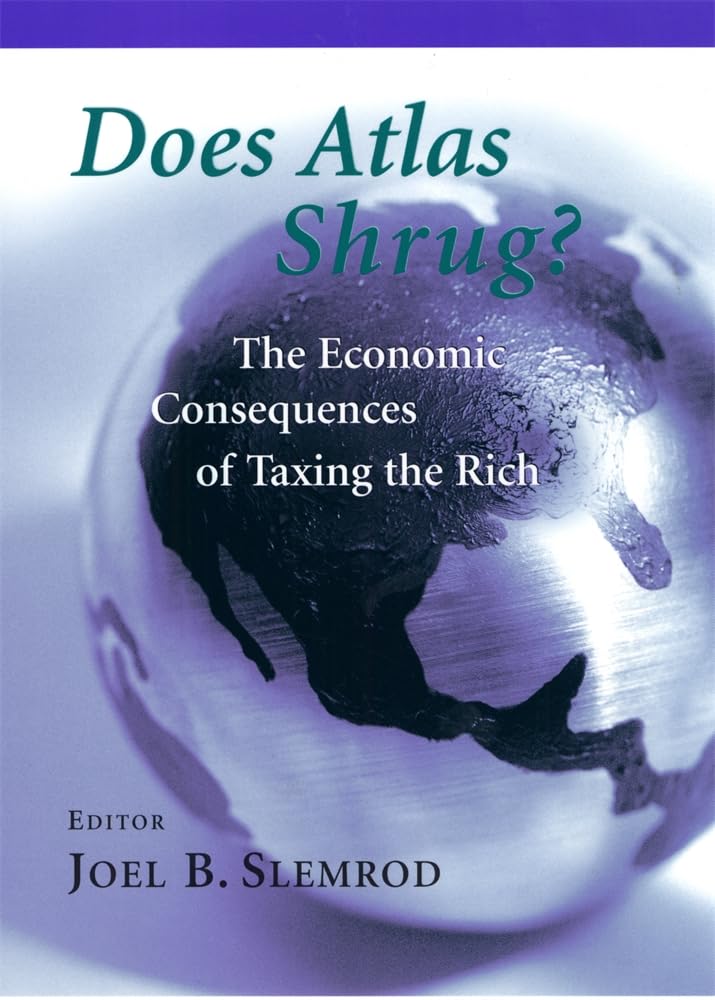
Since the introduction of the income tax in 1913, controversy has raged about how heavily to tax the rich. Opponents of high tax rates claim that heavy assessments have negative incentives on the productivity of some of our most talented citizens; supporters stress the importance of the rich shouldering their "fair share," and decry the loopholes that permit many to escape their obligations. Notably absent from this debate is hard evidence about the actual impact of taxes on the behavior of the affluent.This book presents evidence by leading economists of the effects of taxes on the formation of businesses, the supply of labor, the form of executive compensation, the accumulation of wealth, the allocation of portfolios, and the realization of capital gains. Among its findings are that the labor supply of the rich remained unchanged in the face of large tax cuts in 1986, and that in late 1992 executives exercised billions of dollars' worth of stock options in order to beat the tax increases expected in 1993. The book also presents a history of efforts to tax the rich, a demographic snapshot of the financially affluent, and a road map to widely used taxavoidance strategies.Does Atlas Shrug? will be of great interest to policymakers and interested citizens who want to know how much tax revenue could really be gained by increasing tax rates on the rich, or whether low capital gains tax rates really spur economic growth.
⚠️ WARNING (California Proposition 65):
This product may contain chemicals known to the State of California to cause cancer,
birth defects, or other reproductive harm.
For MAP (Minimum Advertised Price) violations and Intellectual Property (IP) or Trademark concerns, please contact:
support@ergodebooks.com
⚠️ California Proposition 65 Warning: Some products sold on this website may expose you to chemicals known to the State of California to cause cancer, birth defects, or other reproductive harm. For more information, visit www.P65Warnings.ca.gov.