
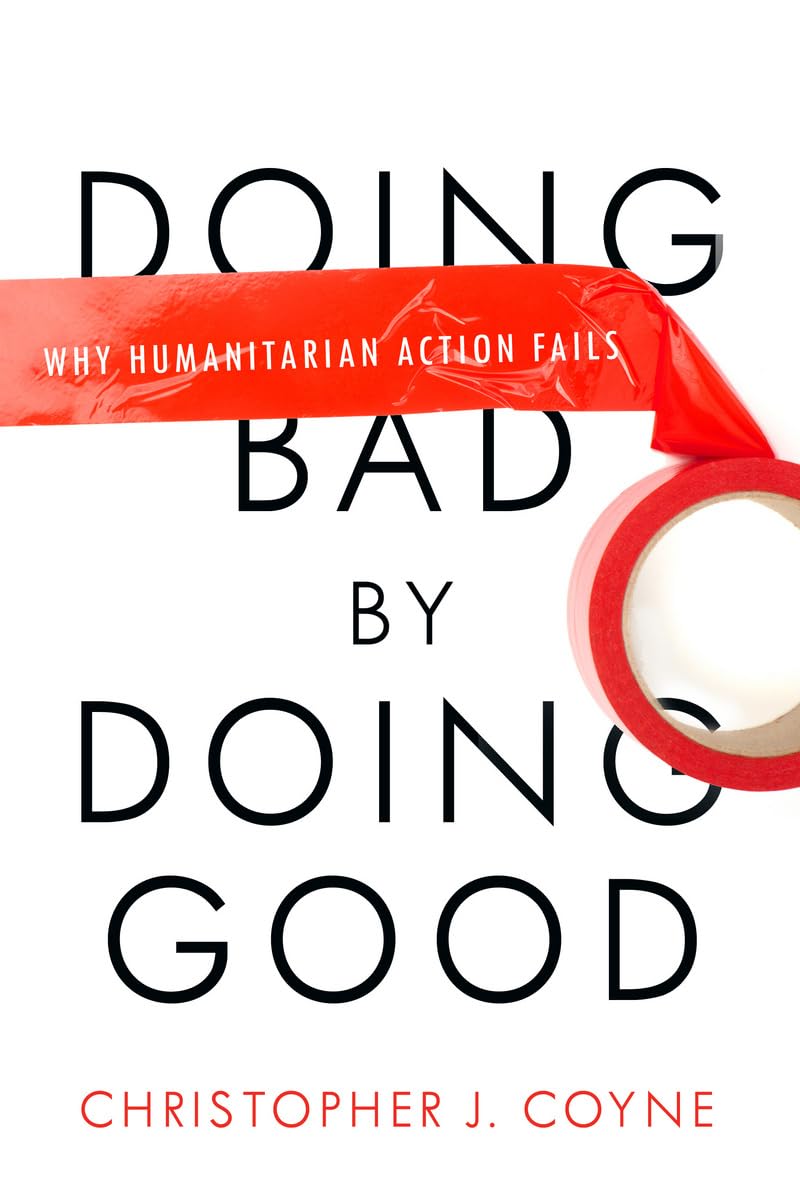
Title
Doing Bad By Doing Good: Why Humanitarian Action Fails,Used
Sold by Ergodebooks, an authorized reseller.
Returns accepted within 30 days | support@ergodebooks.com
Shipping Information
- Free Standard Shipping — United States only
- Processing Time: 3–5 business days
- Estimated Delivery: 6–10 business days after dispatch
- Double-boxed, fully insured & discreetly packaged
- Tracking number sent via email once dispatched
Returns & Refund
Returns accepted within 30 days of delivery.
Damaged or Defective Item
Free return shipping + replacement or full refund
Wrong Item Received
Free return shipping + replacement or full refund
Change of Mind
Return shipping at customer's expense · 25% restocking fee applies
Payment Option

In 2010, Haiti Was Ravaged By A Brutal Earthquake That Affected The Lives Of Millions. The Call To Assist Those In Need Was Heard Around The Globe. Yet Two Years Later Humanitarian Efforts Led By Governments And Ngos Have Largely Failed. Resources Are Not Reaching The Needy Due To Bureaucratic Red Tape, And Many Assets Have Been Squandered. How Can Efforts Intended To Help The Suffering Fail So Badly? In This Timely And Provocative Book, Christopher J. Coyne Uses The Economic Way Of Thinking To Explain Why This And Other Humanitarian Efforts That Intend To Do Good End Up Doing Nothing Or Causing Harm. In Addition To Haiti, Coyne Considers A Wide Range Of Interventions. He Explains Why The U.S. Government Was Ineffective Following Hurricane Katrina, Why The International Humanitarian Push To Remove Muammar Gaddafi In Libya May Very Well End Up Causing More Problems Than Prosperity, And Why Decades Of Efforts To Respond To Crises And Foster Development Around The World Have Resulted In Repeated Failures. In Place Of The Dominant Approach To Stateled Humanitarian Action, This Book Offers A Bold Alternative, Focused On Establishing An Environment Of Economic Freedom. If We Are Willing To Experiment With Aidasking Questions About How To Foster Development As A Process Of Societal Discovery, Or How Else We Might Engage The Private Sector, For Instancewe Increase The Range Of Alternatives To Help People And Empower Them To Improve Their Communities. Anyone Concerned With And Dedicated To Alleviating Human Suffering In The Short Term Or For The Long Haul, From Policymakers And Activists To Scholars, Will Find This Book To Be An Insightful And Provocative Reframing Of Humanitarian Action.
⚠️ WARNING (California Proposition 65):
This product may contain chemicals known to the State of California to cause cancer, birth defects, or other reproductive harm.
For more information, please visit www.P65Warnings.ca.gov.
- Q: What is the page count of the book? A: The book has two hundred seventy-two pages. This length provides a comprehensive exploration of humanitarian action and its failures.
- Q: What type of binding does this book have? A: The book is published in paperback binding. This makes it lightweight and portable for easy reading.
- Q: Who is the author of 'Doing Bad by Doing Good'? A: The author is Christopher J. Coyne. He presents a critical examination of humanitarian efforts through an economic lens.
- Q: Is this book suitable for academic study? A: Yes, it is suitable for academic study. It provides insights relevant to policymakers, activists, and scholars interested in humanitarian issues.
- Q: What themes does this book explore? A: The book explores themes of humanitarian action, economic freedom, and the failures of government-led interventions. It challenges traditional approaches to aid.
- Q: What is the book's primary focus? A: The primary focus is on why humanitarian actions often fail. Coyne examines various case studies to illustrate this point.
- Q: How should I take care of this book? A: To keep the book in good condition, store it in a dry place away from direct sunlight. Avoid bending the spine to maintain its shape.
- Q: Can this book be read by children? A: No, it is not primarily aimed at children. The content is more suited for adults and those interested in complex social issues.
- Q: Is this book a good resource for policymakers? A: Yes, it is a valuable resource for policymakers. It provides critical insights into the effectiveness of humanitarian interventions.
- Q: What if the book arrives damaged? A: If the book arrives damaged, contact customer support for return or exchange options. Most retailers have policies in place for such issues.
- Q: Is this book available in other formats? A: Currently, it is available in paperback format. There may not be eBook or hardcover versions available.
- Q: What makes this book different from other humanitarian literature? A: This book differentiates itself by applying economic principles to analyze humanitarian efforts. It critiques common practices and suggests alternatives.
- Q: Does the book include real-world examples? A: Yes, it includes real-world examples such as the Haiti earthquake and Hurricane Katrina. These case studies illustrate the failures of humanitarian action.
- Q: Is there a specific audience for this book? A: The book targets readers interested in development, economics, and humanitarian issues. It appeals to academics, policymakers, and activists.
- Q: Can I find a summary of the book online? A: Yes, summaries and reviews are available online. They can provide insights into the book's main arguments and themes.
- Q: What is the book's publication date? A: The book was published in 2010. It provides a timely analysis of humanitarian action following significant global events.