
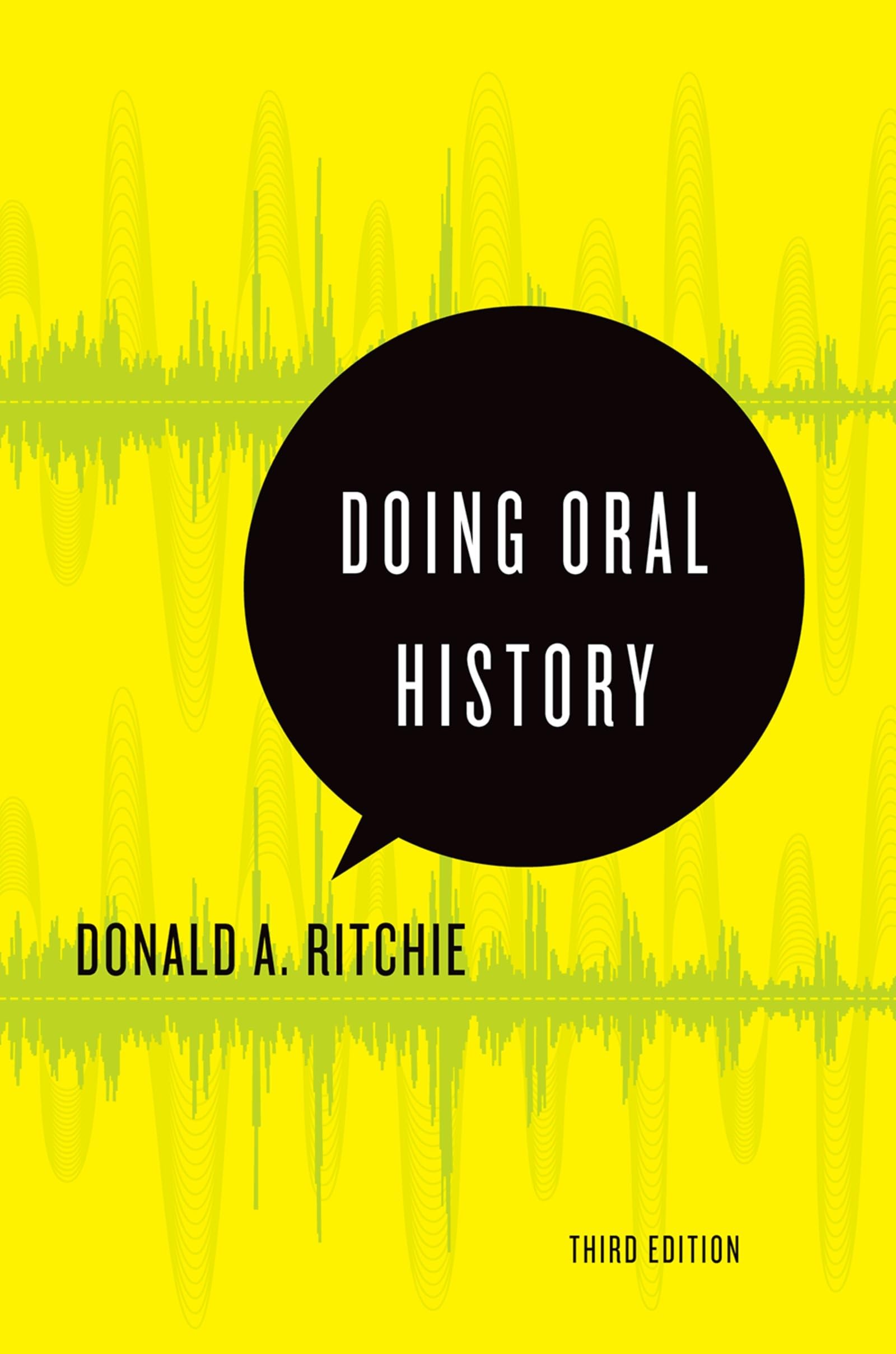
Title
Doing Oral History (Oxford Oral History Series),New
Sold by Ergodebooks, an authorized reseller.
Returns accepted within 30 days | support@ergodebooks.com
Shipping Information
- Free Standard Shipping — United States only
- Processing Time: 3–5 business days
- Estimated Delivery: 6–10 business days after dispatch
- Double-boxed, fully insured & discreetly packaged
- Tracking number sent via email once dispatched
Returns & Refund
Returns accepted within 30 days of delivery.
Damaged or Defective Item
Free return shipping + replacement or full refund
Wrong Item Received
Free return shipping + replacement or full refund
Change of Mind
Return shipping at customer's expense · 25% restocking fee applies
Payment Option

Doing Oral History Is Considered The Premier Guidebook To Oral History, Used By Professional Oral Historians, Public Historians, Archivists, And Genealogists As A Core Text In College Courses And Throughout The Public History Community. Over The Past Decades, The Development Of Digital Audio And Video Recording Technology Has Continued To Alter The Practice Of Oral History, Making It Even Easier To Produce Quality Recordings And To Disseminate Them On The Internet. This Basic Manual Offers Detailed Advice On Setting Up An Oral History Project, Conducting Interviews, Making Video Recordings, Preserving Oral History Collections In Archives And Libraries, And Teaching And Presenting Oral History.Using The Existing Q&A Format, The Third Edition Asks New Questions And Augments Previous Answers With New Material, Particularly In These Areas:1. Technology: As Before, The Book Avoids Recommending Specific Equipment, But Weighs The Merits Of The Types Of Technology Available For Audio And Video Recording, Transcription, Preservation, And Dissemination. Information About Web Sites Is Expanded, And More Discussion Is Provided About How Other Oral History Projects Have Posted Their Interviews Online.2. Teaching: The New Edition Addresses The Use Of Oral History In Online Teaching. It Also Expands The Discussion Of Institutional Review Boards (Irbs) With The Latest Information About Compliance Issues.3. Presentation: Once Interviews Have Been Conducted, There Are Many Opportunities For Creative Presentation. There Is Much New Material Available On Innovative Forms Of Presentation Developed Over The Last Decade, Including Interpretive Dance And Other Public Performances.4. Legal Considerations: The Recent Boston College Case, In Which The Courts Have Ruled That Irish Police Should Have Access To Sealed Oral History Transcripts, Has Refocused Attention On The Problems Of Protecting Donor Restrictions. The New Edition Offers Case Studies From The Past Decade.5. Theory And Memory: As A Beginner'S Manual, Doing Oral History Has Not Dealt Extensively With Theoretical Issues, On The Grounds That These Emerge Best From Practice. But The Third Edition Includes The Latest Thinking About Memory And Provides A Sample Of Some Of The Theoretical Issues Surrounding Oral Sources. It Will Include Examples Of Increased Studies Into Catastrophe And Trauma, And The Special Considerations These Have Generated For Interviewers.6. Internationalism: Perhaps The Biggest Development In The Past Decade Has Been The Spreading Of Oral History Around The World, Facilitated In Part By The International Oral History Association. New Oral History Projects Have Developed In Areas That Have Undergone Social And Political Upheavals, Where The Traditional Archives Reflect The Old Regimes, Particularly In Eastern Europe, The Middle East, Asia, Africa, And Latin America. The Third Edition Includes Many More References To Nonu.S. Projects That Will Still Be Relevant To An American Audience.These Changes Make The Third Edition Of Doing Oral History An Even More Useful Tool For Beginners, Teachers, Archivists, And All Those Oral History Managers Who Have Inherited Older Collections That Must Be Converted To The Latest Technology.
⚠️ WARNING (California Proposition 65):
This product may contain chemicals known to the State of California to cause cancer, birth defects, or other reproductive harm.
For more information, please visit www.P65Warnings.ca.gov.
- Q: How many pages does this book have? A: This book has three hundred forty-seven pages. It's a comprehensive guide covering various aspects of oral history.
- Q: What is the binding type of this book? A: The binding type of this book is paperback. This makes it lightweight and flexible for easy handling.
- Q: What are the dimensions of this book? A: The dimensions of this book are nine point one inches long, six point one inches wide, and one inch thick.
- Q: Is this book suitable for beginners in oral history? A: Yes, this book is suitable for beginners. It serves as a foundational guide for those new to oral history practices.
- Q: Can I use this book for online teaching? A: Yes, you can use this book for online teaching. It includes expanded discussions relevant to online educational practices.
- Q: How do I set up an oral history project using this book? A: To set up an oral history project, follow the detailed advice in the book, which includes project planning and interview techniques.
- Q: How do I preserve oral history collections? A: Preserve oral history collections by following the guidelines on archival practices provided in the book.
- Q: What should I know about legal considerations in oral history? A: You should be aware of donor restrictions and legal cases discussed in the book, such as the Boston College case.
- Q: Is this book relevant for international oral history projects? A: Yes, this book is relevant for international oral history projects. It references many non-U.S. projects that are significant for a global audience.
- Q: What if my book arrives damaged? A: If your book arrives damaged, contact the seller for return or replacement options as per their policy.
- Q: Is there a warranty for this book? A: No, books typically do not come with a warranty. However, check with the seller for any specific return policies.
- Q: How can I find support for using this book? A: You can find support for using this book through educational institutions or online forums focused on oral history.
- Q: What technology topics does this book cover? A: This book covers various technology topics such as audio and video recording, transcription, and online dissemination.
- Q: Are there any creative presentation ideas in this book? A: Yes, the book includes innovative presentation ideas like interpretive dance and public performances.
- Q: Does this book discuss theory and memory in oral history? A: Yes, it includes discussions on memory and theoretical issues surrounding oral sources, enhancing your understanding.