If you have any questions, you are always welcome to contact us. We'll get back to you as soon as possible, withing 24 hours on weekdays.
Customer service
All questions about your order, return and delivery must be sent to our customer service team by e-mail at yourstore@yourdomain.com
Sale & Press
If you are interested in selling our products, need more information about our brand or wish to make a collaboration, please contact us at press@yourdomain.com
Help
If you have any questions, you are always welcome to contact us. We'll get back to you as soon as possible, withing 24 hours on weekdays.
Customer service
All questions about your order, return and delivery must be sent to our customer service team by e-mail at yourstore@yourdomain.com
Sale & Press
If you are interested in selling our products, need more information about our brand or wish to make a collaboration, please contact us at press@yourdomain.com
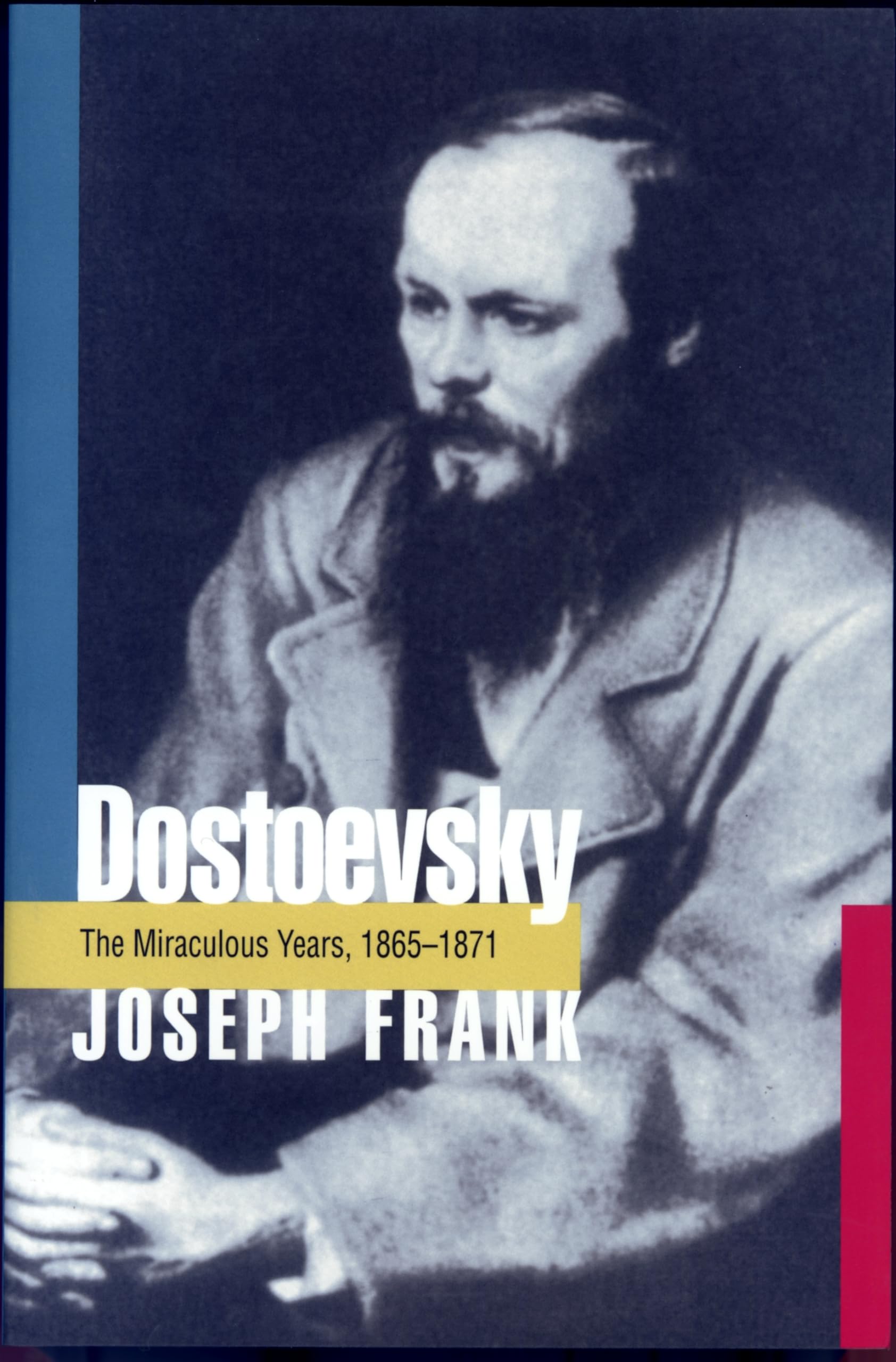
This volume, the fourth of five planned in Joseph Frank's widely acclaimed biography of Dostoevsky, covers the six most remarkably productive years in the novelist's entire career. It was in this short span of time that Dostoevsky produced three of his greatest novelsCrime and Punishment, The Idiot, and The Devilsand two of his best novellas, The Gambler and The Eternal Husband. All these masterpieces were written in the midst of harrowing practical and economic circumstances, as Dostoevsky moved from place to place, frequently giving way to his passion for roulette. Having remarried and fled from Russia to escape importuning creditors and grasping dependents, he could not return for fear of being thrown into debtor's prison. He and his young bride, who twice made him a father, lived obscurely and penuriously in Switzerland, Germany, and Italy, as he toiled away at his writing, their only source of income. All the while, he worried that his recurrent epileptic attacks were impairing his literary capacities. His enforced exile intensified not only his love for his native land but also his abhorrence of the doctrines of Russian Nihilismwhich he saw as an alien European importation infecting the Russian psyche. Two novels of this period were thus an attempt to conjure this looming spectre of moralsocial disintegration, while The Idiot offered an image of Dostoevsky's conception of the Russian Christian ideal that he hoped would take its place.
⚠️ WARNING (California Proposition 65):
This product may contain chemicals known to the State of California to cause cancer,
birth defects, or other reproductive harm.
For MAP (Minimum Advertised Price) violations and Intellectual Property (IP) or Trademark concerns, please contact:
support@ergodebooks.com
⚠️ California Proposition 65 Warning: Some products sold on this website may expose you to chemicals known to the State of California to cause cancer, birth defects, or other reproductive harm. For more information, visit www.P65Warnings.ca.gov.