
Title
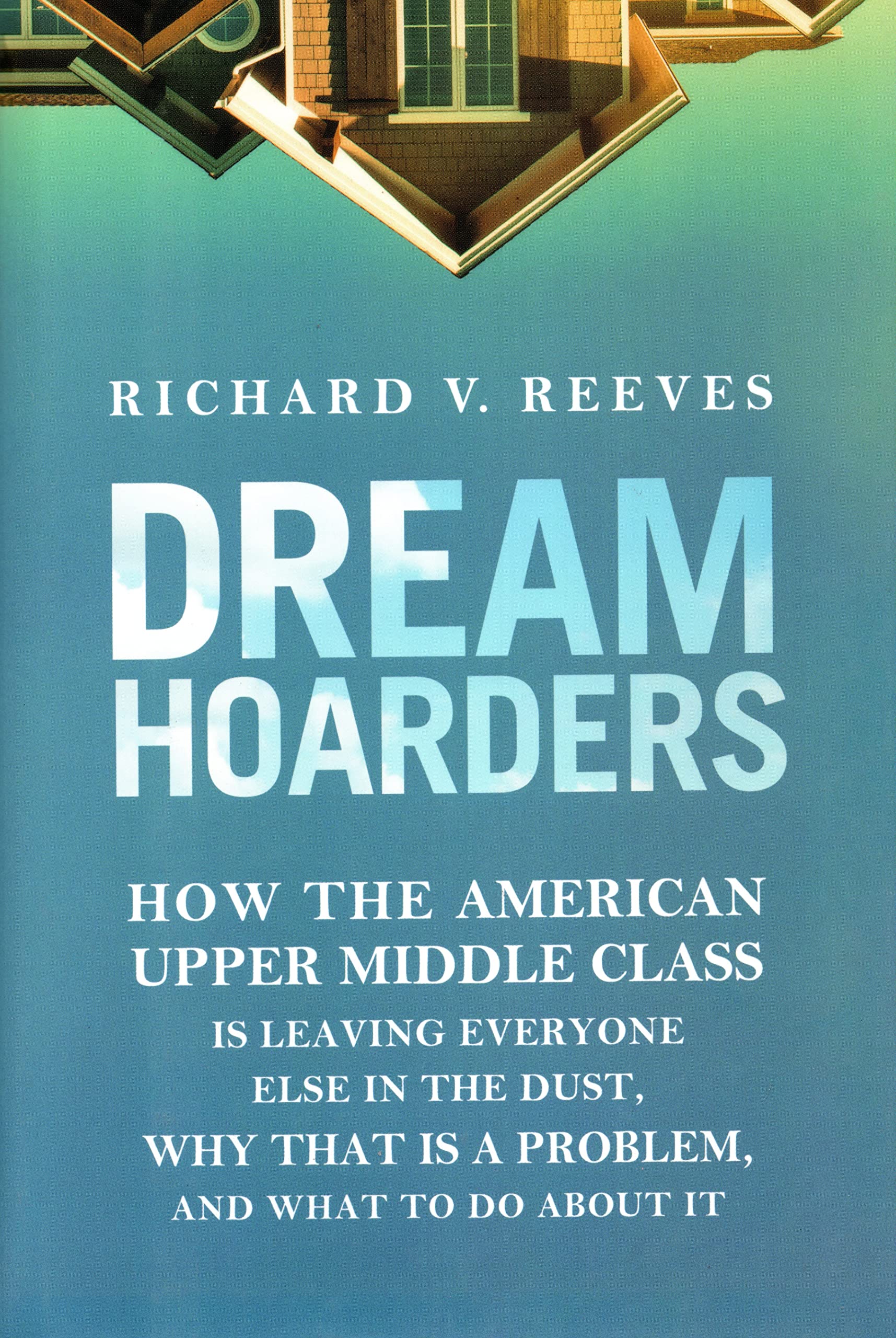
Dream Hoarders: How The American Upper Middle Class Is Leaving Everyone Else In The Dust, Why That Is A Problem, And What To Do,New
Sold by Ergodebooks, an authorized reseller.
Returns accepted within 30 days | support@ergodebooks.com
Shipping Information
- Free Standard Shipping — United States only
- Processing Time: 3–5 business days
- Estimated Delivery: 6–10 business days after dispatch
- Double-boxed, fully insured & discreetly packaged
- Tracking number sent via email once dispatched
Returns & Refund
Returns accepted within 30 days of delivery.
Damaged or Defective Item
Free return shipping + replacement or full refund
Wrong Item Received
Free return shipping + replacement or full refund
Change of Mind
Return shipping at customer's expense · 25% restocking fee applies
Payment Option

America Is Becoming A Classbased Society.It Is Now Conventional Wisdom To Focus On The Wealth Of The Top 1 Percentespecially The Top 0.01 Percentand How The Ultrarich Are Concentrating Income And Prosperity While Incomes For Most Other Americans Are Stagnant. But The Most Important, Consequential, And Widening Gap In American Society Is Between The Upper Middle Class And Everyone Else.Reeves Defines The Upper Middle Class As Those Whose Incomes Are In The Top 20 Percent Of American Society. Income Is Not The Only Way To Measure A Society, But In A Market Economy It Is Crucial Because Access To Money Generally Determines Who Gets The Best Quality Education, Housing, Health Care, And Other Necessary Goods And Services.As Reeves Shows, The Growing Separation Between The Upper Middle Class And Everyone Else Can Be Seen In Family Structure, Neighborhoods, Attitudes, And Lifestyle. Those At The Top Of The Income Ladder Are Becoming More Effective At Passing On Their Status To Their Children, Reducing Overall Social Mobility. The Result Is Not Just An Economic Divide But A Fracturing Of American Society Along Class Lines. Uppermiddleclass Children Become Uppermiddleclass Adults.These Trends Matter Because The Separation And Perpetuation Of The Upper Middle Class Corrode Prospects For More Progressive Approaches To Policy. Various Forms Of Opportunity Hoarding Among The Upper Middle Class Make It Harder For Others To Rise Up To The Top Rung. Examples Include Zoning Laws And Schooling, Occupational Licensing, College Application Procedures, And The Allocation Of Internships. Uppermiddleclass Opportunity Hoarding, Reeves Argues, Results In A Less Competitive Economy As Well As A Less Open Society.Inequality Is Inevitable And Can Even Be Good, Within Limits. But Reeves Argues That Society Can Take Effective Action To Reduce Opportunity Hoarding And Thus Promote Broader Opportunity. This Fascinating Book Shows How American Society Has Become The Very Classdefined Society That Earlier Americans Rebelled Againstand What Can Be Done To Restore A More Equitable Society.
⚠️ WARNING (California Proposition 65):
This product may contain chemicals known to the State of California to cause cancer, birth defects, or other reproductive harm.
For more information, please visit www.P65Warnings.ca.gov.
- Q: How many pages does this book have? A: This book has two hundred forty pages. It provides an in-depth analysis of class dynamics in American society.
- Q: What is the binding type of this book? A: The book is hardcover. This binding is durable and suitable for long-term use.
- Q: Who is the author of this book? A: The author is Richard Reeves. He is known for his insights into social issues and economics.
- Q: What are the dimensions of this book? A: The book measures six point three two inches in length, zero point eight inches in width, and nine point two eight inches in height. These dimensions make it portable and easy to handle.
- Q: What is the genre of this book? A: This book falls under the comparative genre. It explores social structures and economic disparities.
- Q: Is this book suitable for young readers? A: This book is primarily aimed at adults and young adults. It discusses complex themes related to class and economics.
- Q: How can I apply the concepts in this book? A: You can use the insights from this book to understand social mobility and economic inequality. It provides practical approaches to addressing these issues.
- Q: What key themes does the book explore? A: The book explores themes of social mobility, economic inequality, and opportunity hoarding. These are critical issues in contemporary American society.
- Q: Can I read this book in a book club? A: Yes, this book is suitable for book clubs. It offers rich discussion points on class and economic disparity.
- Q: How should I care for this hardcover book? A: Keep the book in a dry place away from direct sunlight. This will help preserve its condition over time.
- Q: What if the book arrives damaged? A: If the book arrives damaged, you should contact the seller for a replacement or refund. Most sellers have return policies in place for such issues.
- Q: Is there a warranty for this book? A: Books typically do not come with a warranty. However, you can check the return policy with the retailer.
- Q: How do I store this book? A: Store this book upright on a shelf or in a bookcase. This prevents damage to the spine and pages.
- Q: What if I don't understand some concepts in the book? A: You can look for supplementary resources or discussion groups online. These can help clarify the book's concepts.
- Q: How does this book compare to others on social inequality? A: This book provides a unique perspective on class dynamics. It focuses specifically on the upper middle class, making it distinct from other works.
- Q: Is this book a good choice for academic research? A: Yes, this book is a good choice for academic research. It presents well-researched arguments and insights into social structures.