
Title
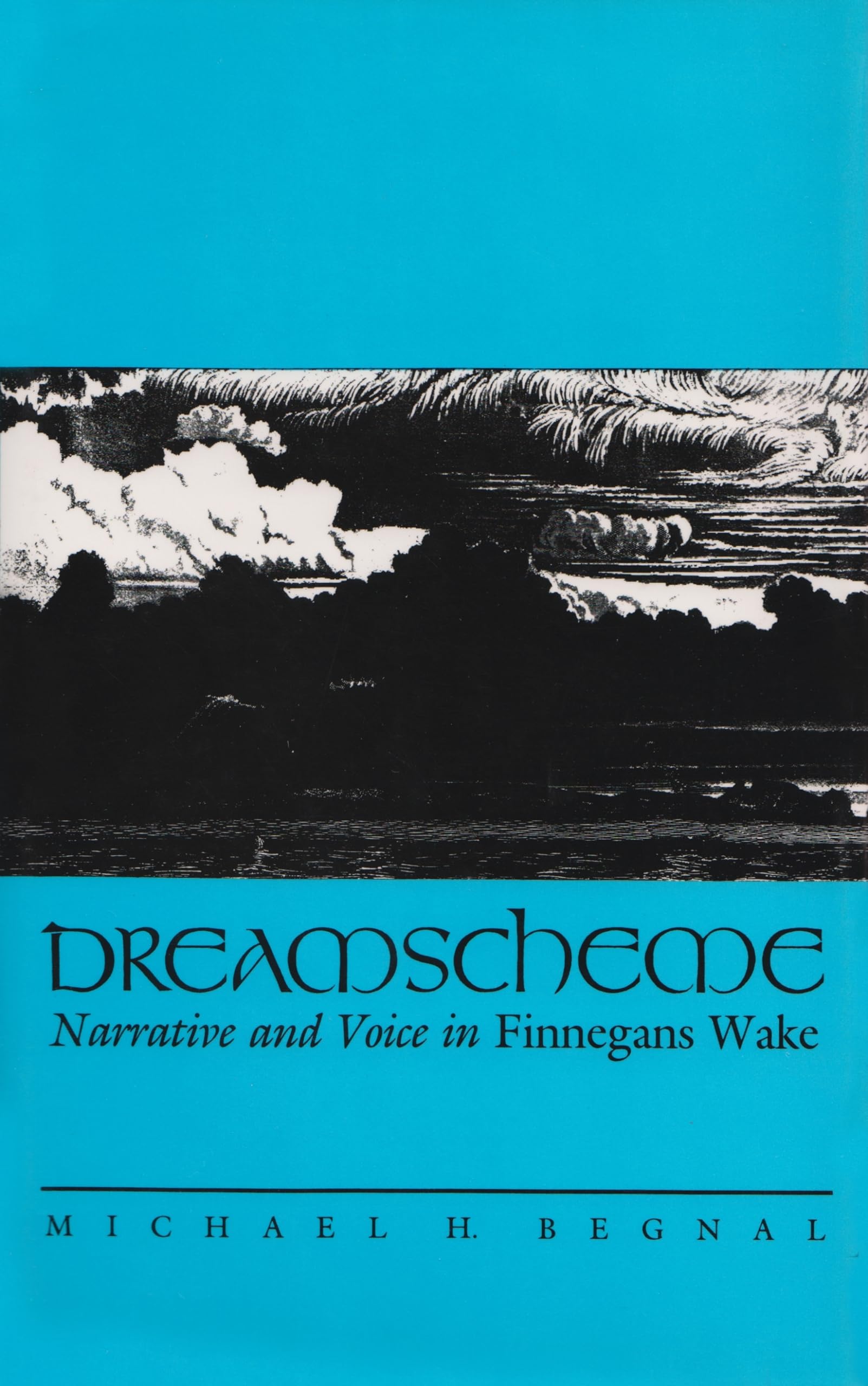
Dreamscheme: Narrative and Voice in Finnegans Wake (Irish Studies),Used
Sold by Ergodebooks, an authorized reseller.
Returns accepted within 30 days | support@ergodebooks.com
Shipping Information
- Free Standard Shipping — United States only
- Processing Time: 3–5 business days
- Estimated Delivery: 6–10 business days after dispatch
- Double-boxed, fully insured & discreetly packaged
- Tracking number sent via email once dispatched
Returns & Refund
Returns accepted within 30 days of delivery.
Damaged or Defective Item
Free return shipping + replacement or full refund
Wrong Item Received
Free return shipping + replacement or full refund
Change of Mind
Return shipping at customer's expense · 25% restocking fee applies
Payment Option

As one of the most experimental works attempted in prose fiction, Finnegans Wake has not yielded to examination easily, but it need not remain a complete enigma. As Michael Begnal emphasizes, Joyce's work is still a novel and can be read as such. Making no claim to simplify the Wake, Begnal challenges the reader to become aware of the multitude of voices at work in the text, to identify and single them out as the narrative rolls along. A pattern of interplay, he asserts, then emerges and gives the reader a handle on Joyce's masterpiece. This critique, arising from a traditional perspective, determines its own field of inquiry and will no doubt spark some healthy controversy among Joyce scholars. In this commonsense, highly readable approach to difficult material, Begnal focuses on voice, theme, and structure. This work has no intention of limiting interpretation, but instead invites the reader to return to narrative and characterization in order to open up the possibilities of Joyce's exploration of a dreaming consciousness his 'dreamscheme.' Begnal first discusses Finnegans Wake in the tradition of realistic and experimental fiction, then goes on to examine narrative methods, stressing how Joyce uses 'narrator interpolations' (asides, interventions, etc.). He then shows how Joyce rejects a single, continual narrative in favor of different kinds of fictional reality, yet still remains true to certain realistic conventions. The method in the Wake is not random, and by concentrating closely upon the structure and the language of the novel, Begnal argues, the reader can follow the signposts which lead to Joyce's grand design. Joyce never promised that this would be easy, but the insights, the laughter, and the rewards will more than justify the midnight oil. Joyce scholars and other enthusiastsincluding students and professorswill welcome Dreamscheme as a sharply focused and clear analysis of Finnegans Wake.
⚠️ WARNING (California Proposition 65):
This product may contain chemicals known to the State of California to cause cancer, birth defects, or other reproductive harm.
For more information, please visit www.P65Warnings.ca.gov.