If you have any questions, you are always welcome to contact us. We'll get back to you as soon as possible, withing 24 hours on weekdays.
Customer service
All questions about your order, return and delivery must be sent to our customer service team by e-mail at yourstore@yourdomain.com
Sale & Press
If you are interested in selling our products, need more information about our brand or wish to make a collaboration, please contact us at press@yourdomain.com
Help
If you have any questions, you are always welcome to contact us. We'll get back to you as soon as possible, withing 24 hours on weekdays.
Customer service
All questions about your order, return and delivery must be sent to our customer service team by e-mail at yourstore@yourdomain.com
Sale & Press
If you are interested in selling our products, need more information about our brand or wish to make a collaboration, please contact us at press@yourdomain.com
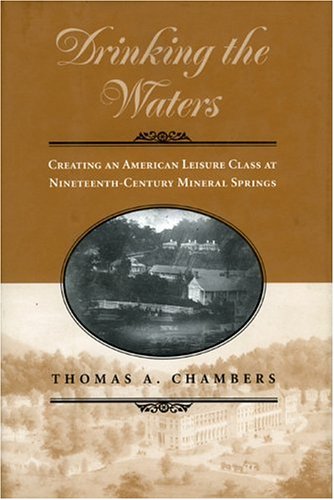
Few public places in the early nineteenth century offered men and women from different regions of the United States the opportunity to socialize with each other. At the resorts of Virginia's western mountains and upstate New York's Saratoga Springs, the nation's social, economic, and political leaders gathered to relax and to recuperate, and in the process they began to form a 'fledgling aristocracy.' As Thomas Chambers reveals, at these resorts the boundaries of class and region were defined, tested, solidified, and broken by the Civil War, but eventually repaired in its aftermath.No other movement or establishment challenged the springs as the social centers for America's leisure class. Chambers describes how the springs attracted the cultural elite through architecture, bucolic landscapes, and claims of medical authority and high fashion. The conflicts between old and new money created tension, and status was open to negotiation at the springs. Chambers examines how these conflicts illustrate the nearly constant process of social display, class construction, and the negotiation of gender roles.The attempts to create an American national elite faltered with the approach of the Civil War. Although the Northerners and Southerners who frequented the springs could agree on the place of women in society, on dress and comportment, and on chivalry and honor, they could not agree on the issue of slavery. The springs' popularity did revive after the war as patrons eventually overcame cultural and political differences with nostalgia.
⚠️ WARNING (California Proposition 65):
This product may contain chemicals known to the State of California to cause cancer,
birth defects, or other reproductive harm.
For MAP (Minimum Advertised Price) violations and Intellectual Property (IP) or Trademark concerns, please contact:
support@ergodebooks.com
⚠️ California Proposition 65 Warning: Some products sold on this website may expose you to chemicals known to the State of California to cause cancer, birth defects, or other reproductive harm. For more information, visit www.P65Warnings.ca.gov.