
Title
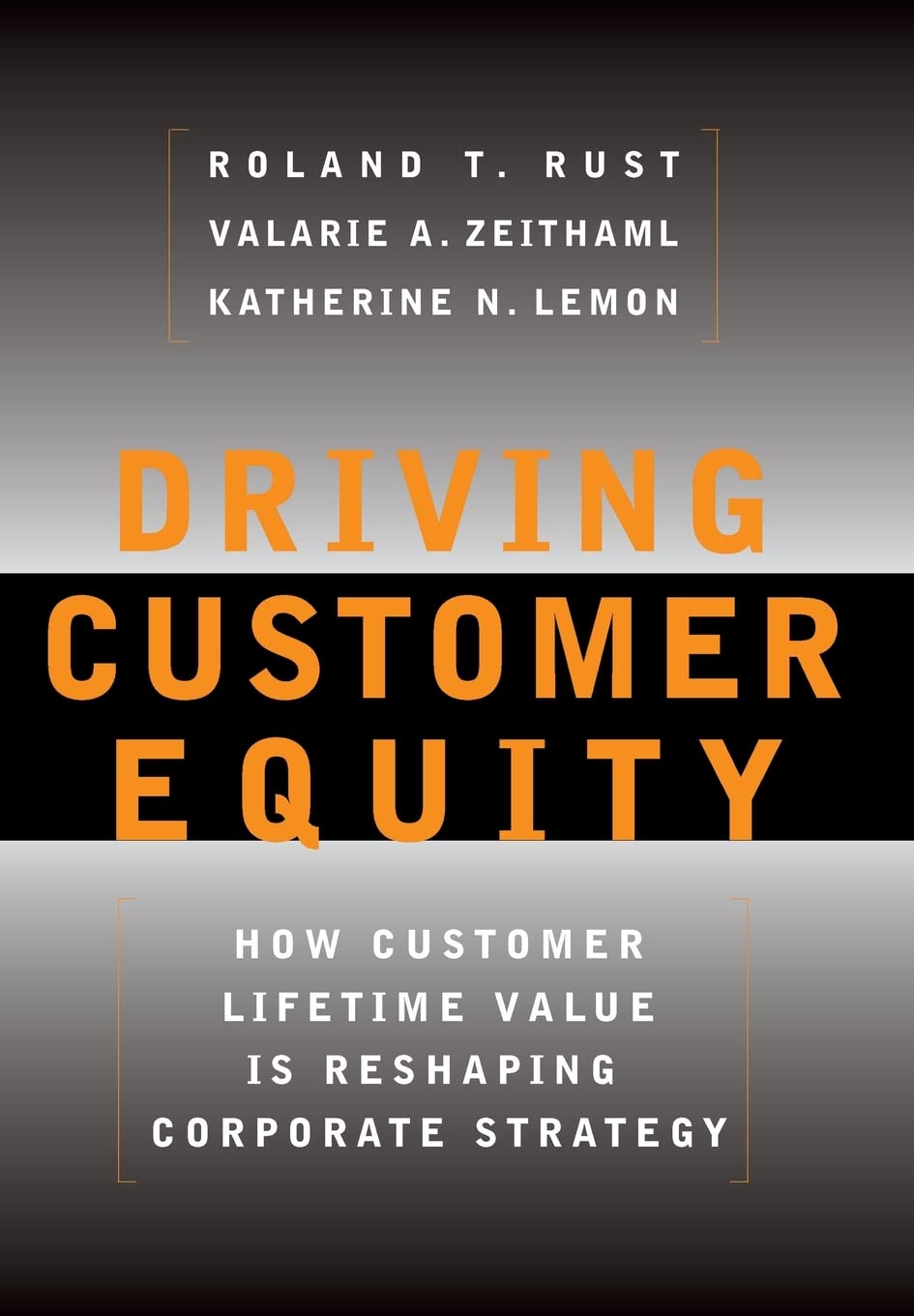
Driving Customer Equity : How Customer Lifetime Value is Reshaping Corporate Strategy,New
Sold by Ergodebooks, an authorized reseller.
Returns accepted within 30 days | support@ergodebooks.com
Shipping Information
- Free Standard Shipping — United States only
- Processing Time: 3–5 business days
- Estimated Delivery: 6–10 business days after dispatch
- Double-boxed, fully insured & discreetly packaged
- Tracking number sent via email once dispatched
Returns & Refund
Returns accepted within 30 days of delivery.
Damaged or Defective Item
Free return shipping + replacement or full refund
Wrong Item Received
Free return shipping + replacement or full refund
Change of Mind
Return shipping at customer's expense · 25% restocking fee applies
Payment Option

In their efforts to become more customerfocused, companies everywhere find themselves entangled in outmoded systems, metrics, and strategies rooted in their productcentered view of the world. Now, to ease this shift to a customer focus, marketing strategy experts Roland T. Rust, Valarie A. Zeithaml, and Katherine N. Lemon have created a dynamic new model they call 'Customer Equity', a strategic framework designed to maximize every firm's most important asset, the total lifetime value of its customer base. The authors' Customer Equity Framework yields powerful insights that will help any business increase the value of its customer base. Rust, Zeithaml, and Lemon introduce the three drivers of customer equity Value Equity, Brand Equity, and Retention Equity and explain in clear, nontechnical language how managers can base their strategies on one or a combination of these drivers. The authors demonstrate in this breakthrough book how managers can build and employ competitive metrics that reveal their company's Customer Equity relative to their competitors. Based on these metrics, they show how managers can determine which drivers are most important in their industry, how they can make efficient strategic tradeoffs between expenditures on these drivers, and how to project a financial return from these expenditures. The final section devotes two chapters to the Customer Pyramid, an approach that segments customers based on their longterm profitability, and an especially important chapter examines the Internet as the ultimate Customer Equity tool. Here the authors show how companies such as Intuit.com, Schwab.com, and Priceline.com have used more than one or all three drivers to increase Customer Equity. In this age of onetoone marketing, understanding how to drive Customer Equity is central to the success of any firm. In particular, Driving Customer Equity will be essential reading for any marketing manager
⚠️ WARNING (California Proposition 65):
This product may contain chemicals known to the State of California to cause cancer, birth defects, or other reproductive harm.
For more information, please visit www.P65Warnings.ca.gov.