If you have any questions, you are always welcome to contact us. We'll get back to you as soon as possible, withing 24 hours on weekdays.
Customer service
All questions about your order, return and delivery must be sent to our customer service team by e-mail at yourstore@yourdomain.com
Sale & Press
If you are interested in selling our products, need more information about our brand or wish to make a collaboration, please contact us at press@yourdomain.com
Help
If you have any questions, you are always welcome to contact us. We'll get back to you as soon as possible, withing 24 hours on weekdays.
Customer service
All questions about your order, return and delivery must be sent to our customer service team by e-mail at yourstore@yourdomain.com
Sale & Press
If you are interested in selling our products, need more information about our brand or wish to make a collaboration, please contact us at press@yourdomain.com
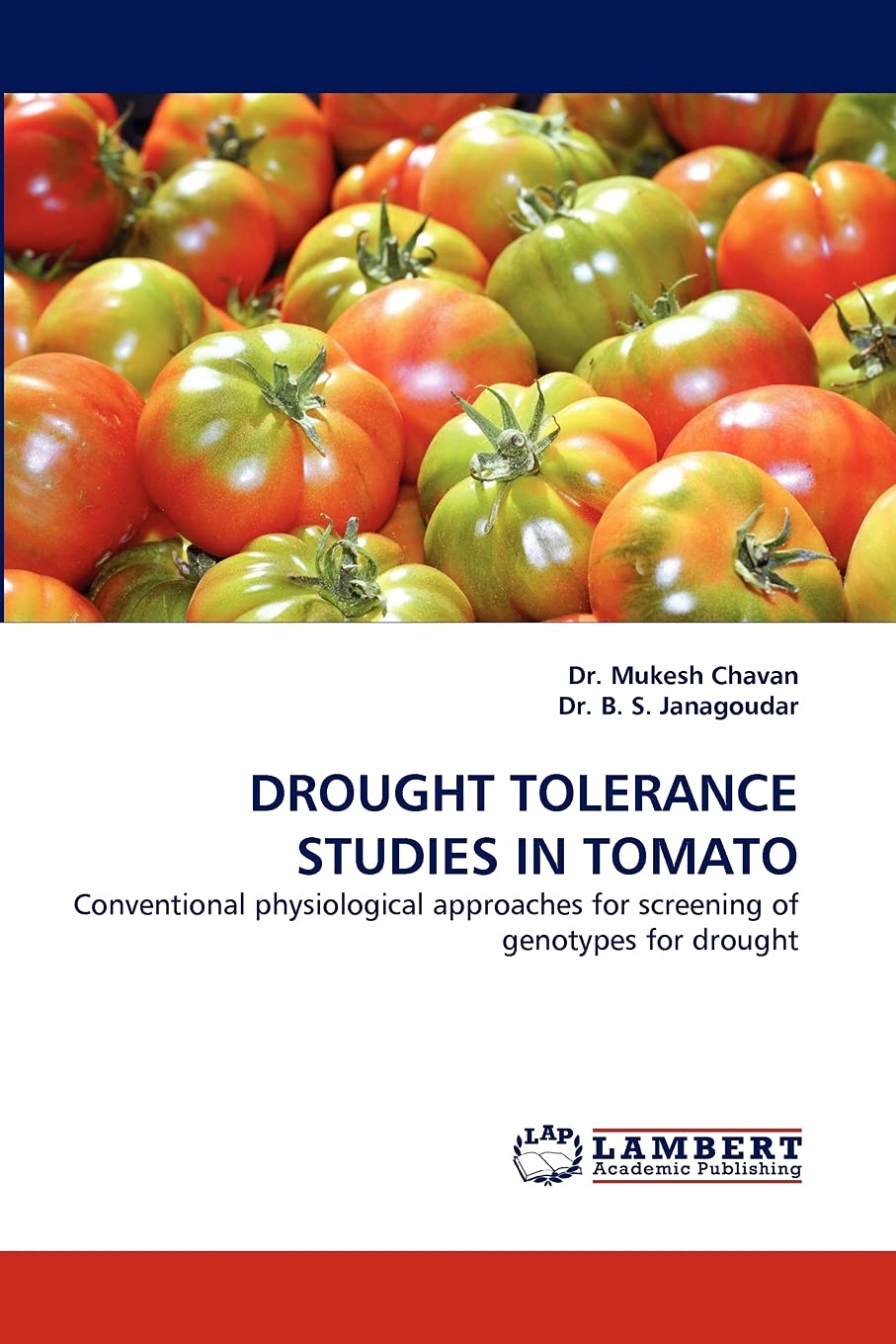
Tomato is one of the widely grown vegetables in the world. Drought is the major inevitable and recurring feature of semiarid tropics. Crop scientists are still concerned about it as it remains the single most important factor affecting the yield potentials of crop species. Therefore, optimum use of water is of paramount importance. It helps in better utilization of all other production factors and thus leads to increase in yield per unit land and time. There are several physiological and biochemical traits contributing to the drought tolerance nature. With this hypothesis, the present investigation was planned to identify variability in different drought adoptive mechanisms among different tomato genotypes. The outcome is ascorbic acid content, TSS and lycopene content enhance the fruit quality. The drought tolerant genotypes possessed moderately leaf area, high in RWC, pubescence, proline, chlorophyll content, stomatal conductance, photosynthesis and low in transpiration rate and leaf temperature. Hence, these indices may be used both to screen and to develop drought tolerance genotypes for further crop improvement programme in tomato.
⚠️ WARNING (California Proposition 65):
This product may contain chemicals known to the State of California to cause cancer,
birth defects, or other reproductive harm.
For MAP (Minimum Advertised Price) violations and Intellectual Property (IP) or Trademark concerns, please contact:
support@ergodebooks.com
⚠️ California Proposition 65 Warning: Some products sold on this website may expose you to chemicals known to the State of California to cause cancer, birth defects, or other reproductive harm. For more information, visit www.P65Warnings.ca.gov.